
 Share
Share


 Print
PrintA deal with the senses: Step inside SZ's groundbreaking immersive theater experience
Writer: Sterling Platt | Editor: Lin Qiuying | From: Original | Updated: 2025-10-21
There are moments in a city’s cultural life that feel like a definitive shift from the familiar to the new. For Shenzhen, one of those moments is happening now, not in a conventional playhouse or concert hall, but within the historic hull of a ship permanently moored in Shekou’s Sea World Plaza.
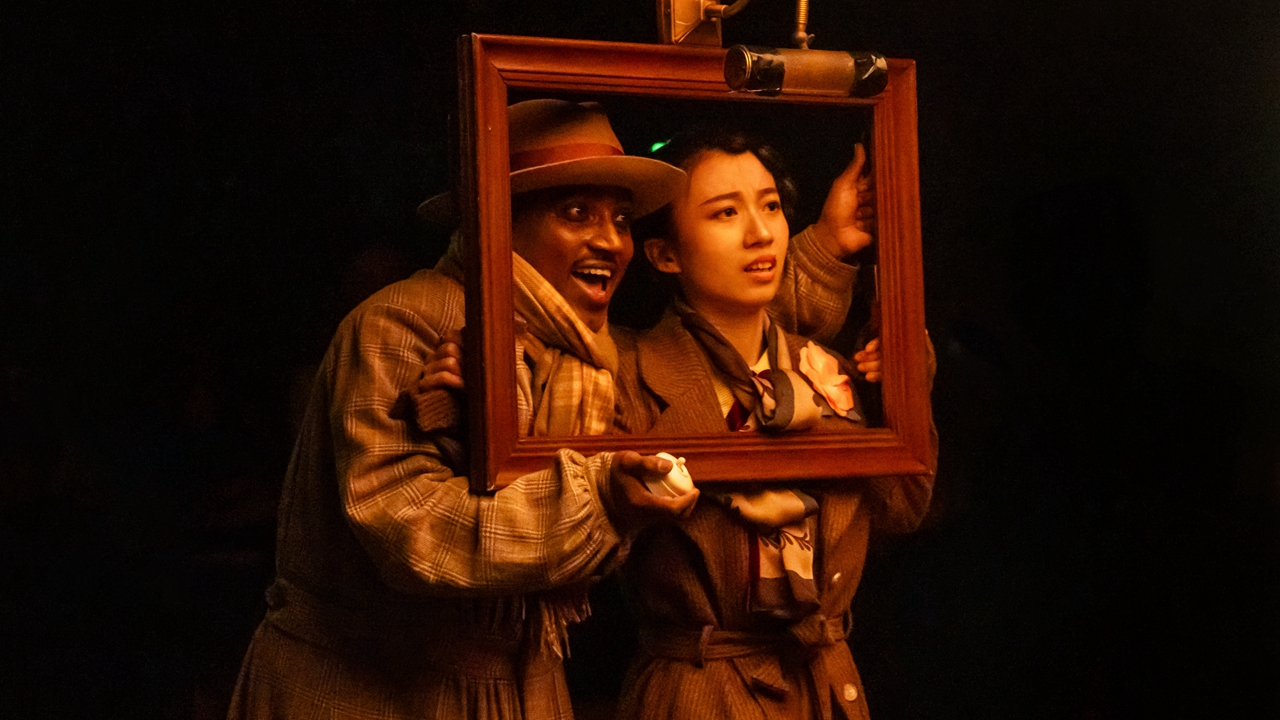 A scene from "The Deal." Photos courtesy of China Merchants Culture
Aboard the Ancerville, a vessel once christened by French President Charles de Gaulle in 1962, a revolutionary performance called “The Deal” is redefining the very relationship between actor, audience, and story. This is not theater you simply watch — it is a world you inhabit. The ship itself has been a local cultural icon since the 1980s and inhabits the mind of Shenzheners — its recent reimagining is worthy of such an important landmark.
“The Deal” is billed as an “original immersive physical theater piece,” a description that barely scratches the surface of the sprawling, multi-sensory journey it offers. Directed by the acclaimed Amit Lahav, artistic director of the U.K.’s renowned Gecko Theater, and performed by a dynamic international cast, the production transforms seven decks and 4,600 square meters of the Ancerville into a living, breathing 1930s Paris. It is an experience that eschews dialogue for movement, fixed seats for free exploration, and passive observation for active participation.
Before one can understand “The Deal,” one must first understand the art form. Immersive theater shatters the “fourth wall,” the invisible barrier separating the audience from the stage. Here, the line is not just blurred — it is erased entirely. You are not assigned a seat but are invited to wander through meticulously crafted environments, following characters as their stories unfold and piecing together a narrative from the fragments you choose to witness.
You might find yourself standing in a bustling street market, rifling through letters on a desk in an abandoned apartment, or even being pulled into the action as a temporary character. The story happens around you, to you, and sometimes, because of you.
A voyage back in time
The experience begins the moment you step onto the gangway. The Ancerville, a cultural landmark in its own right, feels less like a ship and more like a grand, multi-storied building from the ground floor. It was initially very interesting entering the ship — there is a very spacious atrium that allows you to see several levels of the ship above, with several decks with railings wrapping around the open space. Two glass elevators at the far end of the atrium immediately draw your attention.
After getting my tickets, I was led to the elevators by staff in crisp sailor outfits, a wonderful detail that sets the period tone. One of the staff members even operated the elevators with an old-world formality, a small gesture that feels plucked from a classic film and immediately begins to suspend your disbelief.
As the elevator ascends to the third floor, a subtle but effective architectural shift occurs. The ceilings become lower and the space more intimate, instantly creating the impression that you are, indeed, inside the cabins and corridors of an old cruise ship.
To enter the theater proper, you must first pass through a dimly lit bar, styled like a 1930s speakeasy. The décor, the lighting, the faint murmur of unseen patrons — it all works in concert to pull you back in time, priming your senses for the world you are about to enter.
Where the stage is a city
Not knowing what to really expect from an “immersive theater piece,” nothing could truly prepare me for the initial shock of stepping into the first performance area. I found myself standing on what felt like a 1930s Parisian street, complete with storefronts, apartments, and alleyways branching off in intriguing directions. The use of over 3,000 vintage props throughout the theater creates a believable, lived-in world.
For the first 15 minutes, the audience is set free to simply explore. I wandered, captivated. At one corner of an alleyway, I stopped to watch a café owner engage in a quiet, intense conversation with his patrons. Denizens had conversations with each other — some of it audible, some not, creating a tapestry of ambient mystery.
My curiosity led me into one of the rooms, which appeared to be the site of a recent séance — it was complete with a crystal ball, crystals, tarot cards, sage, and many other occult-themed items. The story of what had happened there was absent, left entirely to my imagination to fill in the narrative. In yet another apartment, I found myself trying to decipher the life of an unknown resident through the letters left on their desk.
This initial phase of “free exploration” felt strikingly similar to an open-world video game, where the environment itself is a character, rich with clues, side-stories, and narratives waiting to be discovered. Performers walked about living out their daily lives, talking with one another. Musicians also roamed about while playing music.
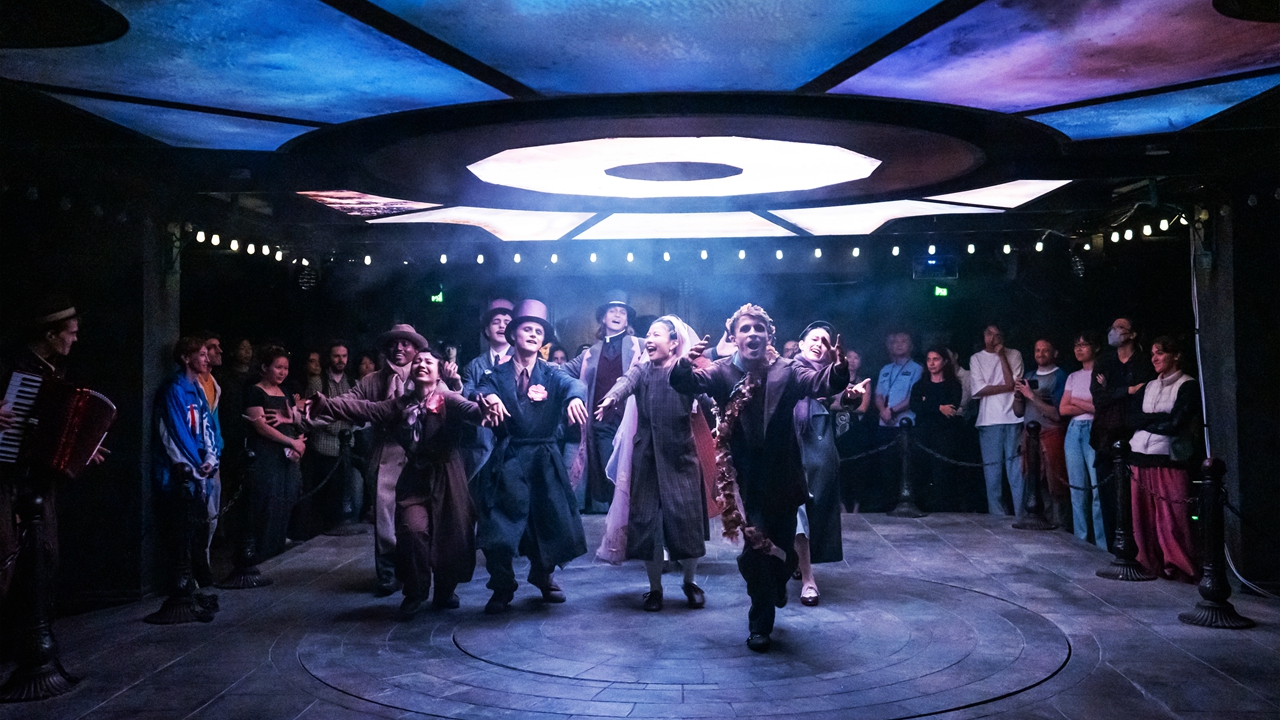
The cast performs the first "main storyline" sequence.
Then, without warning, the actors converged in the central square. The ambient, individual scenes coalesced into the first “main storyline” performance. What followed was a breathtaking fusion of physical choreography, evocative music, and raw drama.
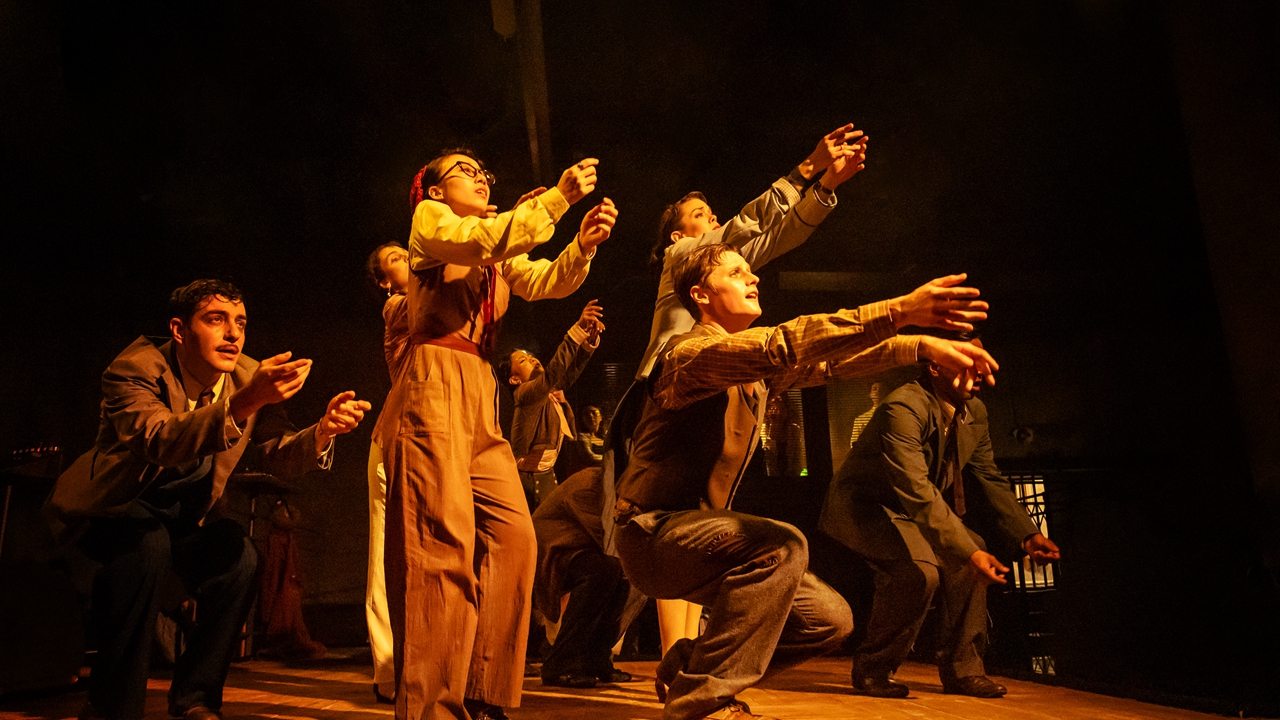
A "main storyline" performance.
It lived up to the promise of the program, which said, “The performance breaks away from traditional forms, using explosive and deeply expressive physical movements to drive the plot and convey emotional shifts, creating one powerful moment after another. Replacing words with the body, the actors tell stories through breath, rhythm, and gaze.”
It is very hard to describe because what it produced in me were visceral reactions and emotions that are not easily translated into words. You don’t just understand the characters’ struggles with love, desire, and solitude — you feel them.
From spectator to participant
This powerful physical language is the signature of director Lahav and the Gecko Theater, and it forms the core of “The Deal.” The plot itself draws inspiration from literary classics — Goethe’s “Faust” and Gogol’s “The Overcoat” — reimagining them in 1930s Paris.
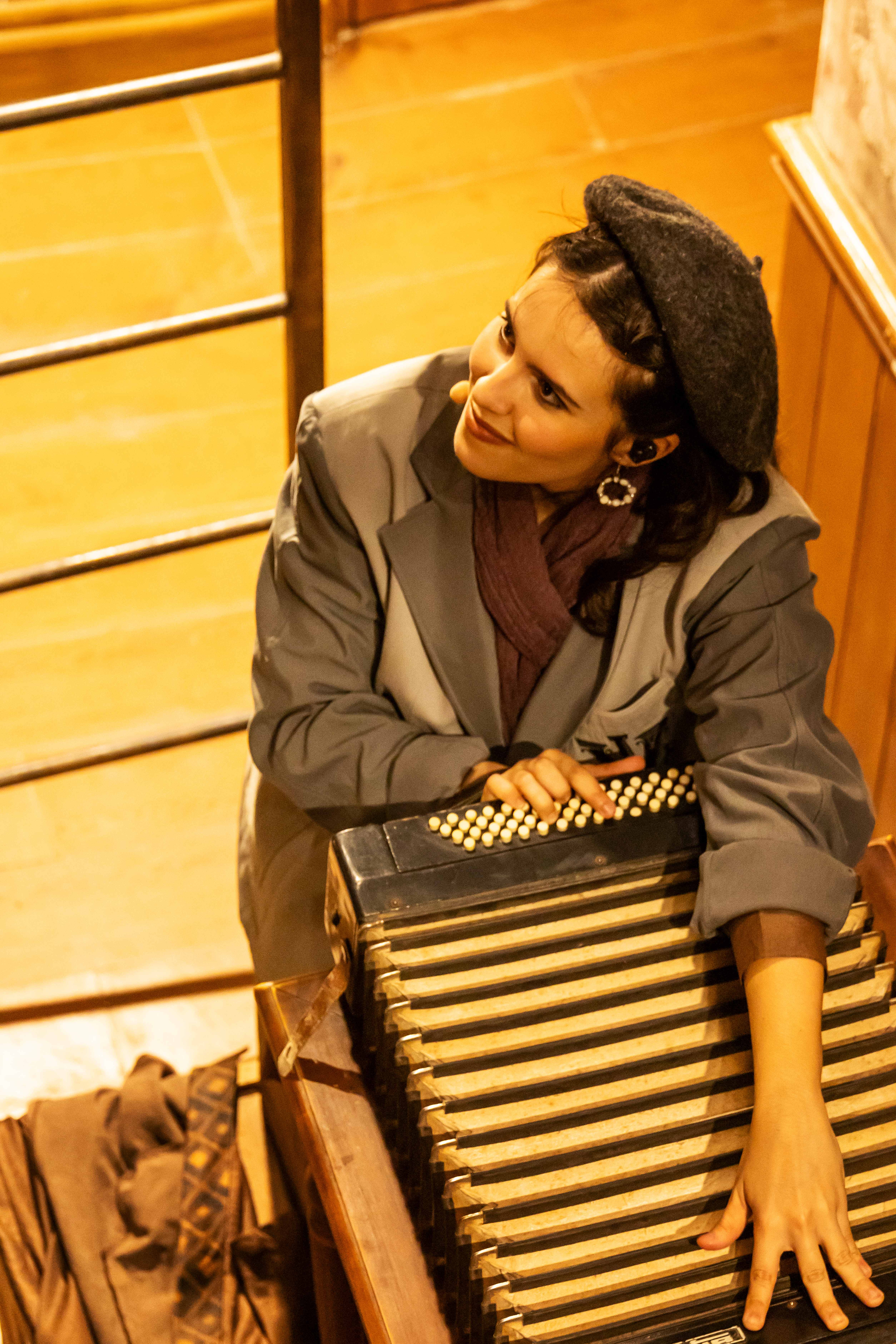
One of the actresses works in the office set.
We follow Marcel, a shy, low-level office worker who, in an attempt to win the affection of a beautiful colleague, makes a fateful pact with a devilish figure. But the way this story is told is anything but linear, and the audience frequently becomes entangled in the narrative.
One of the most arresting segments took place in an office space. An actor approached me and a few others, asking if we were the new interns. Answering “yes” on a whim, I was suddenly thrust into a cubicle with other audience members and given a task: print documents, stamp them, and hang them to dry. It was jarringly hyper-real.
Our new “boss,” a man whose promotion seemingly depended on our flawless work, inspected our efforts. When a mistake was found, one of my fellow “interns” was singled out and sanctioned. This went on for 10 minutes before the actors launched into another powerful, collective performance, using the entire office set — complete with the boss’s private, overlooking office — as their stage. Once these main narrative performances are complete, the audience is led into the next main performance space, which total eight.
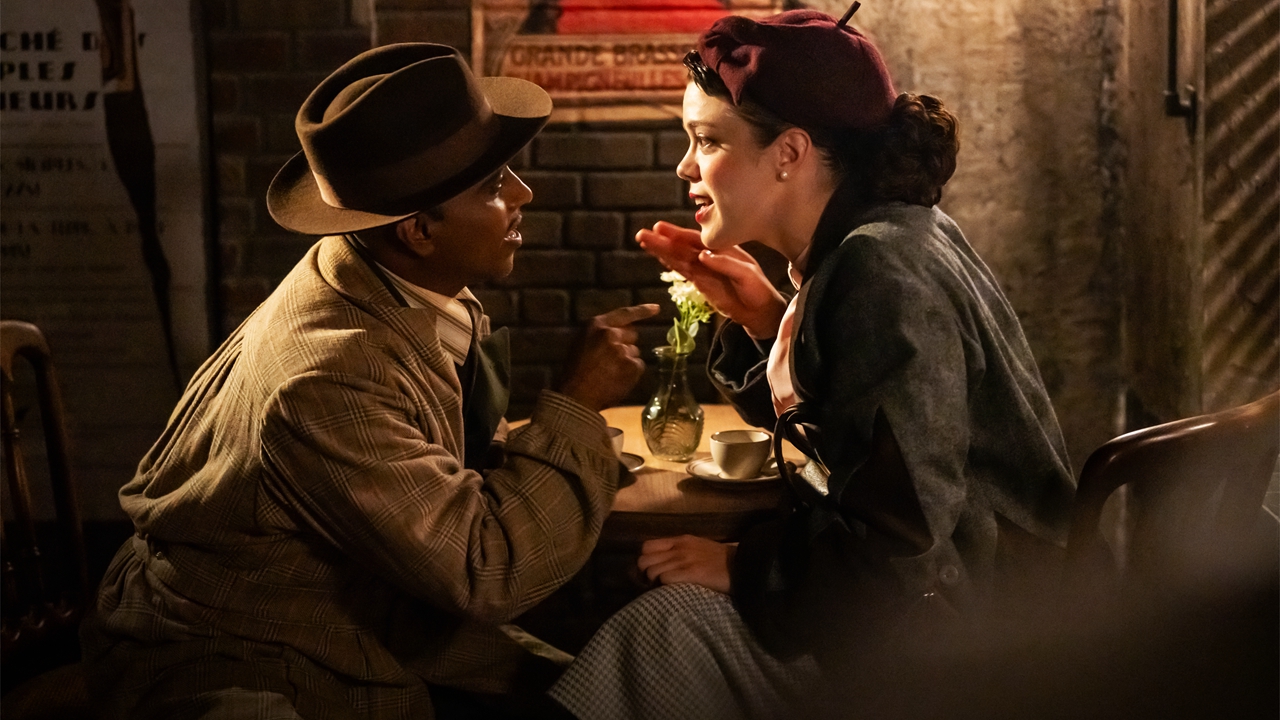
Saju Hari (L) and Natalie Gabrielczyk converse on a Parisian street.
Another memorable space was a Parisian cabaret, reminiscent of something from the movie “Moulin Rouge.” As we entered, actors were scattered about, decompressing after a grueling day at work. On a small stage, three musicians played cabaret-type music — one had an accordion, another a violin, and the third a cello. It was amazing to watch different scenes playing out in different parts of the space. I was particularly captivated by one of the office workers from the previous scene, now drinking heavily and hilariously, but poignantly, trying to kiss her coworkers.
The show continued this way for two hours, a duration that passed in a heartbeat. The sensory overload was immense, a whirlwind of surreal imagery, interpretivism, and impressionism. One moment, you are a fly on the wall, and in the next, while exploring a shop, you find yourself thrust into the role of a shopper witnessing a passionate, silent argument between two actors, their deep emotion and turmoil conveyed with a captivating physicality that transcends language. The action physically occurs in front of you, in back of you, and on your sides, all at the same time.
The storyline played out in multiple languages, and my interpretation of what transpired was probably very different from other audience members who saw different tableaus and scenes than I did. Much of the plot is reliant on the universally understandable aspects — body language, emotion, speech intonation, and imagery.
Maybe this is the most powerful and most frustrating aspect — is your interpretation of the events correct or is it not? Perhaps that is what the creators wanted, something highly dependent on an audience member’s point-of-view, experiences, and emotions. It leaves much to the imagination, fully pulling you in to solve what is transpiring around you.
“The Deal” is a bold, provocative, and profoundly moving piece of art. It is a testament to the vision of its creators and the incredible talent of its international cast. More than that, it is a landmark event for Shenzhen, offering entertainment that is both intellectually stimulating and deeply personal.
It asks not just for your attention, but for your presence — it invites you to find the center of action and walk up to it. As the program noted, “Multilayered narratives interweave into distinct trajectories. The joys and sorrows of the characters serve as mirrors reflecting fragments of ourselves. Flowing with the story, you will resonate with them and converse with your own soul.”