
 Share
Share


 Print
PrintSpecial report chronicles Shenzhen literature
Writer: | Editor: Lin Qiuying | From: Shenzhen Daily | Updated: 2025-11-03
Some say literature mirrors a city; some say a city nourishes its literature; others say literature reflects a city’s soul. As the founding of the Pengcheng Literary Institute draws near, Book Capital, a magazine under Shenzhen Publishing Group, dedicates its latest issue to tracing the 45-year journey of Shenzhen literature, launching a special feature titled “An Institute Founded on Literature: Shenzhen’s Expression of China’s Narrative.”
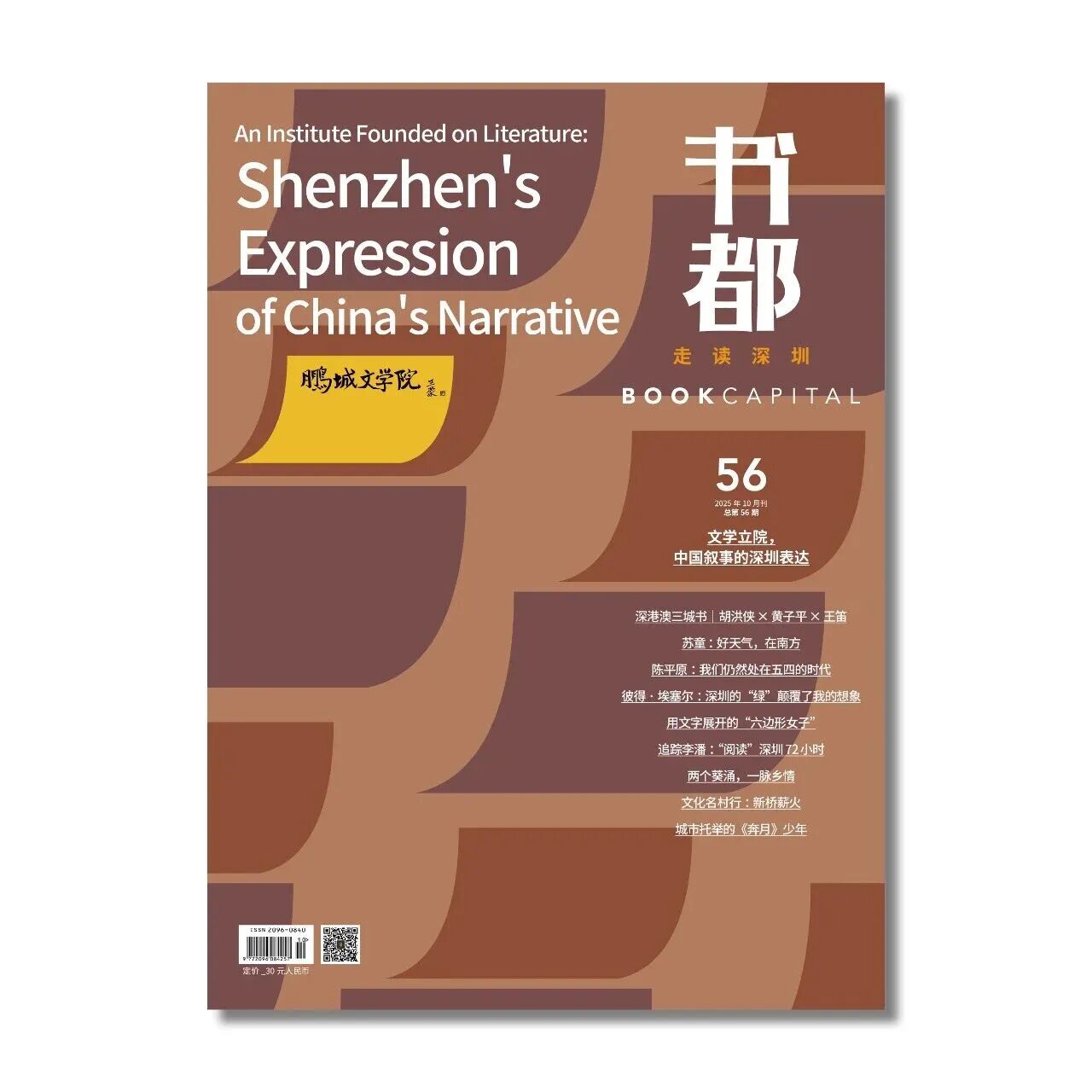
Photos from Book Capital's WeChat official account
The Pengcheng Literary Institute, scheduled to debut at the 26th Shenzhen Reading Month, aims to become a “literary institute of the people” in the new era, enabling everyone living in Shenzhen to become a “playwright” of the city’s stories.
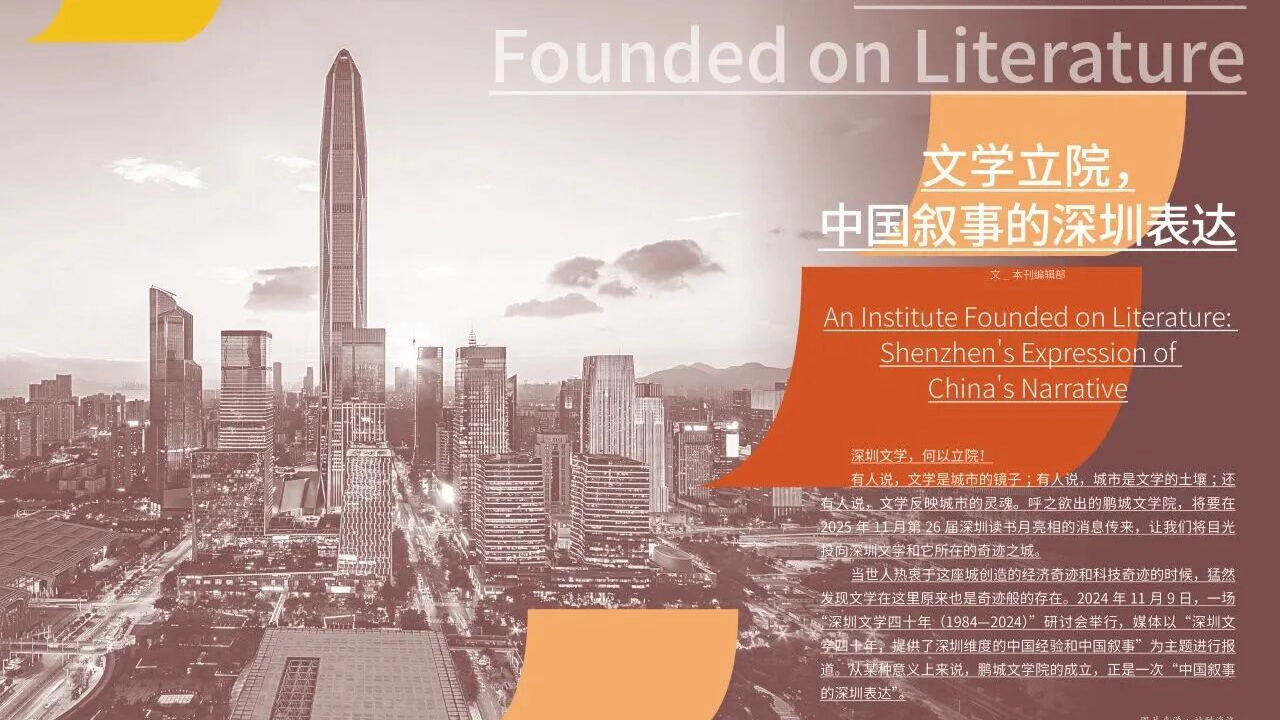 Ahead of its founding, Book Capital turns its gaze to Shenzhen literature and the miracle city it inhabits, systematically tracing its national mission, historical interpretation, spiritual strength, and its citizens’ collective creative energy.
Why and how to found a literary institute in Shenzhen
Why does Shenzhen choose this time to found a literary institute? What kind of literary institute does the city need? The first question finds its answer in the character of Shenzhen literature; the second, in the reflections of leading writers from different perspectives.
“Shenzhen is a crucial window for the world to observe China’s reform and opening-up, and an equally important one for China to showcase its achievements to the world,” said Tang Hanlong, chairman of Shenzhen Publishing Group.
How should that observation be made? How should that story be told? Literature, he noted, is an important mirror. The founding of the Pengcheng Literary Institute, coinciding with Shenzhen’s 45th anniversary, carries a national mission: to make Shenzhen literature more visible to the world — and more importantly, to make Shenzhen’s stories the stories of the world.
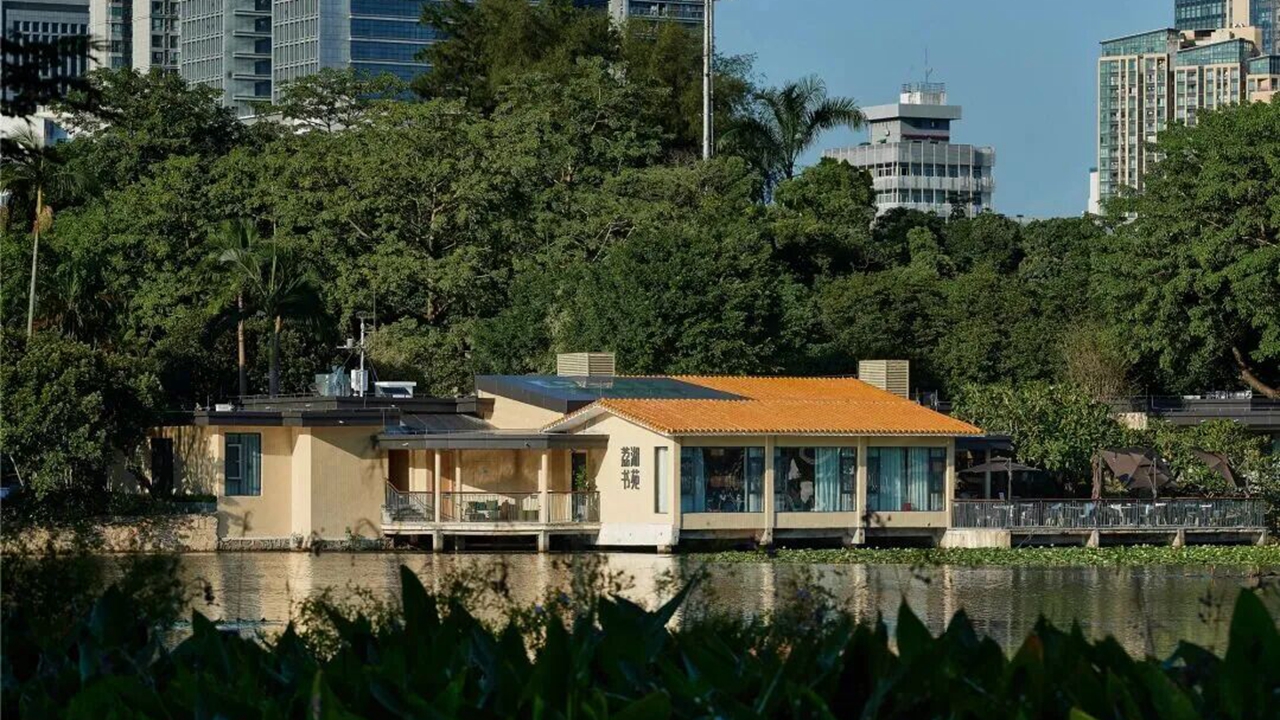
A “city of literature” is in the making. According to literary critic Liao Lingpeng, who, after years of observation, found that the “pioneers” from all walks of life have endowed Shenzhen literature with a landscape of extraordinary diversity, forming a distinctive logic of “labor first, literature follows.” When this logic evolves into a form of spiritual confidence, it offers an answer to why Shenzhen deserves a literary institute.
What kind of literary institute does Shenzhen need? The question goes beyond institutional goals — it concerns the very soul of the city’s literature. To explore this question, Book Capital invited renowned writers Li Jingze and A Lai, Hong Kong and Macao cultural scholars Wu Zhiliang and You Jiang, as well as young writers Cai Chongda, Cai Dong, Chen Qiufan, and Hai Ya, to engage in a multidimensional dialogue on the value of the Pengcheng Literary Institute.
When waves of thought converge, the course of the future becomes clearer. The Pengcheng Literary Institute will mark a new milestone for Shenzhen literature.
A 40,000-word chronicle of a city’s literary development
At the early stage of preparation, Shenzhen Publishing Group organized a comprehensive survey of Shenzhen literature. Penned by Liao Lingpeng, the 40,000-word report, titled “An Atypical Chronicle of the 45-Year Growth of Shenzhen Literature,” systematically reviews Shenzhen literature from aspects such as its evolution, the relationship between writers and the city, the platforms and ecosystems shaping its expression, and its global presence. It reveals the literary energy that has driven the city’s citizens — a force transforming action into spirit.
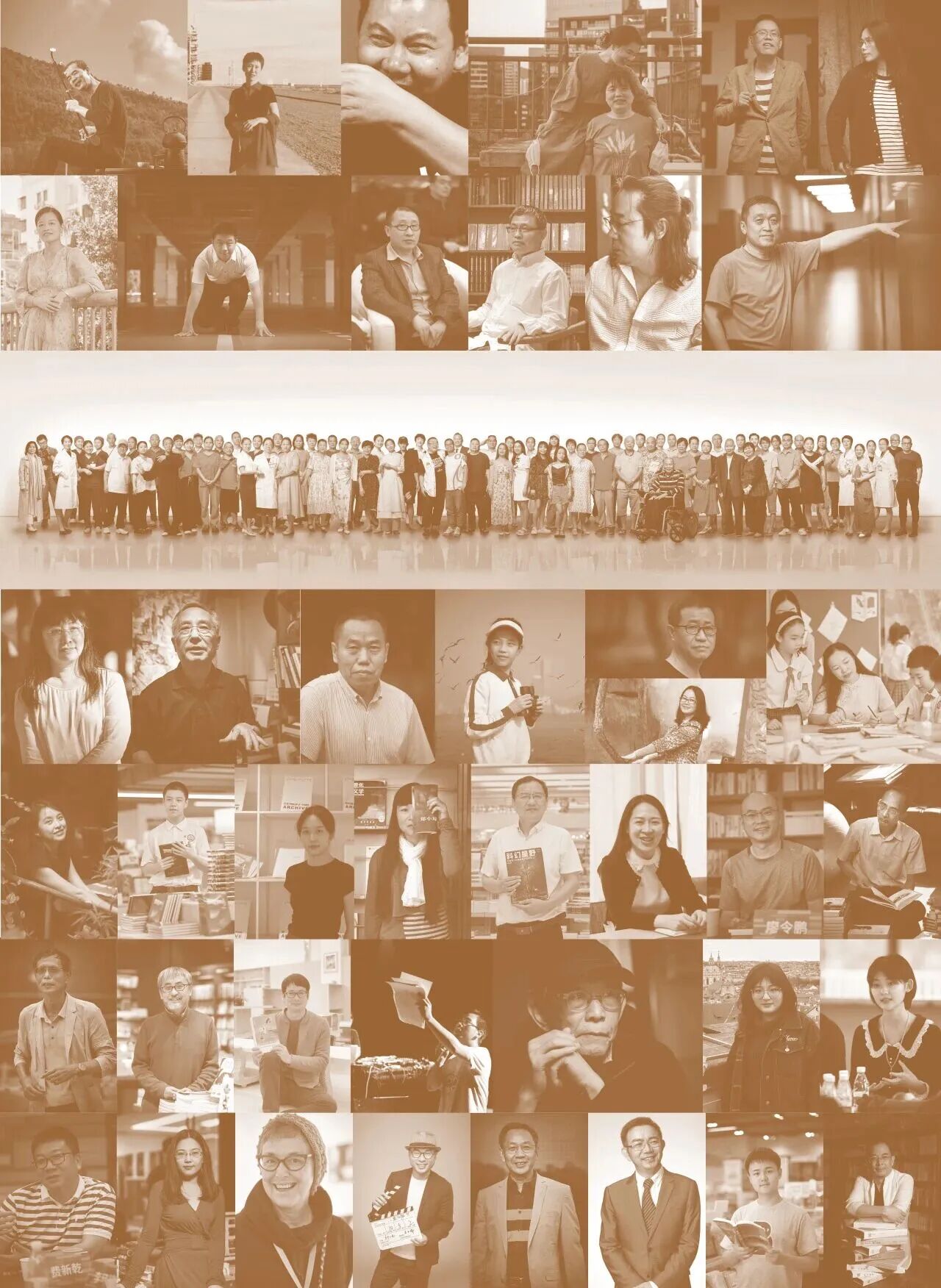
Every city has its own distinctive trait — one that often lingers in its literature and art. The 45th anniversary of the establishment of the Shenzhen Special Economic Zone is the brilliant interpretation on a blank sheet of paper by its people. Shenzhen literature, too, is an interpretation on that piece of paper. Reform and opening-up, along with the rise of a new city, form its unique context; pioneering spirit and inclusiveness shape its spiritual essence. Shenzhen literature is a history of evolving themes and narrative paradigms centered on urbanization and modernization. Over 45 years, Shenzhen’s writers have followed the city’s pulse, unfolding literary narratives that capture the myriad lives and boundless possibilities here.
As General Secretary Xi Jinping pointed out at the Forum on Literature and Art in 2014, the people are both creators and witnesses of history. The development of Shenzhen literature is, in essence, a history of people’s writing and their lives. Each chapter holds the emotions and destiny of ordinary individuals — each person is both an “author” and a “character” in the city’s story.
How far is Shenzhen from becoming a 'city of literature'
In a technologically advanced, intellectually diverse, and rapidly evolving city like Shenzhen, the development of literature is closely interwoven with the city’s ecology. Shenzhen literature is now in a phase of flourishing vitality. From the industrial experiment of “Literature +” to its aspiration toward the title of a “city of literature,” Shenzhen’s literary future is rich with promise.
The “Shenzhen Literature +” phenomenon that has emerged in recent years represents not only a unique cultural landscape but also an unprecedented industrial experiment. The exploration of combining literature with games, films, theater, animation, technology, design, and industries has offered valuable models for the innovative development of Chinese literature.
In discussing the relationship between literature and city, the concept of a “city of literature” has become an important benchmark. As a young immigrant city known for openness, inclusiveness, and innovation, Shenzhen gathers talents from across the country and releases vigorous cultural energy. Constant creativity, innovation, and imagination have provided fertile soil for literary creation. For this reason, Shenzhen has become, in many hearts, a city likely to attain that title.
“The title of ‘city of literature’ is not unattainable. Shenzhen has its own distinctive strengths and should form a narrative of its own advantage,” said literary critic Yu Aicheng. He believes Shenzhen is fully capable of reshaping urban culture, setting new cultural benchmarks for the future, and has already left firm and clear footprints on this path.
While the world marvels at Shenzhen's economic and technological miracles, Book Capital guides readers to look back on the roots and future of Shenzhen literature — literature here, too, is also a kind of miracle. In a sense, the founding of the Pengcheng Literary Institute also represents a “Shenzhen expression of China’s narrative.”
Book Capital is a public-interest local cultural magazine supervised by Shenzhen Publishing Group and published by Shenzhen Publishing House. Upholding the principles of being “down-to-earth, forward-looking, and mindful,” the magazine aims to serve as a “cultural handbook of the city,” dedicated to exploring Shenzhen’s cultural connotations, highlighting its cultural richness, and guiding reading from books into the deeper dimensions of the city itself.