
 Share
Share


 Print
PrintShenzhen and AI: the city that thinks
Writer: Luigi G. | Editor: Zhang Chanwen | From: Original | Updated: 2025-11-18
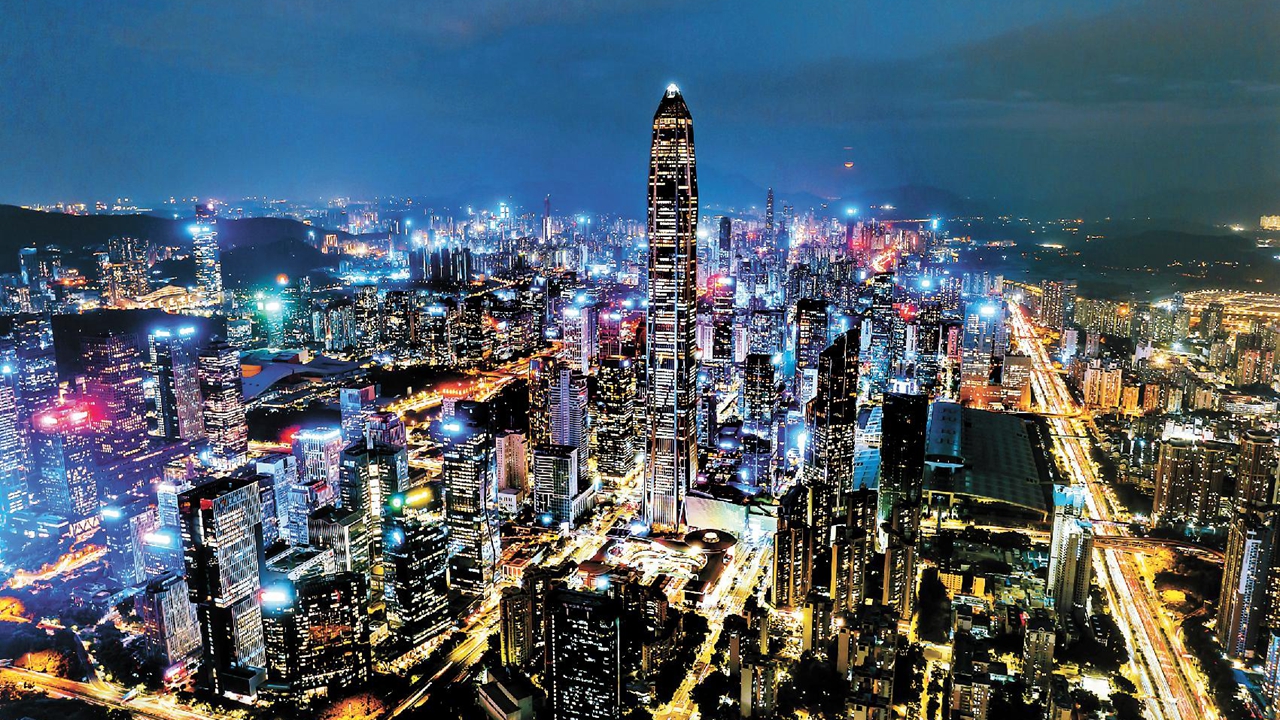
The night skyline of Shenzhen’s Futian CBD glows with dense clusters of skyscrapers, with the Ping An Finance Center rising prominently at the center. Shenzhen Evening News
From the top of Lianhua Hill, Shenzhen does not resemble a traditional metropolis. It looks more like a neural network. At night, districts light up like synapses, with thin pulses of light moving along the boulevards in the same rhythm as the city’s digital flows. Every tower is a node. Every street, a circuit. The result is a landscape that gives the impression of a city with a mind of its own — and in many ways, it truly is.
In the heart of the Futian District Data Bureau, that “mind” takes shape. A circular operations room is covered with screens monitoring, in real time, temperatures, metro movements, energy consumption, medical appointments, and pollution levels. A wall-sized display shows a multicolored map that changes every minute — a portrait of the city’s metabolism. A senior official, observing the screens with something close to paternal pride, captured it in a few simple words: “This is our digital heartbeat. Shenzhen never sleeps, but it knows when to breathe more slowly.”
Shenzhen is one of the first cities in the world to transform digitalization into a fully fledged urban operating system. Artificial intelligence is no longer a project or an industrial sector: it is public infrastructure, quietly but decisively woven into the city’s daily life.
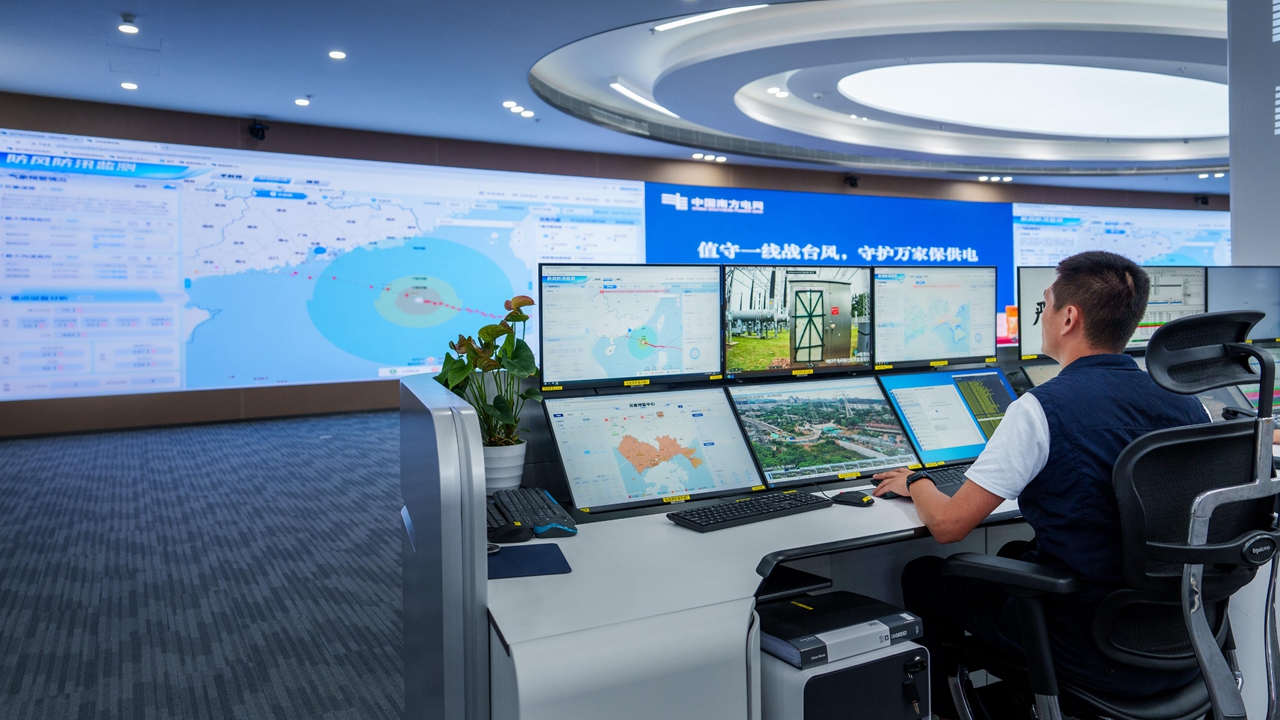
At the command center of Shenzhen Power Supply Bureau of China Southern Power Grid, staff work around the clock, monitoring Typhoon Higos and remotely inspecting power infrastructure to safeguard the city’s electricity supply Sept. 24. Photo by Huang Haipeng
A growing share of administrative processes — a large majority, according to local estimates — are now run by digital platforms in which AI plays a central analytical role. These systems do not simply gather data; they act on it. When traffic intensifies, bus routes recalibrate automatically. When a school reports an unusual spike in absences, the health engine cross-checks hospital data and issues an alert. When energy consumption rises, the grid adjusts in real time.
A municipal engineer summed up the city’s philosophy with precision: “This is real-time governance. Every decision is an A/B test between past and future.” The result is a predictive model of urban management that reduces waste, improves continuity, and enables the city to anticipate issues rather than react to them — a capability increasingly essential for major cities in China and around the world.
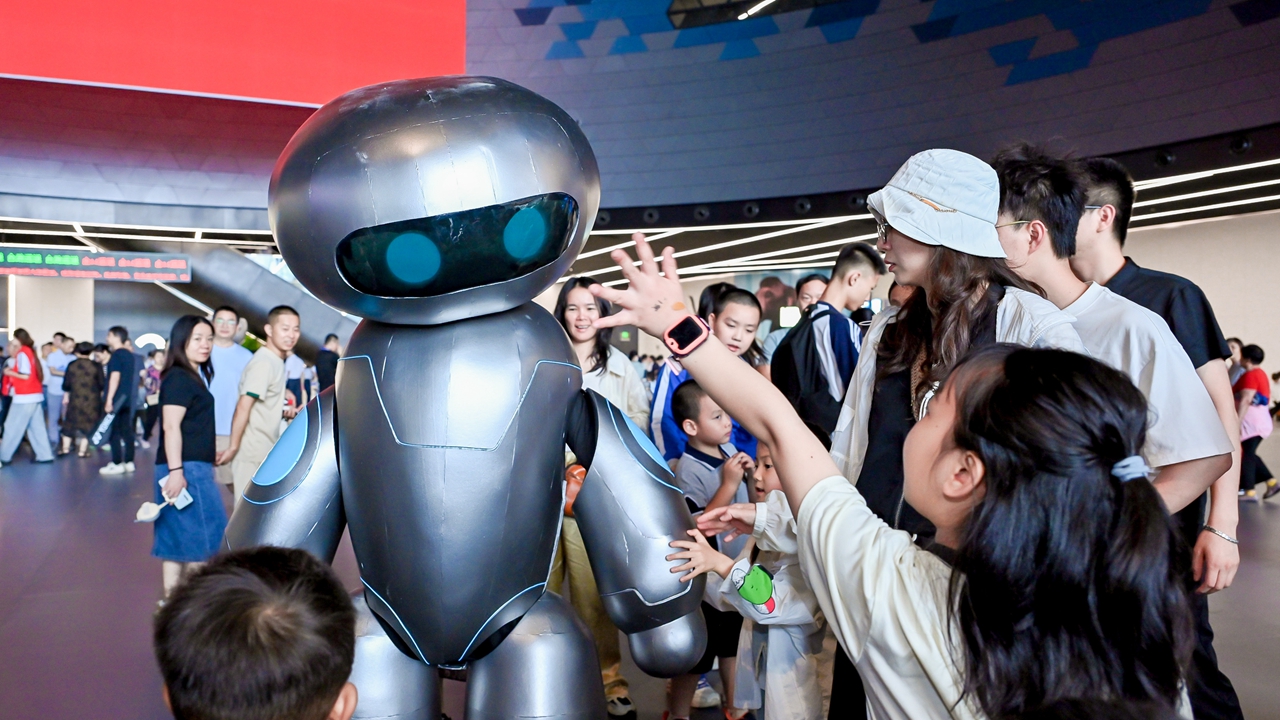
Visitors interact with a robot at the Shenzhen Science & Technology Museum. Photos courtesy of the museum
AI in Shenzhen does not live only in data centers. It lives in the daily habits of its residents. In Luohu, an elderly woman proudly showed me her smartwatch, which tracks her sleep, prompts her to walk, and reminds her to take her medication. “It’s like having a doctor on my wrist,” she said.
In the schools of Longgang, children learn mathematics through small programmable robots, while teachers adapt their lessons using real-time learning analytics. “AI isn’t a subject,” a teacher told me. “It’s a grammar everyone needs to speak.” Even municipal services behave increasingly like an intelligent interface. Citizens can report a pothole or a broken traffic light and receive almost immediate responses from automated systems. The city replies, assists — and, in a sense, converses.
But nowhere is Shenzhen’s transformation more striking than in Qianhai. If Futian is the brain of the city, Qianhai is becoming its global interface. Rising on the western shore, conceived as a strategic hinge between Shenzhen and Hong Kong and as a flagship platform of the Greater Bay Area, Qianhai embodies the city’s next leap forward: a place where governance, finance, and innovation converge into a single urban logic.
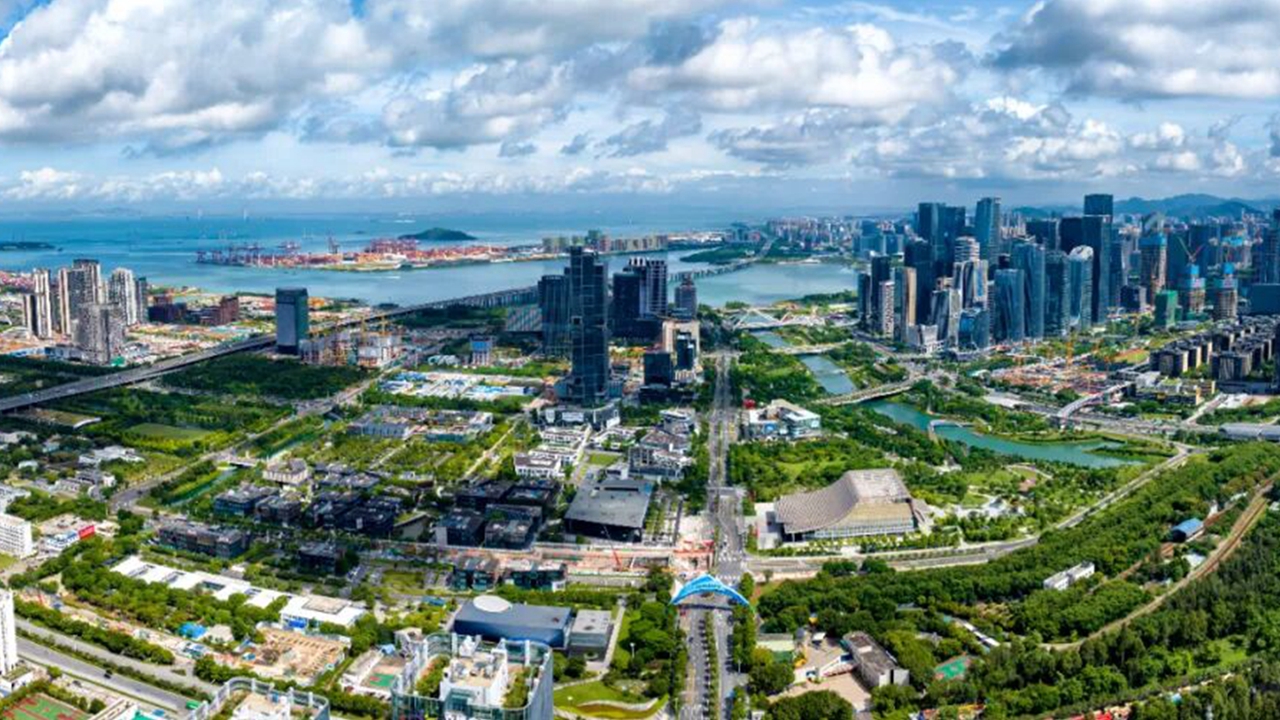
An aerial view of Qianhai. Courtesy of Qianhai Authority
Qianhai is not simply a financial district: it is a regulatory laboratory. Here, cross-boundary data flows, digital finance, smart logistics, international arbitration, and AI-enabled public services are tested on a scale unmatched anywhere else in China. Its skyline — new, ambitious, deliberately experimental — reflects this purpose. Buildings are designed not only as workplaces, but as programmable infrastructures: sensor-infused façades, digital twins of entire blocks, autonomous logistics nodes linking ports, free-trade facilities, and metro lines.
For companies, Qianhai acts as a gateway zone, where mainland regulatory frameworks meet Hong Kong’s legal and financial systems, creating unprecedented room for cross-border innovation. For the Greater Bay Area, it functions as an integrator, the operational mechanism that enables Guangzhou, Shenzhen, and Hong Kong to behave like a single economic and technological corridor. And for the world, Qianhai is emerging as one of Asia’s most compelling urban experiments: a place where artificial intelligence, global business, and urban governance converge.
Many of Shenzhen’s most advanced companies now choose Qianhai as their base for international operations, taking advantage of its regulatory openness, its proximity to Hong Kong, and its role as a testing ground for future policy models.
Behind this civic architecture lies one of China’s most dynamic industrial engines. Public estimates suggest that Shenzhen hosts more than 2,000 AI-focused companies, with a complete value chain that spans data and computing, robotics, drones, sensors, and applications for healthcare, logistics, and education. In 2024, the city’s “core layer” of the AI industry reached an estimated value of more than 76 billion yuan (US$10.73 billion)— a growth pace that places Shenzhen among the world’s most important AI hubs.
Qianhai’s emerging ecosystem further accelerates this trajectory, attracting global investors and positioning the district as a new anchor point in the international AI value chain.
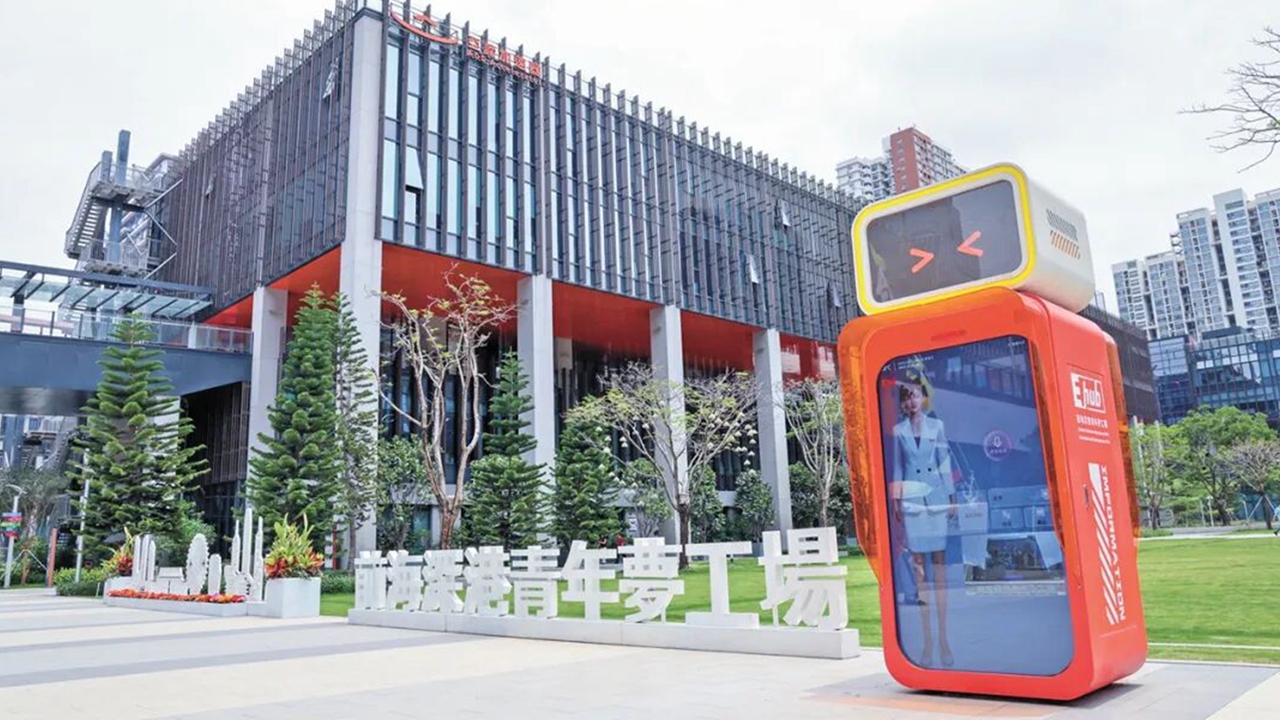
The Qianhai-Shenzhen-Hong Kong Youth Innovation and Entrepreneur Hub, a platform for closer Guangdong-Hong Kong cooperation, is seen in this April 23, 2025 photo. File photo
Shenzhen may be one of the first cities to embed artificial intelligence across the entire lifecycle of urban life — not as a tool, but as a logic. It is a place that produces AI and thinks with AI, and this dual identity makes it a global case study. Shenzhen’s experience shows how AI can raise living standards, reduce inefficiencies, and prevent crises. But it also offers a deeper lesson: a city is not defined by its sensors or its platforms, but by the values it chooses to encode within them.
For Europe, the implications are clear. Shenzhen demonstrates that AI can function as public infrastructure — a driver of collective prosperity. Qianhai adds an additional dimension: the possibility of designing regulatory, financial, and technological frameworks that accelerate innovation rather than constrain it. Together, they remind us that the true challenge of the twenty-first century is not to build smart cities, but aware cities: urban systems that use technology not to automate society, but to elevate it.
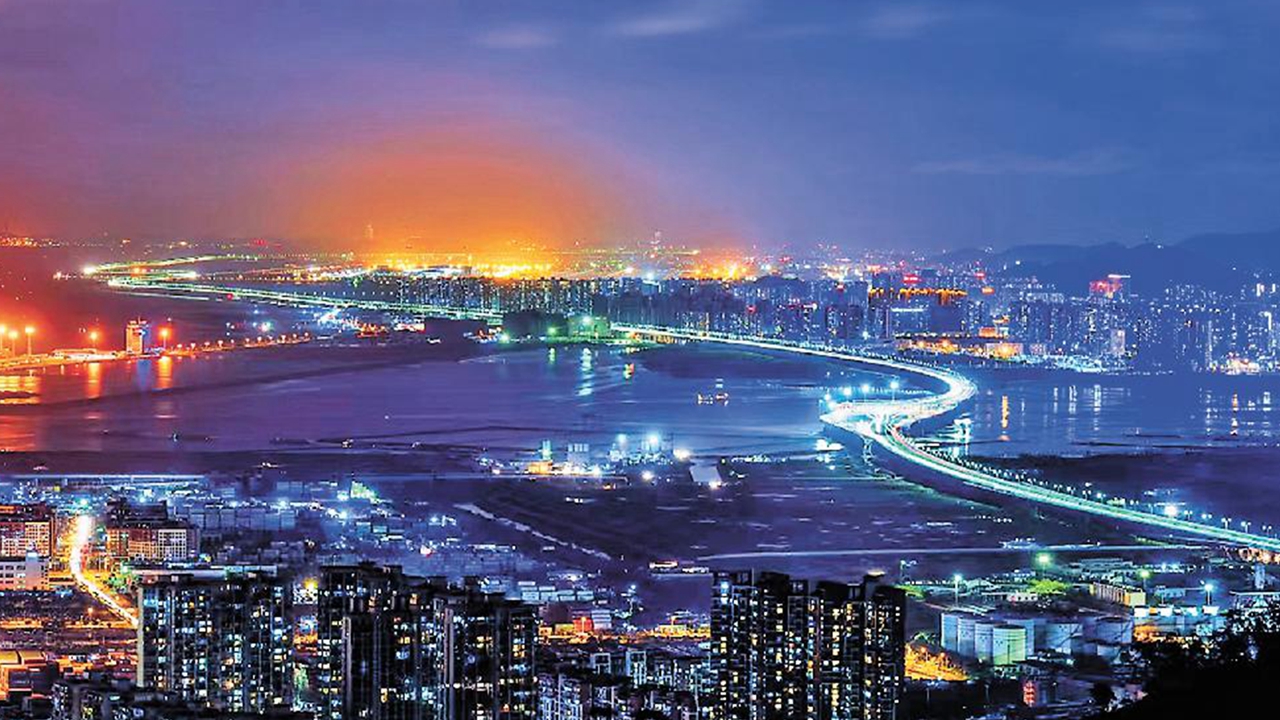
A night view of Shenzhen’s western coastline. Daily Sunshine
Shenzhen — and especially Qianhai — is already moving in this direction. Its journey is both a benchmark and an invitation: to imagine cities that think faster, serve better, and remain profoundly human.
A city that thinks is an achievement.
A city that thinks with purpose — that is the true measure of progress.