
 Share
Share


 Print
PrintMeticulous copies reveal Palace Museum craft
Writer: Cao Zhen | Editor: Lin Qiuying | From: Original | Updated: 2025-11-28
Shenzhen Museum has opened an exhibition presenting 101 exquisite hand-painted reproductions of ancient painting and calligraphic masterpieces from the Palace Museum in Beijing.
These meticulous copies are far more than simple reproductions: they represent a fusion of art and technology, have been praised as “second only to the originals,” and allow scholars to study the delicate details of China’s artistic legacy up close.
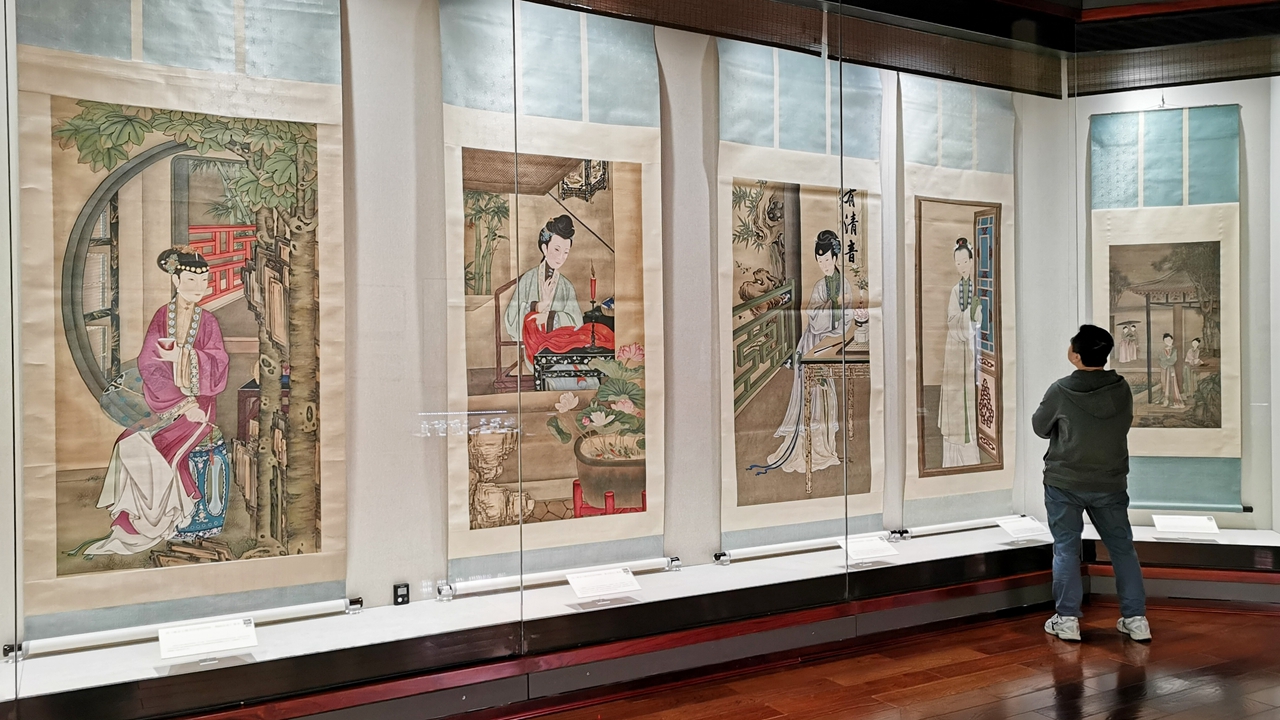 A visitor admires paintings at the exhibition at Shenzhen Museum’s ancient art division. Photos by Cao Zhen unless otherwise stated

A visitor takes photos at the exhibition.
Because ancient paintings and calligraphic works are highly susceptible to aging, creating faithful reproductions is vital for preserving cultural relics and transmitting traditional techniques. Copying to preserve originals has been practiced since the Eastern Jin Dynasty (317-420), with court-sponsored copying flourishing in the Tang (618-907) and Song (960-1279) dynasties.
Since the 1950s, the Palace Museum has seen four generations of painters hand-copying ancient masterpieces; this craft is now designated a national-level intangible cultural heritage. It encompasses a discerning eye, deft brush control, subtle techniques of color application and more.
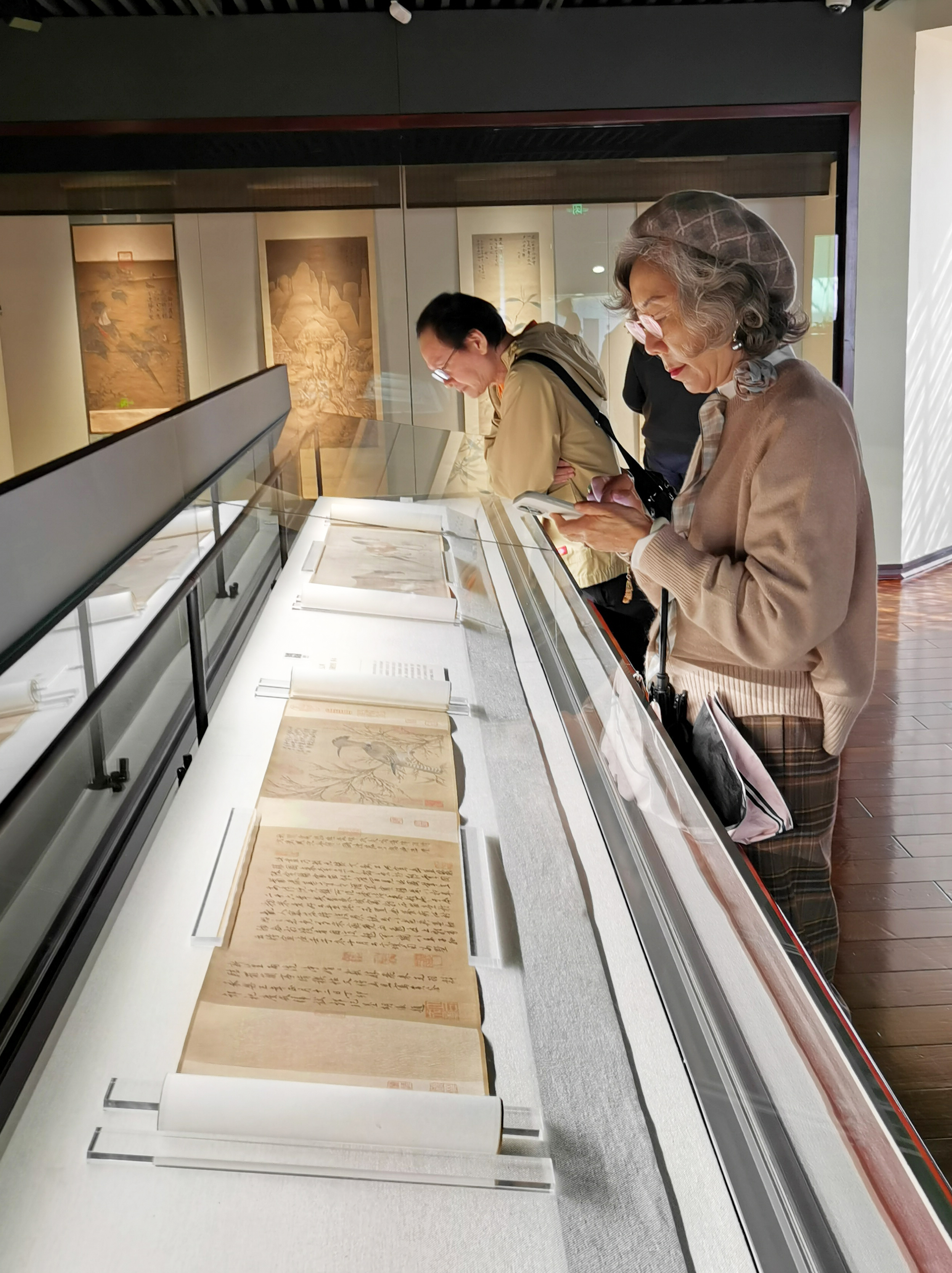
Visitors observe paintings and calligraphic works at the exhibition.
Copying at the Palace Museum demands exceptional precision. Extensive research is conducted into an original work’s provenance, style, and techniques before copying begins. While traditional analysis relied on visual inspection, today’s painters also use advanced, non-invasive tools — such as 3D microscopy, ultraviolet photography, and X-ray fluorescence scanning — to gain more accurate insights into materials, pigments, and methods. Copies are then executed on silk that closely matches the original’s texture.
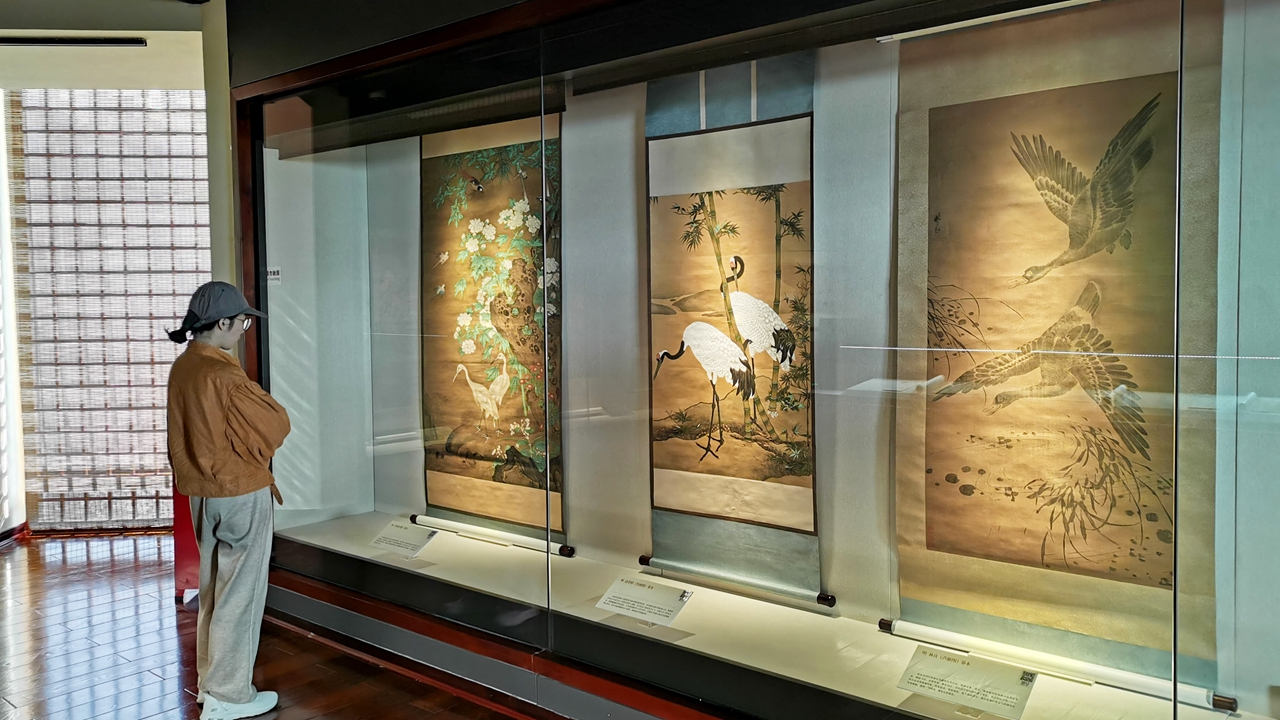
A visitor admires paintings at the exhibition.
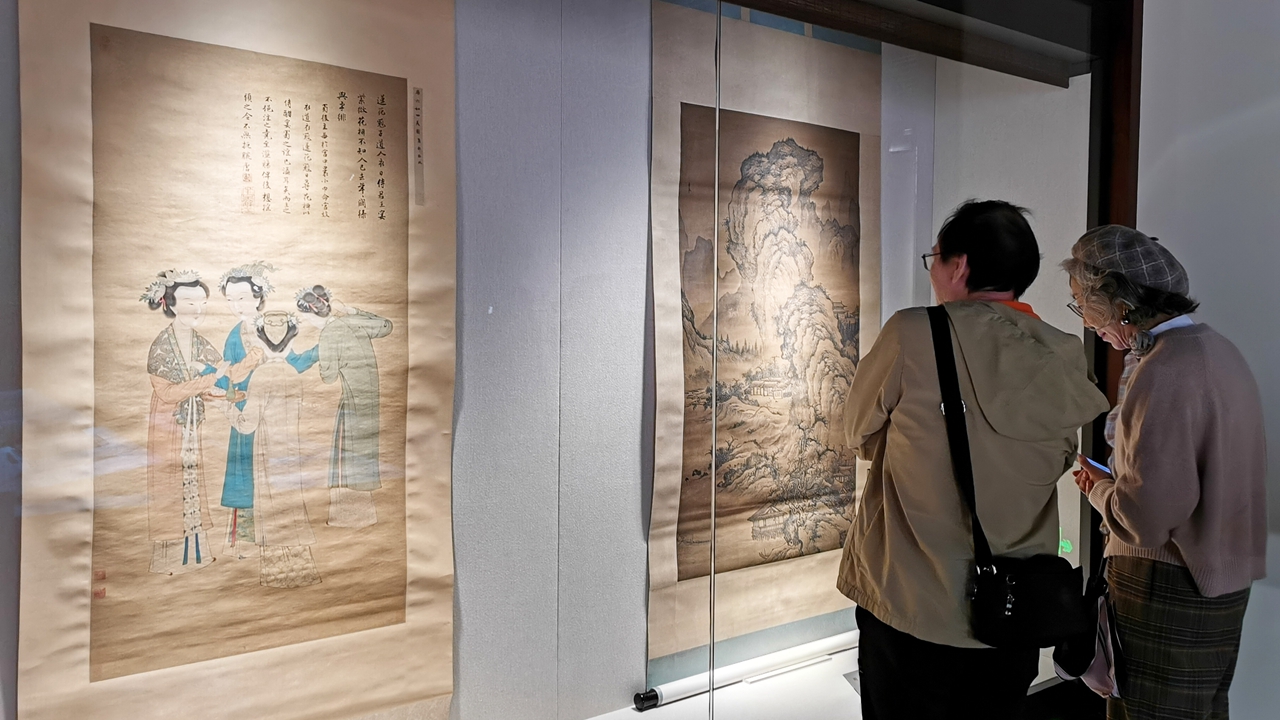
Visitors admire paintings at the exhibition.
The exhibition not only lets visitors appreciate these classic works but also reveals the historical, cultural, and technological contexts behind masterpiece-copying. An immersive video projection brings selected works to life, giving visitors the sense of entering the paintings. Touchscreens and interactive displays compare originals with copies and explain the reproduction process, while several photo spots invite visitor participation. Stories and insights shared by Palace Museum painters encourage deeper reflection on cultural transmission.
During the exhibition, lectures by Palace Museum experts and seal-carving workshops will be offered. For details, follow the Shenzhen Museum’s official WeChat account (ID: iszbwg).
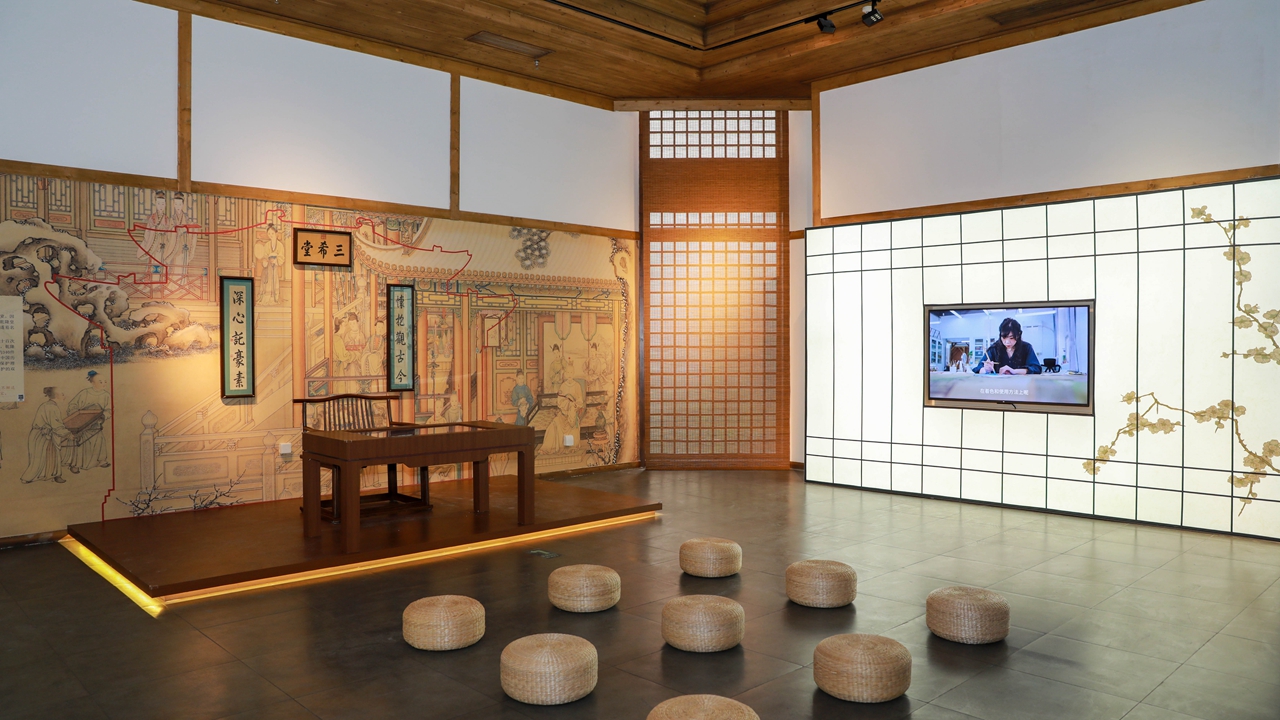
A glance at the exhibition. Photo by Ba Yuting
Dates: Through March 8, 2026
Hours: 10 a.m.-6 p.m., closed Mondays
Venue: Shenzhen Museum’s ancient art division, Tongxin Road, Futian District (深圳博物馆同心路馆-古代艺术)
Metro: Line 9 to Hongling South Station (红岭南站), Exit A