
 Share
Share


 Print
PrintExpat with 'panda blood' hits 100th donation milestone in SZ
Writer: Zhang Yu | Editor: Lin Qiuying | From: Original | Updated: 2025-12-01
When Heráclito Everson Biscaia Filho, a Brazilian expat living in Shenzhen, first donated blood at the age of 18 in his home country, he had no idea that his blood type was rare. 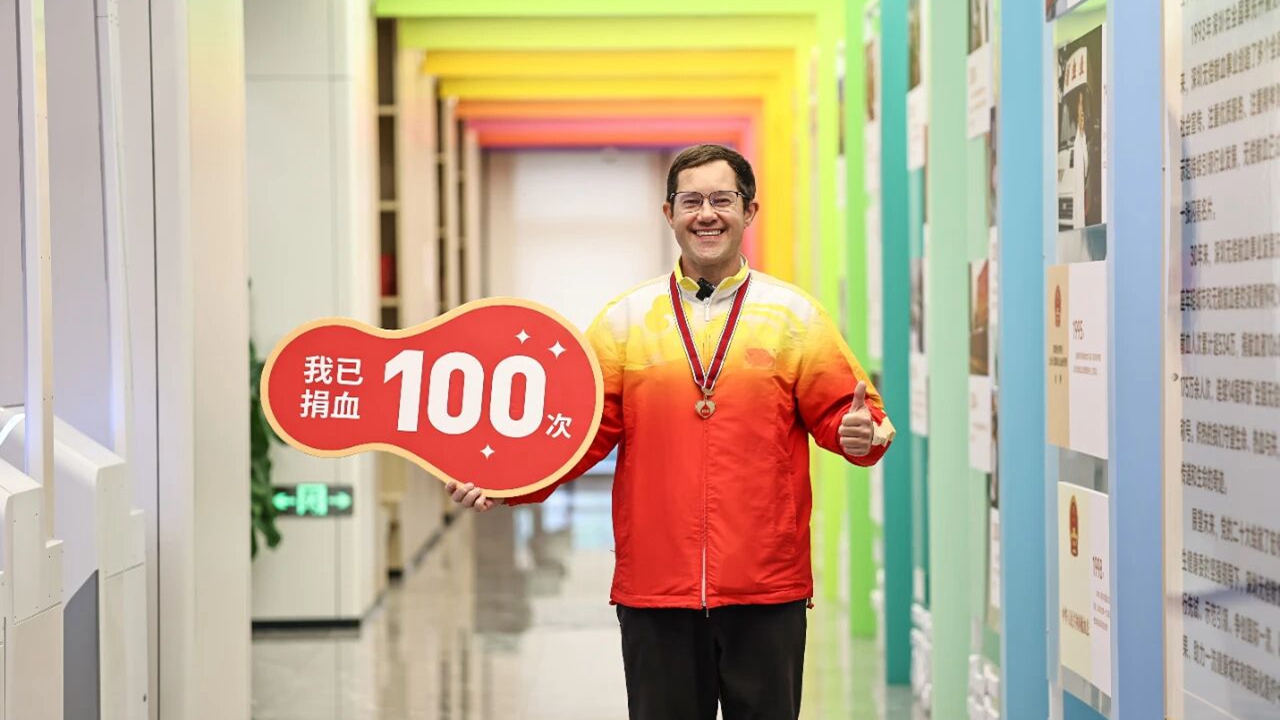 Heráclito Everson Biscaia Filho, from Brazil, celebrates his 100th blood donation at Shenzhen Blood Center yesterday, wearing his symbolic outfit for important moments: a jacket from the 2008 Beijing Olympics. Photos by Liu Xudong
It wasn’t until years later, at a blood donation center in Shenzhen, that staff told him he had Rh-negative blood — known locally as “panda blood” — a type so scarce it appears in just 0.3% of the Han Chinese population.
On Sunday, that discovery culminated in a remarkable act of dedication: his 100th blood donation in Shenzhen.
“It’s a privilege to be able to offer something of myself to someone else,” the Brazilian, who prefers to be called Hera, told Shenzhen Daily during an interview, reflecting on the milestone. “For me, it’s just two hours every two weeks. But for someone else, it can be the difference between life and death.”
For this special occasion, Hera chose to wear his prized possession: a jacket from the 2008 Beijing Olympics.
“While volunteering in Athens for the 2004 Olympics, I watched the Chinese team during the closing ceremony and was so inspired by their spirit that I decided I had to come to China for the 2008 Beijing Games,” he said. He bought the jacket years later, but it has become his symbolic outfit for important moments.
Hera, who moved to China in 2007 and now calls Shenzhen home, began donating blood in the city in 2013. What started as a routine soon turned into a mission. With his rare AB Rh-negative blood type, he occasionally receives urgent calls from the blood center — often due to emergencies like car accidents or mothers giving birth.
“When they call, I come,” he said. “It’s that simple.”
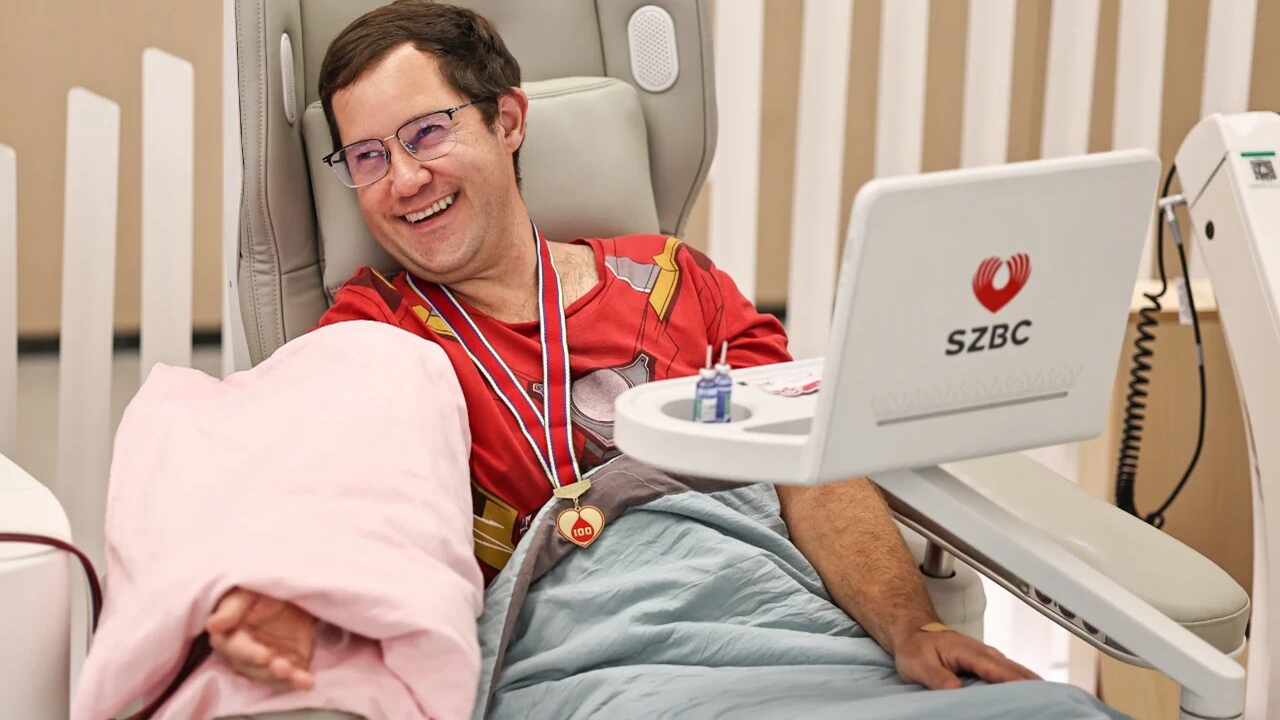
Heráclito Everson Biscaia Filho makes his 100th blood donation at Shenzhen Blood Center yesterday.
His commitment goes beyond occasional emergencies. By maintaining a strict health regimen — regular exercise, home-cooked meals, and ample sleep — Hera has turned blood donation into a lifestyle. He donates platelets every two weeks, a process he calls “a small act with a big impact.”
But his story is as much about belonging as it is about blood. Hera recalls feeling hesitant at first due to the language barrier. Yesterday, he describes the staff at the blood center as “a second family.” With a smile, he said, “If I don’t come, I’ll miss them.”
That sense of connection is central to his motivation. “I see this as a way to give back to Shenzhen,” he explained. “This city has given me safety, stability, and a wonderful quality of life. Donating blood is how I say thank you.”
Hera is not alone in his cause. Shenzhen, often called the “City of Volunteers,” has built a robust culture of blood donation, with millions of residents participating over the years. Still, Rh-negative blood remains in constant demand.
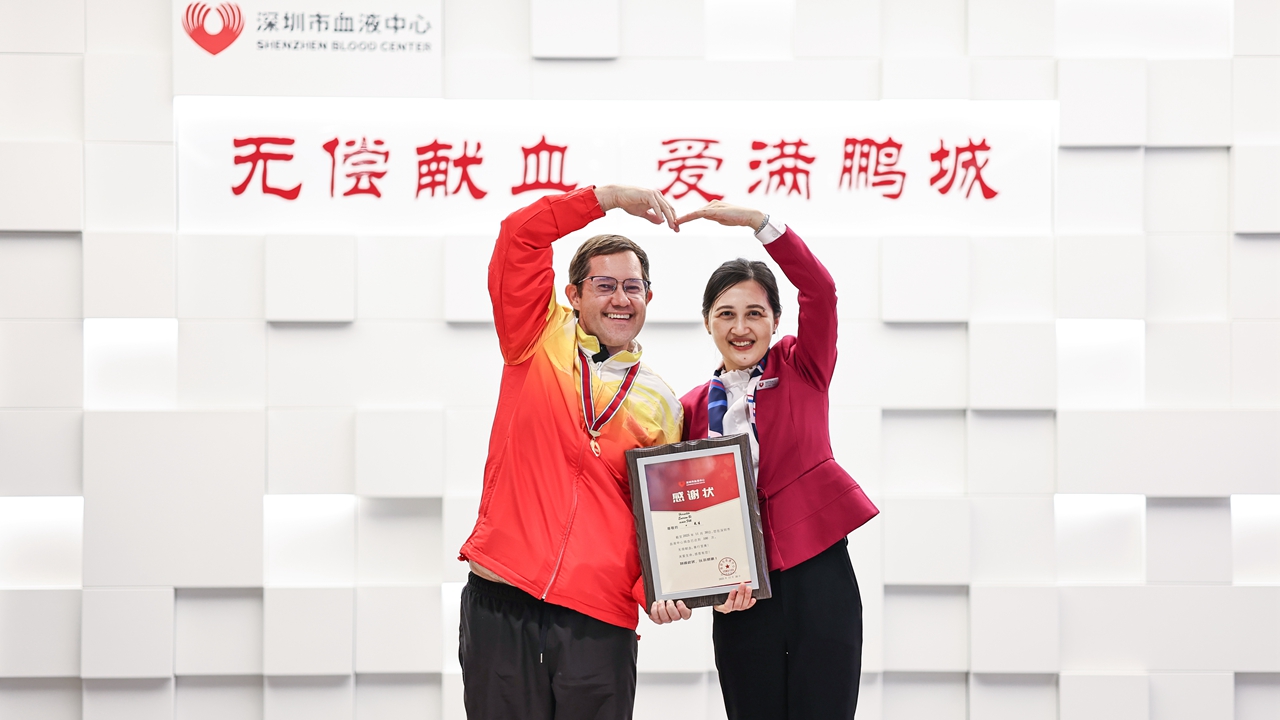
Heráclito Everson Biscaia Filho receives a certificate for his 100th blood donation and celebrates the achievement with a staff member at the Shenzhen Blood Center.
The presence of his friend Sunday added a new dimension to Hera’s milestone. His American friend, who is a music teacher in the city and had never donated blood before, came to offer moral support and was inspired to begin his own journey of blood donation.
“I’m glad I have a friend who came here for the first time today,” Hera said. “That can motivate other people to come here and do a little bit for others. For us, it’s just a little bit of time, but for someone in need, it means a lot.”
Hera hopes his story will inspire others — especially those with rare blood types — to step forward. “Come and try it,” he urged. “You don’t need superpowers to save a life. Just a little time and a willing heart.”
What’s next for the “panda blood” hero? “Maybe 150,” Hera said. “But for now, I’ll keep going and probably donate once a month.”