
 Share
Share


 Print
PrintRussian scholar cites SZ as blueprint for modern development
Writer: Zhang Yu | Editor: Lin Qiuying | From: Original | Updated: 2025-12-03
A leading Russian scholar described Shenzhen’s transformation as a unique case of strategic, long-term investment that offers lessons for countries worldwide and asserted that a polycentric world order is rapidly taking shape.
In an interview with Shenzhen Daily during the 2025 Understanding China Conference in Guangzhou on Monday, Professor Feodor Voitolovsky, director of the Institute of World Economy and International Relations at the Russian Academy of Sciences, analyzed global shifts and pointed to the southern Chinese metropolis as a developmental model.
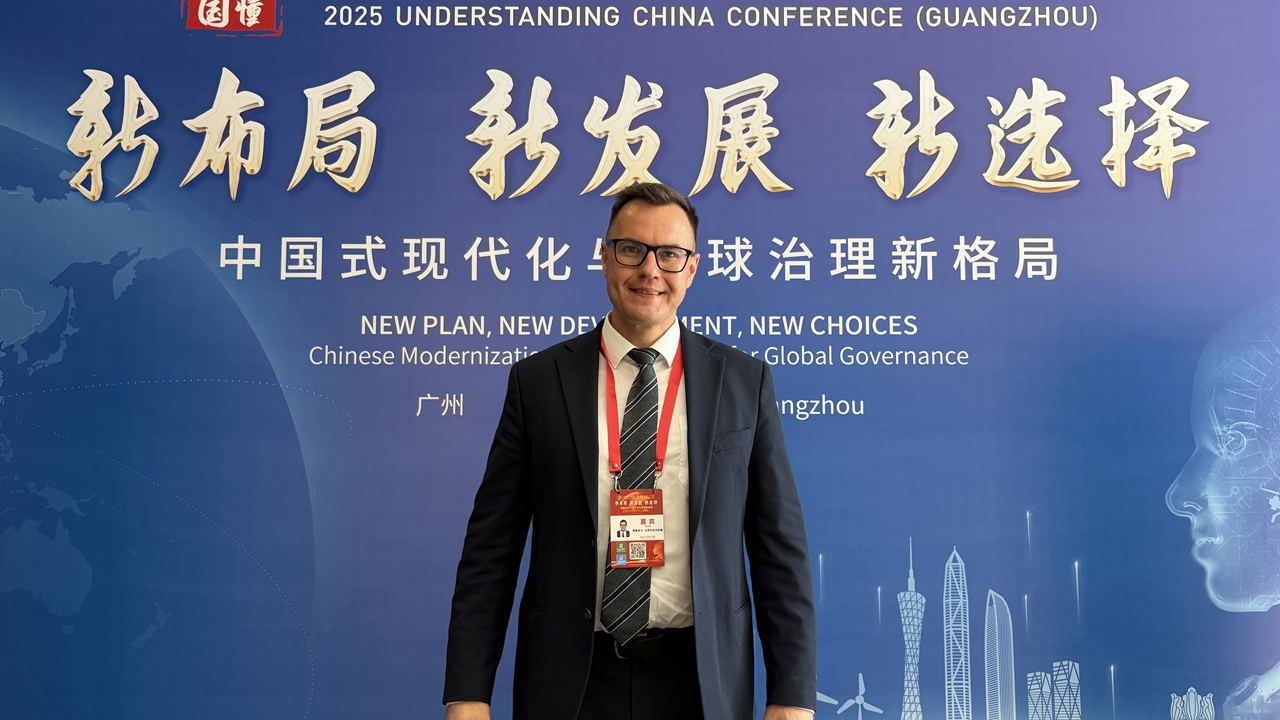
Professor Feodor Voitolovsky, director of the Institute of World Economy and International Relations at the Russian Academy of Science, poses for a photo during the 2025 Understanding China Conference in Guangzhou on Monday. Zhang Yu
Voitolovsky argued that economic and political power is redistributing globally. “The world order is quickly changing,” he said. “The GDP of BRICS countries is now supassing the GDP of G7 countries.”
He said the international system is becoming “more and more polycentric,” moving beyond decades of U.S.-led dominance due to the growing influence of China, Russia, India, and Brazil. While post-World War II institutions like the U.N. remain significant, new structures like BRICS and the Shanghai Cooperation Organization are creating a more diversified architecture.
“The more open and inclusive structures like [the] Shanghai Cooperation Organization are all suggesting a broader understanding of security,” he said, contrasting it with exclusive alliances.
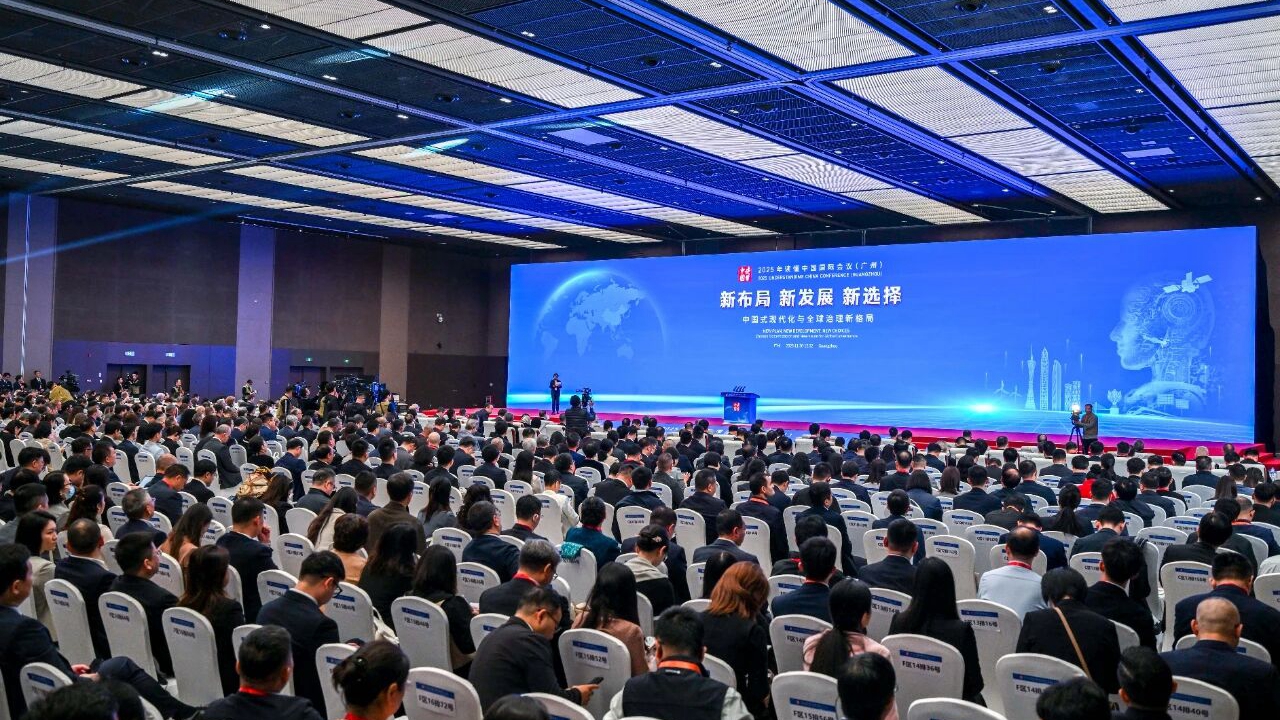
Participants attend the 2025 Understanding China Conference in Guangzhou on Monday. Xinhua
When asked how localized conflicts influence the international system, Voitolovsky focused on Ukraine, describing the ongoing conflict as a symptom of a “deep contradiction” in European security. He contended that Western attempts to expand NATO eastward ignored Russia’s security interests, leading to a prolonged confrontation.
A lasting resolution, he added, would require negotiating a new, more inclusive security framwork in Europe.
Having visited Shenzhen twice, Voitolovsky called it “a unique place” resulting from targeted investments not only in “absolutely fantastic” infrastructure, but also in innovation, technology, and science-education clusters.
“The environment for technological development that has been created in Shenzhen has, to a high extent, stimulated its economic growth,” said Voitolovsky, who has been invited to give lectures at Shenzhen MSU-BIT University.

An aerial view of Shenzhen Bay Park, where a vast coastal mangrove forest runs parallel to the city’s bustling business district. Shenzhen Evening News
The key lesson for other countries, he stressed, is the model of patient, strategic capital allocation. He praised the “readiness to invest in long-term processes” shown by both the Chinese government and private enterprises in Shenzhen, calling it “a very good example of cooperation between scientists and entrepreneurs.”
Voitolovsky cited China’s progress on environmental sustainability as a core aspect of its modernization, demonstrating how a country can balance rapid growth with social and ecological responsibility.
On global governance, he suggested China’s rise supports a more multipolar system. The development path of China and other countries of the Global South, he noted, presents both a challenge and an opportunity: to achieve economic growth while resolving social problems.
Attending the Understanding China Conference for the first time, Voitolovsky endorsed it as a “fruitful” platform for professional dialogue among international experts, which is essential for mutual understanding and common initiatives.
The conference, focused on China’s modernization path and global governance, concludes yesterday in Guangzhou.