
 Share
Share


 Print
PrintNew measures facilitate Hetao cross-border flow
Writer: Li Jing | Editor: Lin Qiuying | From: Shenzhen Daily | Updated: 2025-11-04
The National Immigration Administration (NIA) unveiled 10 new measures yesterday to facilitate high-quality development and further opening up, with Shenzhen positioned as a key testing ground for multiple innovative border initiatives.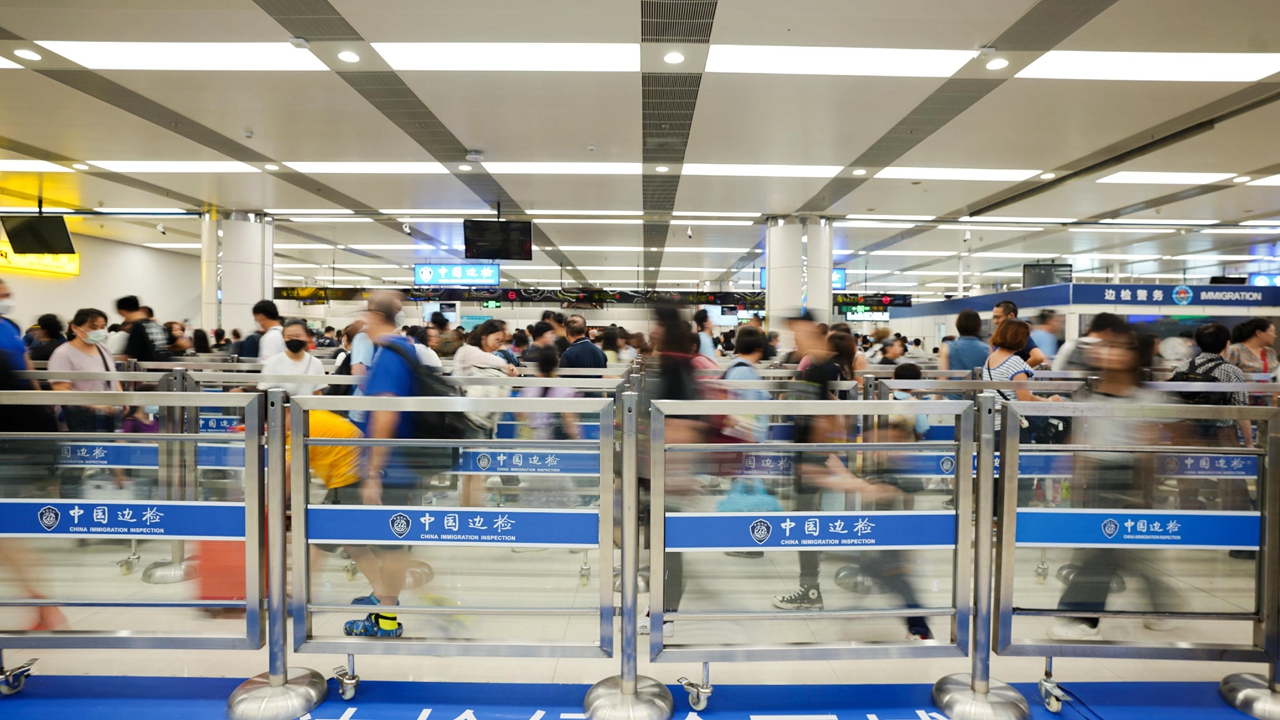
Travelers pass through the Shenzhen Bay Checkpoint amid steady cross-border movement. Photo courtesy of Shenzhen Bay Immigration Inspection Station
The Shenzhen Park of the Hetao Shenzhen-Hong Kong Science and Technology Innovation Cooperation Zone will receive substantial policy support, and dedicated channels are set to open at the Huanggang and Futian checkpoints starting Nov. 5.
Enterprise employees within the Shenzhen Park will enjoy streamlined access through the Futian Bonded Zone’s Channel No. 1. Customized services, including appointment-based clearance and green channels for research materials, will significantly enhance cross-border operational efficiency.
According to the new policy, qualified professionals working in the Shenzhen Park — such as those in research institutes and tech companies — can apply for a three-year multi-entry permit to Hong Kong or Macao. No proof of talent status will be required during the application.
Emerging and start-up enterprises can also apply for business travel permits to Hong Kong or Macao with a tax exemption in their first year. Key enterprises and institutions in high-tech and advanced manufacturing sectors will receive preferential treatment for business travel to Hong Kong and Macao.
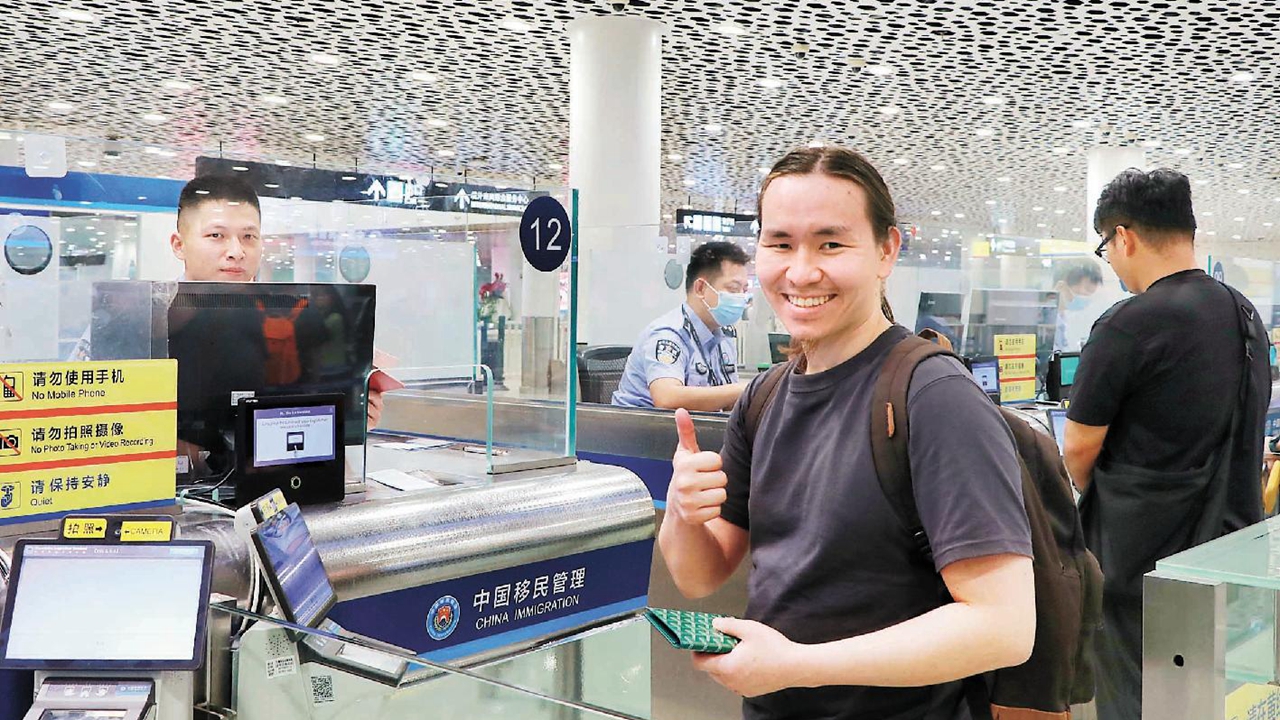
Russian traveler Bakytzhan Adylbekov gives a thumbs-up after becoming the first visitor to enter Shenzhen visa-free under China’s new trial policy for Russian nationals at the Shenzhen Airport Checkpoint on Sept. 16. Bao'an Daily
Meanwhile, intelligent clearance systems will see broader implementation, with facial recognition technology rolling out at additional Shenzhen checkpoints, including Huanggang, Luohu, Liantang, Futian, and Wenjindu. The technology is now in use at the Shenzhen Bay Checkpoint and Zhuhai's Gongbei Checkpoint.
According to the announcement, China's 240-hour visa-free transit policy will extend to five additional checkpoints in Guangdong Province beginning Nov. 5, bringing the national total to 65 designated ports across 24 provincial-level regions. Eligible passport holders from 55 countries may now enter through these ports for stays of up to 10 days without a visa when continuing to a third destination.
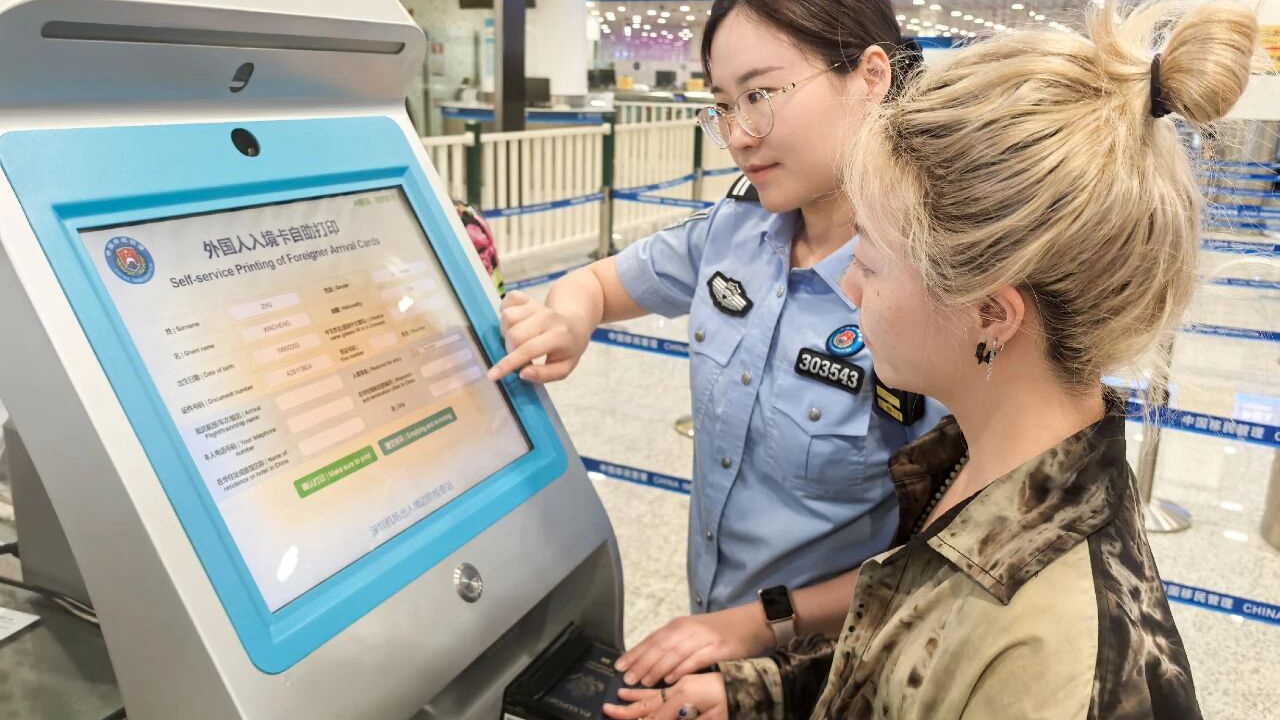
An immigration officer assists a traveler in using the self-service terminal for the new digital arrival card system at Shenzhen Airport Checkpoint in Shenzhen. Shenzhen Economic Daily
A new change will see the launch of digital arrival cards for foreign nationals starting Nov. 20. International visitors can complete entry formalities online before arriving in China through various channels, including the NIA’s official website, the Government Service Platform, the “NIA 12367” app, and WeChat or Alipay mini-programs.
Those unable to pre-register digitally may complete the process upon arrival by scanning QR codes at immigration checkpoints or using port smart devices, with paper forms remaining available as an alternative.
Seven categories of travelers are exempt from the arrival card requirement, including holders of Chinese permanent residence cards, certain Hong Kong and Macao travel permit holders, transit passengers staying within restricted port areas, and crew members of cross-border transport vehicles.