
 Share
Share


 Print
PrintExpats discover Nanshan's nature, sustainability
Writer: Wei Jie, Ye Zhihao | Editor: Lin Qiuying | From: Original | Updated: 2025-12-09
A group of expats and international students who participated in a tour of Nanshan District on Saturday said they were impressed by the district’s low-carbon efforts and cosmopolitan vitality, which offer expats a stronger sense of belonging and integration.
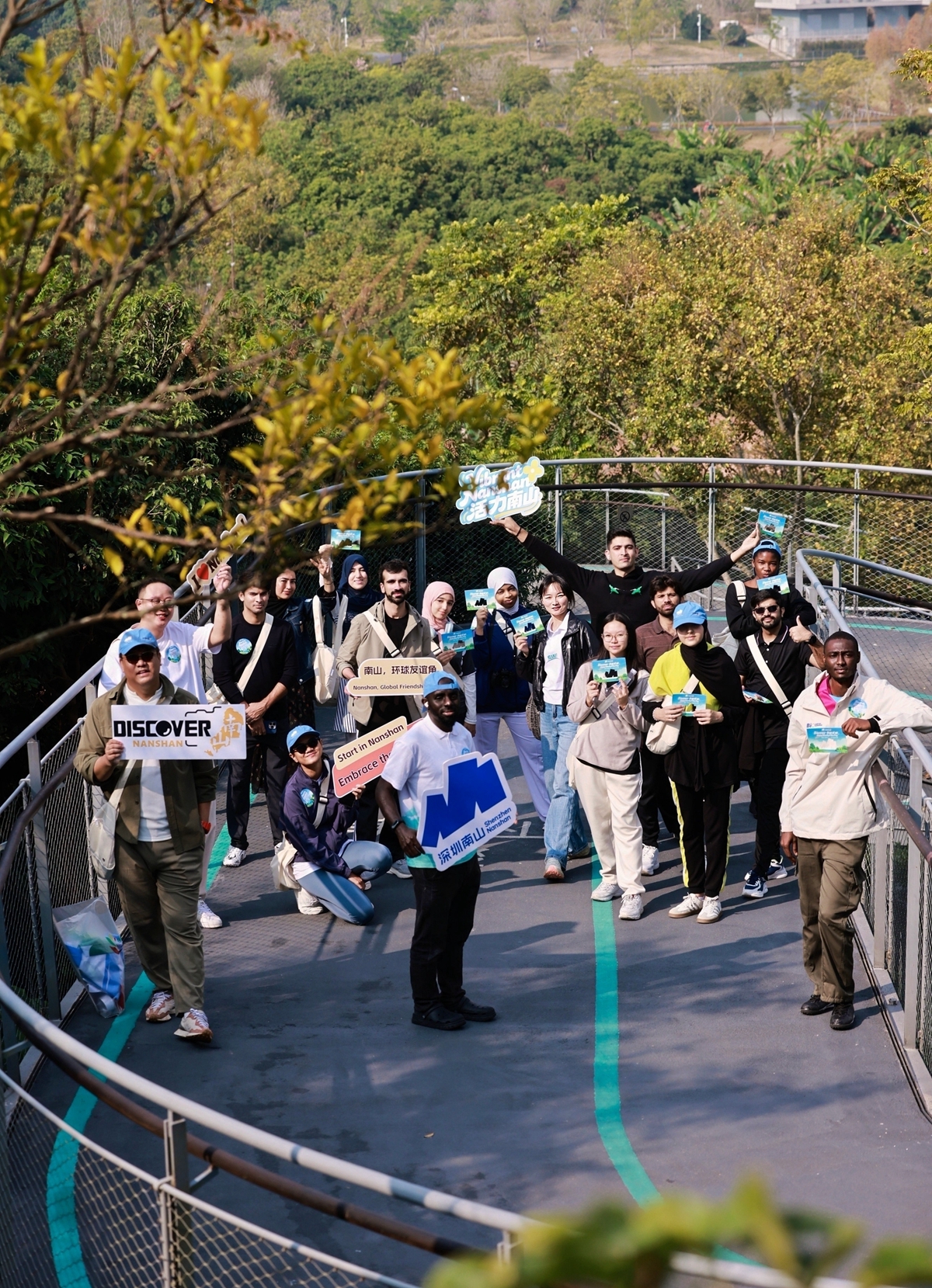
International participants gather for a group photo on the Xili Lake Greenway during a tour in Nanshan on Saturday. Photos courtesy of event organizer
Visiting the Xili Lake Greenway, the Nanshan Energy Ecological Park, and a Shekou international neighborhood, participants gained insight into Shenzhen's integration of nature and sustainability into daily life and Nanshan’s green infrastructure, energy efforts, and community life.
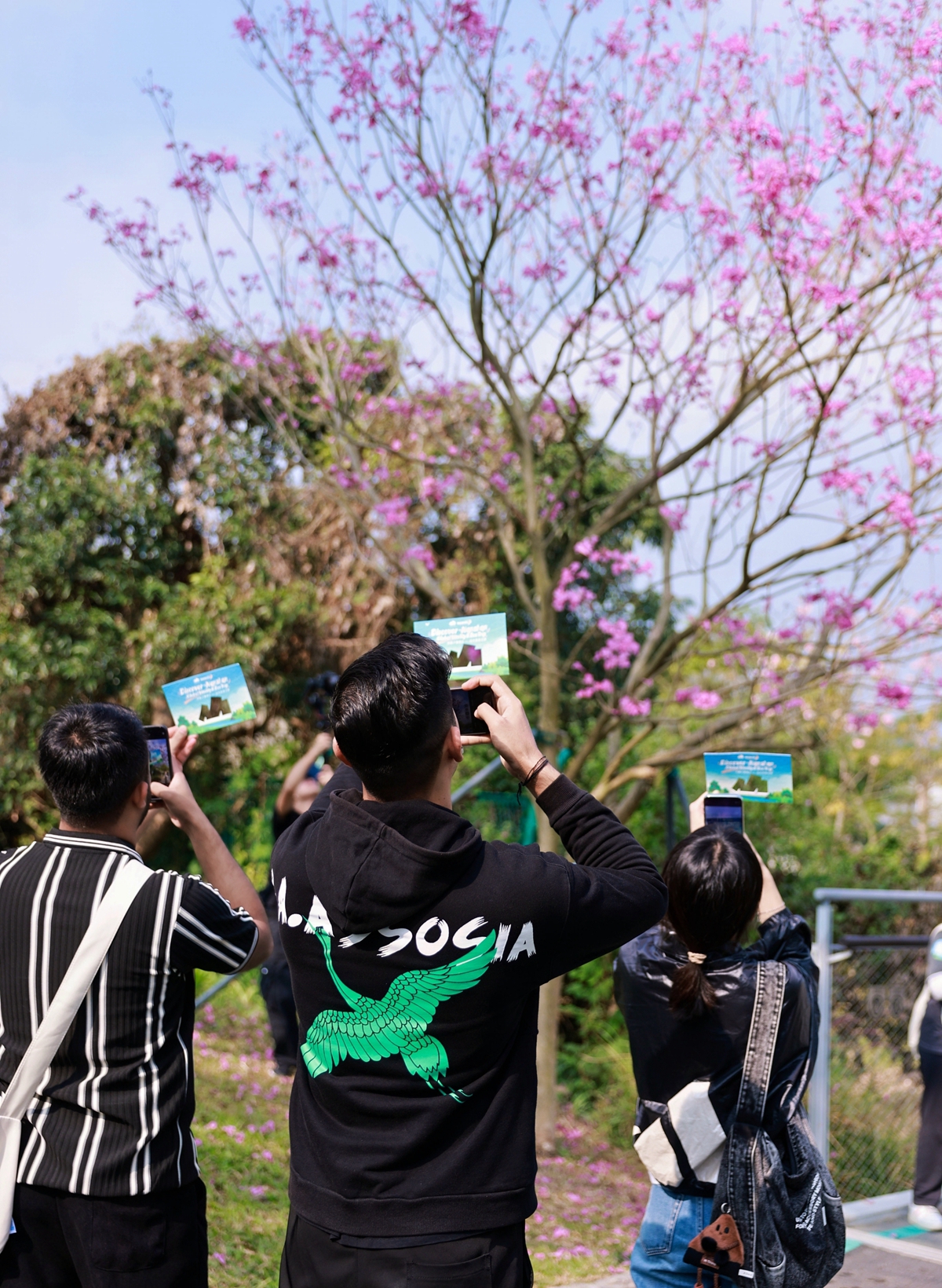
Participants pause to photograph a blooming tree along the Xili Lake Greenway, capturing a scenic moment during the nature-themed segment of the Nanshan tour.
During a visit to the Xili Lake Greenway — an over 16-kilometer loop around the Xili Reservoir — Indonesian student Jesselyn Julietta Sutantio shared that she was surprised by Shenzhen's plentiful greenery when she first settled in the city.
“Trees and parks are seen everywhere. Nature and the city maintain a perfect balance,” she noted, adding that she often goes jogging in the parks in Nanshan.
Nour El Baz, a Moroccan who arrived in Shenzhen just three months ago, shared that sentiment. Experiencing the city’s “green companionship” every day, Baz said, “The trail lets me understand Nanshan’s natural landscape in a much deeper way.”
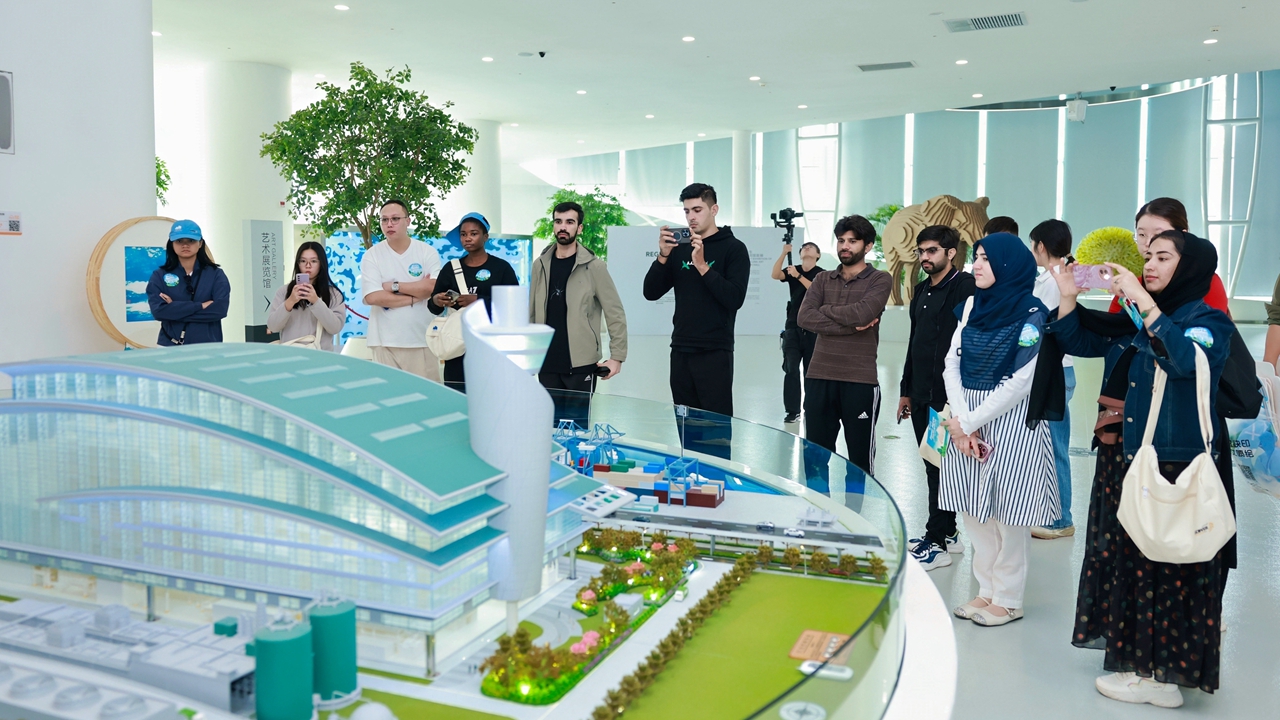
International participants observe a detailed model of Nanshan’s waste-to-energy facility during a guided tour of the Nanshan Energy Ecological Park on Saturday.
After the greenway, the group visited the Nanshan Energy Ecological Park, a waste-to-energy facility that incorporates urban science education, research-study programs, and green exhibitions. For many of the foreign participants, the park was their first opportunity to see how a modern city turns garbage into usable energy.
Bibi Sakina, a Pakistani student at the Harbin Institute of Technology (Shenzhen), said she had studied the “3R” environmental principles — reduce, reuse, recycle — in class, but this was the first time she had seen those ideas fully implemented in city infrastructure. “The recycled artworks and resource-reuse demonstrations turned classroom concepts into reality.”
Nisa Iqbal, another Pakistani student researching environmental protection and heavy-metal remediation, was particularly drawn to the park’s pollutant-treatment processes.
Muhammad Abdullah, a Shenzhen University student who has lived in the city for three years, highlighted the park’s wider benefits. “Seeing resource recycling here made it clear how it can both improve the environment and cut energy costs,” he said. “Turning waste into electricity helps keep the city clean and lowers power costs.”
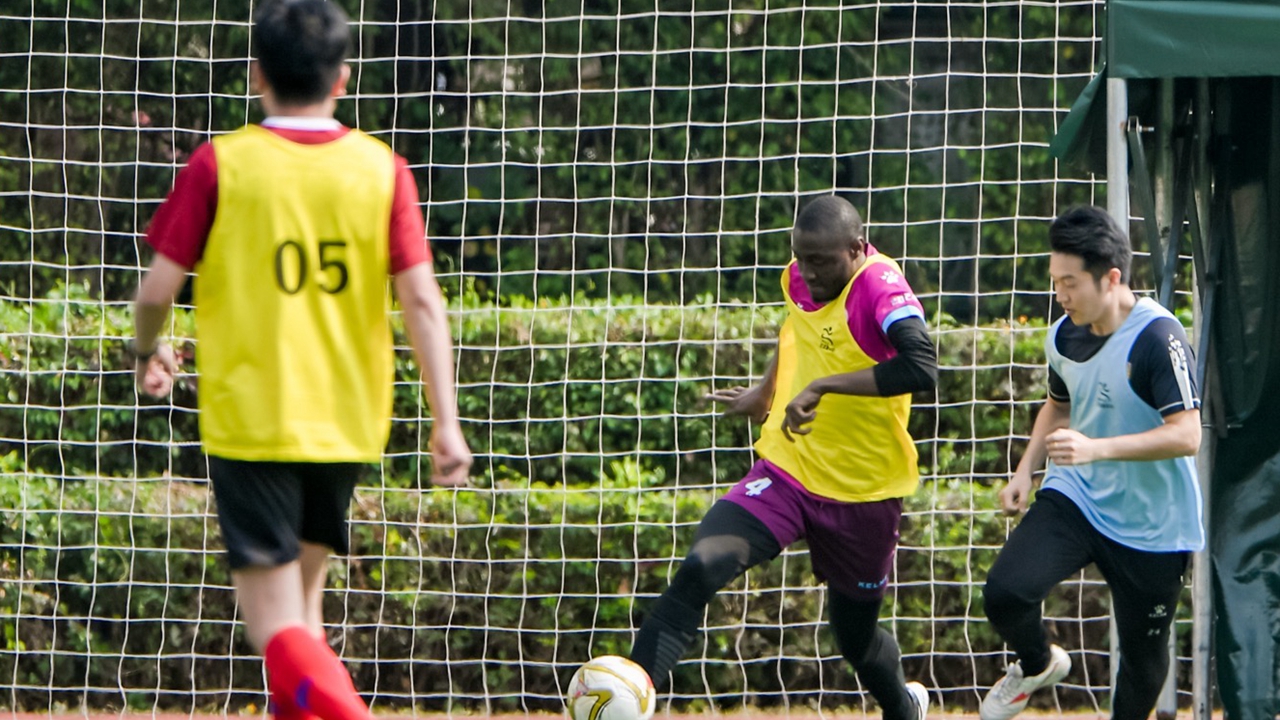
International participants compete in a spirited football match at Shekou Sports Center during the tour in Nanshan on Saturday.
In the afternoon, the group attended a student football match at the Shekou Sports Center — an experience many said was key to understanding everyday life in Nanshan.
“Sport is one way to grasp a city’s energy,” said Muhammad Auwal Saliu, a student at Shenzhen Polytechnic University. “Activities like this make it easier for us to integrate and meet people.”
The tour was hosted by the Nanshan District Foreign Affairs Bureau and organized by Southwind International Service.