
 Share
Share


 Print
Print2026: Shenzhen and Europe, choosing the future together
Writer: Luigi Gambardella | Editor: Zhang Chanwen | From: Original | Updated: 2025-12-26
As we move toward 2026, one reality becomes increasingly clear to those who closely observe the global economy: technology is not lacking, capital is not lacking, ideas are not lacking. What is lacking is direction. And in a world shaped by simultaneous transitions — energy, digital, industrial — direction matters more than speed.
After years of hands-on work between European and Chinese ecosystems, one lesson stands out: next-generation economic cooperation does not emerge from formal alignment alone, but from the ability to create value together. From this perspective, the relationship between Shenzhen and Europe represents one of the most decisive—and still underestimated — strategic opportunities of the coming decade.
Shenzhen is not a city that reacts to change; it anticipates it. It plans, experiments, and scales. This capacity is most clearly embodied in two areas that will be central to Europe–Shenzhen cooperation in 2026: the Nashan District and Qianhai.
Nanshan: a global center of innovation excellence
Nanshan is not simply an urban district; it is one of the world’s most advanced innovation ecosystems. Research, capital, talent, and industrial capability converge here at a density few places globally can match. It is where ideas move rapidly from concept to prototype, and from prototype to market.
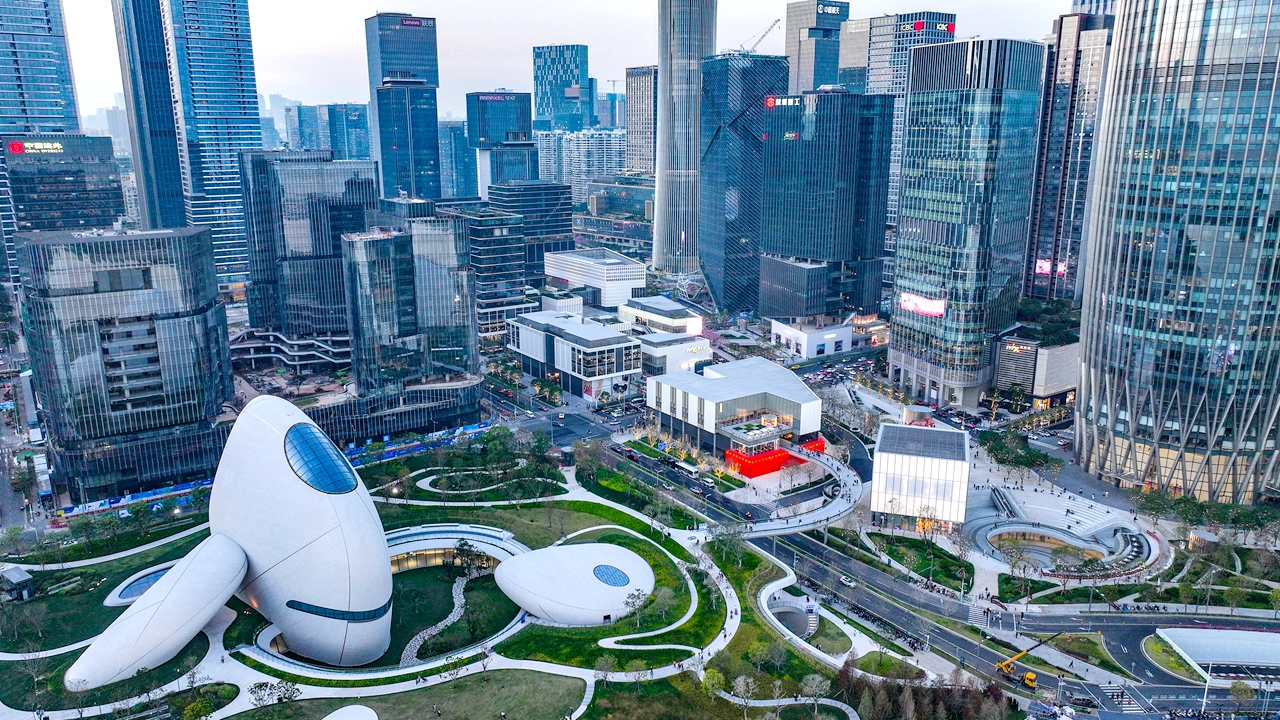
Skyscrapers in Nanshan District. Liu Xudong
For European companies, Nanshan offers a unique environment in which to test advanced digital technologies, artificial intelligence solutions, smart manufacturing systems, and new business models at unprecedented speed. It is this combination of velocity, scale, and growing focus on quality that makes Nanshan a global benchmark not just an Asian one.
Qianhai: a global platform for economic cooperation
Alongside Nanshan, Qianhai stands out as one of the most interesting areas worldwide for international economic cooperation. It is far more than a preferential tax zone or a financial hub; it is a platform designed to reduce friction between different economic and regulatory systems.
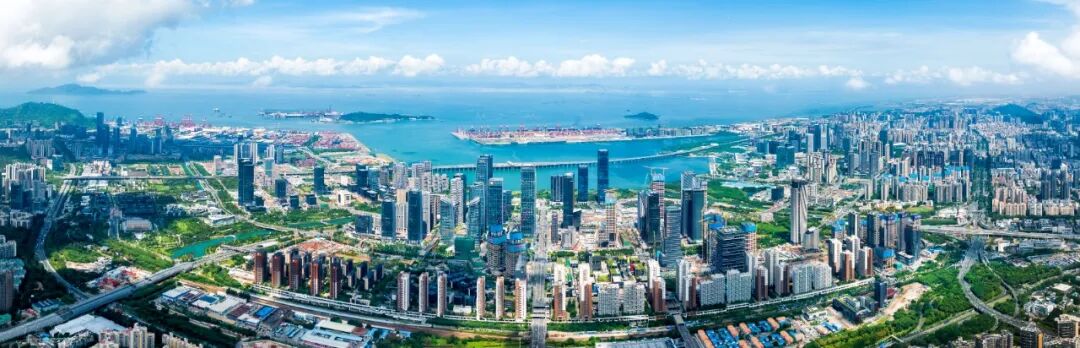
A panoramic view of Qianhai. File photo
Qianhai is pioneering innovative approaches in key areas such as financial services, digital trade, international arbitration, and cross-border data flows. For Europe, this means a privileged gateway to the Chinese market that combines openness, legal certainty, and regulatory experimentation. In 2026, Qianhai can become the natural home for joint pilot projects—from digital finance to trade digitalization—capable of being scaled across much larger markets.
From complementarity to co-creation
For years, the Shenzhen–Europe relationship has been described in terms of complementarity: hardware meets standards, speed meets stability, innovation meets regulation. It was a useful starting point. It is no longer enough. The year 2026 must mark the transition from complementarity to co-creation.
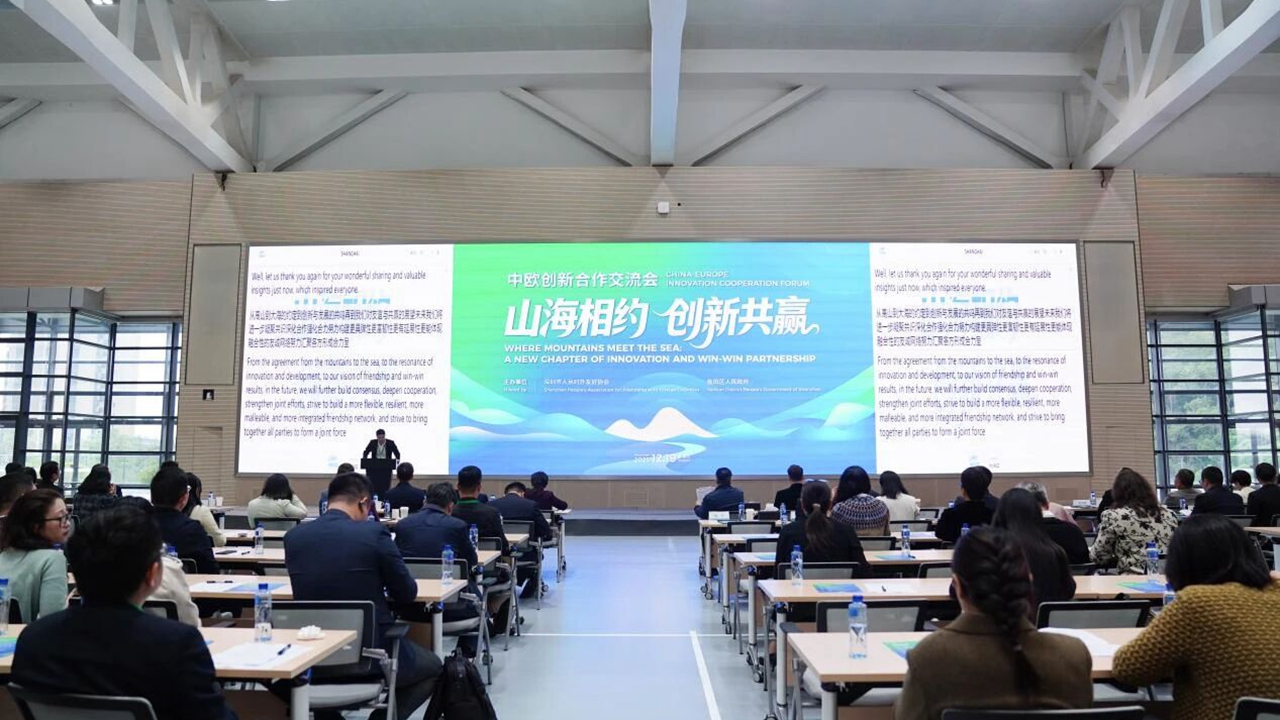
A scene at the China Europe Innovation Cooperation Forum held in Shenzhen earlier this month. Wang Haolan
Green technologies provide a clear and immediate example. Shenzhen hosts global leaders in electric vehicles, batteries, power electronics, and intelligent energy systems. Europe, driven by the Green Deal, is investing heavily in decarbonization, electrification, and energy efficiency. Joint industrial projects designed in Nanshan, enabled through Qianhai, and scaled across Europe can dramatically shorten time-to-market and build resilient, sustainable value chains.
Digital infrastructure as a platform of trust
A second major area of opportunity lies in digital infrastructure. Shenzhen is one of the world’s most advanced laboratories for 5G, artificial intelligence, IoT, and industrial automation. Europe, meanwhile, is shaping global norms on data governance, cybersecurity, and interoperability.
In 2026, value will no longer lie in adopting technology per se, but in making it trustworthy, scalable, and socially sustainable. Solutions developed in Shenzhen and validated against European standards can become global benchmarks strengthening the competitiveness of both ecosystems.
A strategic choice, not an automatic outcome
The year 2026 should not be one of passive continuity. It must be a year of conscious choice. Choosing to deepen economic cooperation between Shenzhen and Europe—by building on centers of excellence such as Nanshan and platforms like Qianhai—means creating stable frameworks for investment, innovation, and talent mobility.
Shenzhen has already shown how a city can reinvent itself within a single generation. Europe is redefining its economic model around sustainability and digital sovereignty. Together, they have the opportunity not only to grow faster, but to grow better offering the world a model of open, pragmatic, and long-term economic cooperation.
The future is not an event that simply happens. It is a decision that is made.
2026 is the year in which Shenzhen and Europe can prove they are ready to make it together.