
 Share
Share


 Print
PrintShenzhen's low-altitude economy: building a bankable industry and a pragmatic flight path to Europe
Writer: Luigi Gambardella | Editor: Lin Qiuying | From: Original | Updated: 2026-01-25
In Qianhai, a drone taxi lifts off with a deep, precise buzz. It is a small moment that captures a larger shift: Shenzhen is no longer treating the low-altitude economy as a technology showcase. It is treating it as infrastructure and turning infrastructure into scalable business.

A view of Qianhai. File photos
The low-altitude economy covers commercial operations in airspace below roughly 1,000 meters: drones for logistics and inspection, eVTOL aircraft, and the digital layer that makes higher-density flight safe and manageable. What matters for investors and operators is not the aircraft alone, but the system that turns flight into repeatable services: routes, pads, connectivity, supervision, and rules that reduce uncertainty and make operations insurable.China’s civil aviation authorities have projected the low-altitude economy to reach 1.5 trillion yuan in 2025 and exceed 3.5 trillion yuan by 2035. The more decisive signal, however, is institutional: China has adopted revisions to its Civil Aviation Law that explicitly address the low-altitude economy and tighten compliance requirements for civil unmanned aircraft, effective 1 July 2026.
Regulation, in other words, is becoming part of the industry’s operating model which is exactly what turns a fast-growing sector into a bankable one. Shenzhen’s advantage is measurable in both industrial scale and operating intensity. The city sits at the center of a dense ecosystem across the value chain, with nearly 2,000 drone companies and a manufacturing base that has already moved beyond pilot economics.
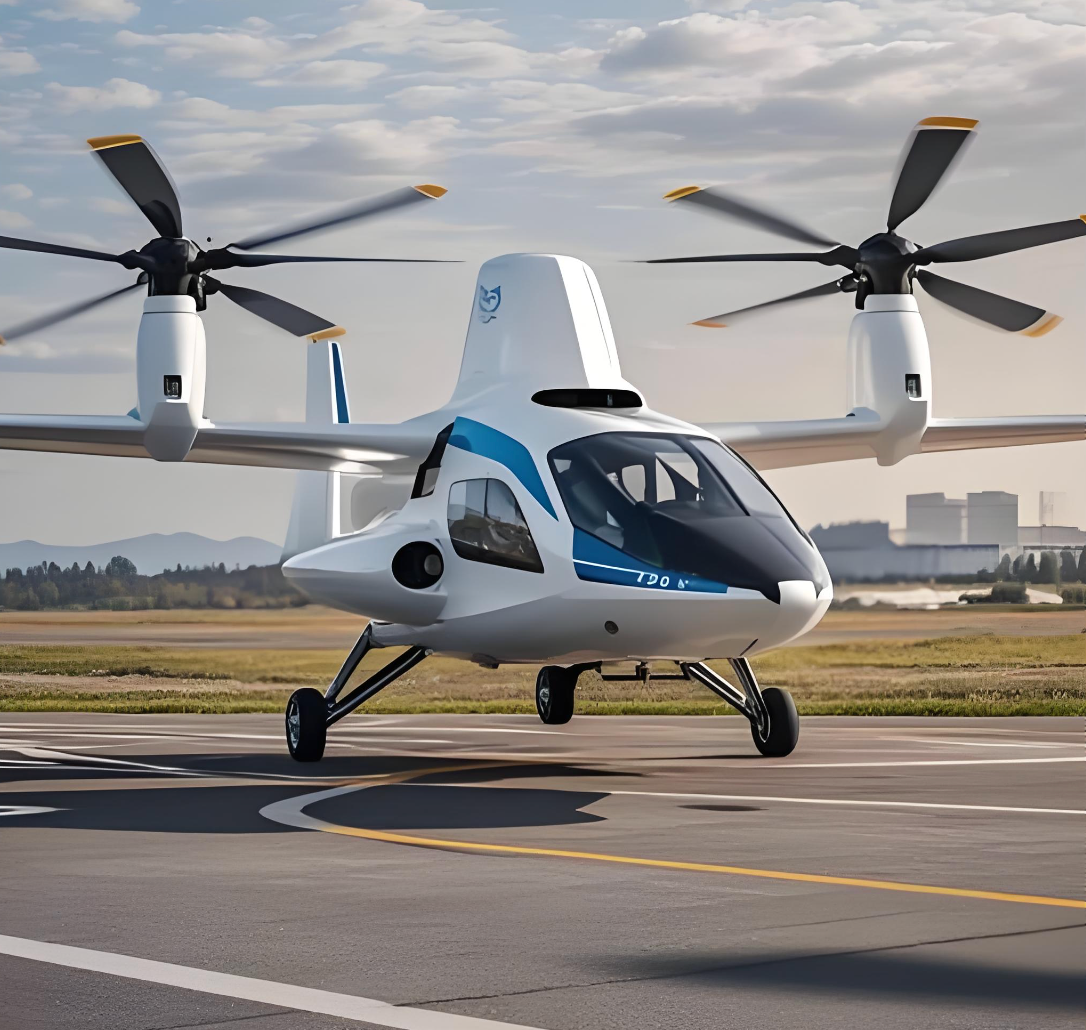
An eVTOL takes off.
Drone-industry output value reached 107 billion yuan in 2024, while civil drone production hit 2.75 million units in the first half of 2025 signals of an industrial platform ready for fleet economics.
One eVTOL player that illustrates this shift is Zero Gravity Aircraft Industry (ZEROG). Headquartered in Hefei with an operating center in Shenzhen’s Nanshan District, it is advancing eVTOL programmer while securing funding to support airworthiness certification and flight testing prerequisites for bankable scale in a sector where regulatory progress and access to capital determine winners.
Operations show the same pattern. By 2025, city reporting shows Shenzhen had opened more than 300 logistics routes, with cargo drone flights counted in the hundreds of thousands evidence of the hardest part of commercialization: repeatability. When flights become routine, the low-altitude economy stops being a series of demonstrations and becomes a service market. Infrastructure is what makes that possible and Shenzhen is building it at city scale. 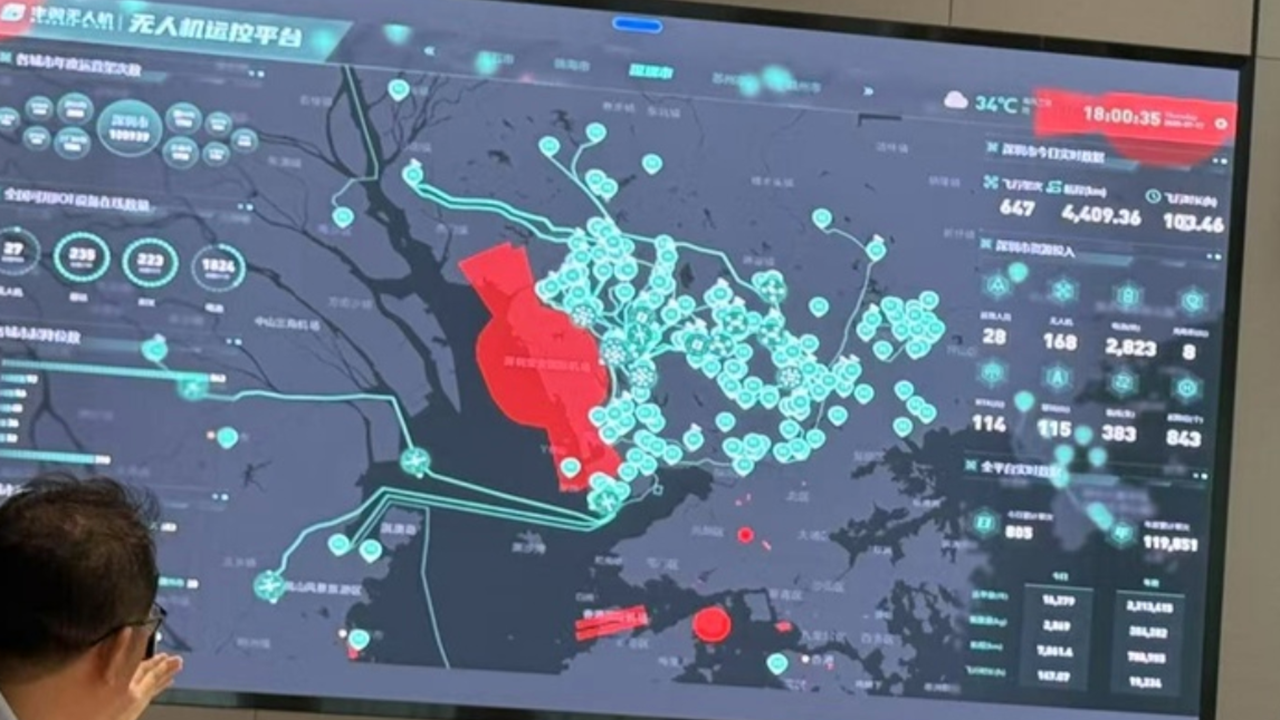
A screen shows a SF Express drone logistics map.
Hundreds of low-altitude take-off and landing sites are already in place, and the city’s plans point to a rapid expansion of platforms and routes in the near term, supported by a dense digital foundation that includes 5G-Advanced capabilities and an expanding integrated sensing layer. This is the unglamorous foundation that turns “air mobility” into a platform industry: managed airspace, corridors, monitoring, and governance that can scale.
Shenzhen is not just enabling flights; it is building the institutions that make a market. For Europe, the business question is straightforward: how to engage with a market that is high-value but regulation-intensive.
Europe’s constraint is not demand it is bankability. Deployment requires clear certification pathways, liability and insurance readiness, cybersecurity and data governance discipline, and the ability to operate within public procurement realities. That is why Europe is strategically valuable: it rewards companies that can convert technology into compliant, auditable services.Europe’s regulatory perimeter is already defined through harmonized EU drone rules, a U-space framework designed to support higher-density operations, and a structured certification pathway for eVTOL aircraft under EASA.
The practical implication is clear: the shortest route to scale is not “sell first, regulate later.” It is the opposite standards first, supervised pilots with public authorities, then industrial partnerships that can localize operations and scale responsibly. This is where Shenzhen–Europe cooperation becomes commercially rational. Shenzhen brings what Europe often lacks: speed, manufacturing depth, operational density, and the ability to industrialize the full stack from prototype to deployment.
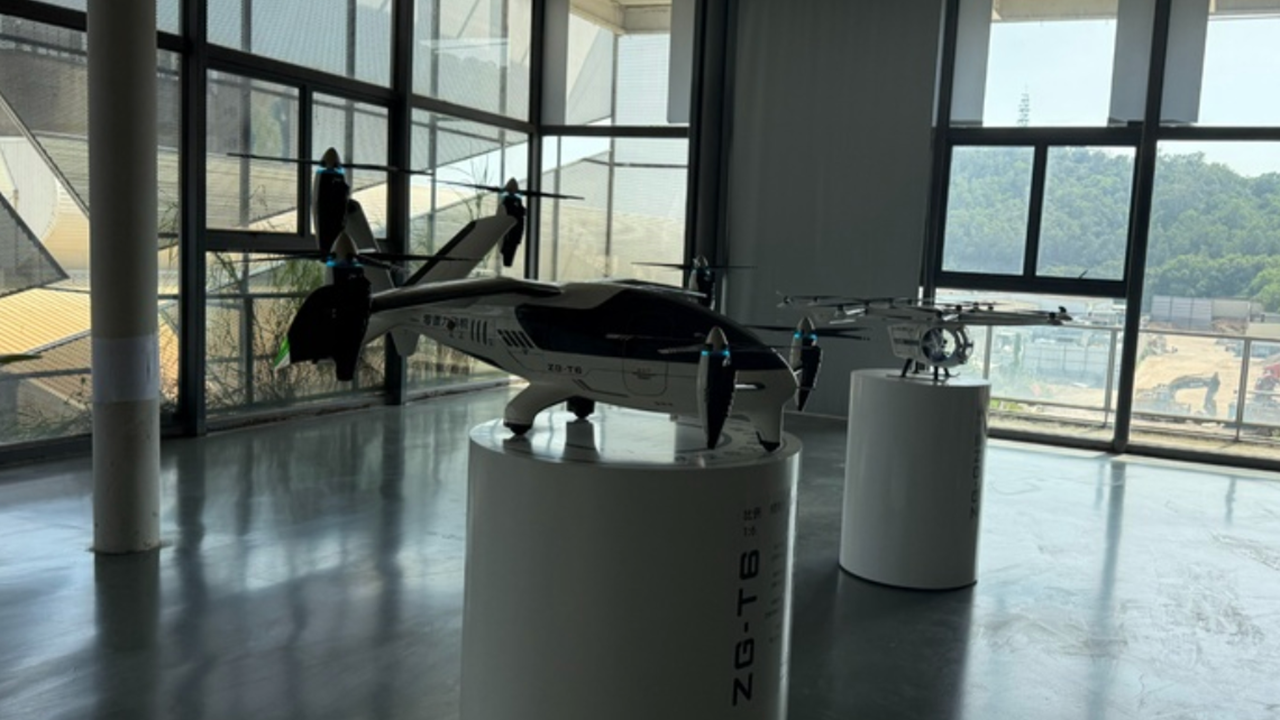
Various models of drones on display.
Europe brings what global scaling increasingly demands: certification credibility, mature liability regimes, procurement access, and public trust. Put together, they can build deployment models that are both fast and investable — and create reference practices that travel across jurisdictions. ChinaEU’s role is to make that pipeline executable.
As a Brussels-based association founded to foster EU–China digital and industrial cooperation, ChinaEU has chosen to follow the low-altitude economy early because new value chains are forming now and early engagement shapes standards, partnerships and market access. In practical terms, ChinaEU can act as a European coordination platform: translating regulatory requirements into actionable market-entry roadmaps, convening cities and competent authorities for supervised pilots, connecting Shenzhen companies with European operators and industrial partners, and helping convert pilots into bankable deployments and long-term industrial cooperation.
Low-altitude aviation is often framed as a story about flying taxis. The investable story is more disciplined and more powerful: building a new layer of urban infrastructure where safety, data and trust are core assets, and where regulatory mastery becomes a competitive moat. Shenzhen is demonstrating it can industrialize that stack at scale. Europe now has a choice: remain a late-stage buyer under someone else’s standards, or become an early partner shaping the flight path and capturing value along it.