
 Share
Share


 Print
PrintHorse fossil exhibition tells stories of evolution
Writer: Cao Zhen | Editor: Cao Zhen | From: Original | Updated: 2026-02-03
The Hezheng region of Linxia in Gansu Province is a treasure trove of Late Cenozoic mammalian fossils, preserving a rich record that spans roughly 30 million to 2.5 million years ago. The exhibition “The Realm of Fossils: An Epic of Life,” presented under the theme “Hoof-prints Through Time: The Evolution from Hipparion to Equus,” features rare fossils from the Hezheng Paleozoological Museum. Combining scientific interpretation, ecological restoration, and interactive displays, the exhibition invites visitors to journey across tens of millions of years and explore the major chapters of life’s evolution.
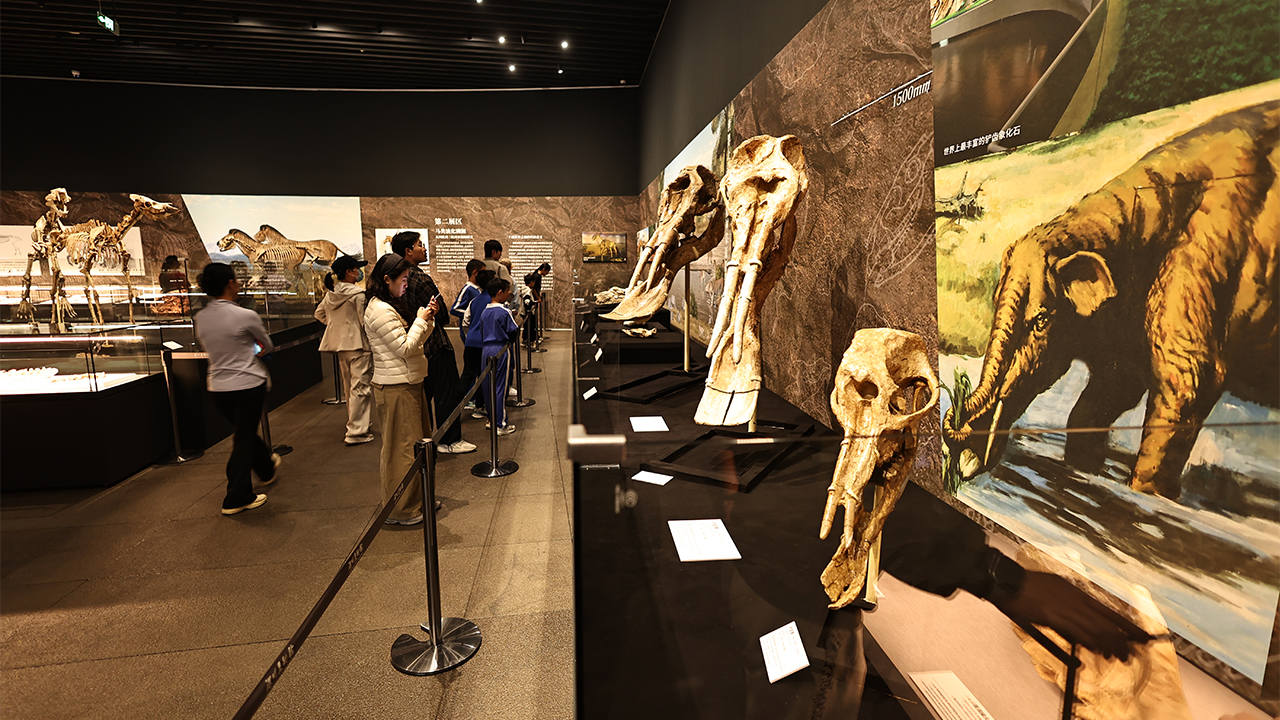
Visitors observe fossils at the exhibition at Shenzhen Art Museum in Longhua District. Photos by Liu Xudong
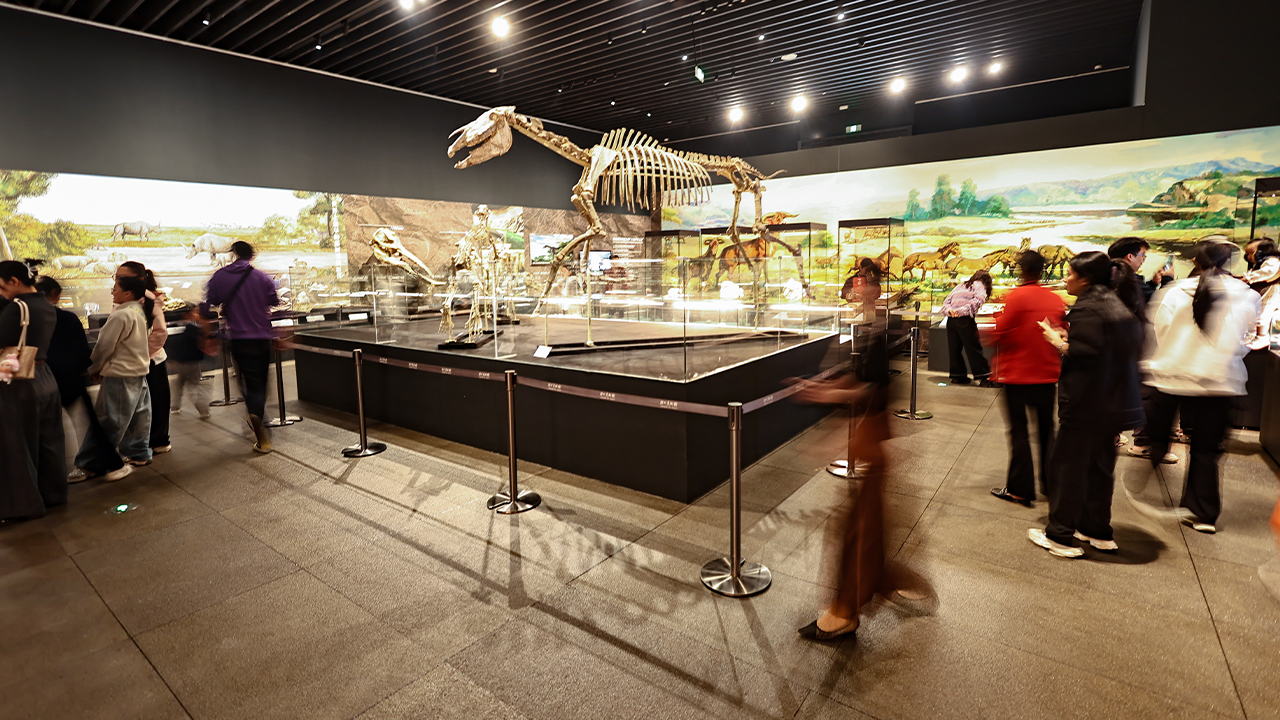
Visitors wander in an exhibition hall.
The show systematically traces the evolutionary trajectory of equids — from four-toed ancestors to three-toed intermediates and ultimately to the single-hoofed modern forms — highlighting the evolutionary link between Hipparion and Equus. Alongside other fossil groups, it documents the succession from Hipparion-dominated faunas to those dominated by Equus. The exhibition’s horse fossil sequence, covering roughly 12 million to 100,000 years ago, and the continuous local stratigraphic record provide invaluable evidence for understanding how environmental change shaped species evolution.
From forests to grasslands, and from multiple toes to a single hoof, the evolution of horses illustrates the power of natural selection. Through comparative displays of Anchitherium, Hipparion, and Equus, the exhibition shows how toe structure, body size, and dietary adaptations responded to shifting environments. As the Xizang-Qinghai Plateau uplifted and grasslands expanded, Hipparion faunas flourished and Equus began to emerge. Fossil assemblages and ecological reconstructions recreate this major faunal transition and reveal how environmental shifts drove species turnovers and critical evolutionary events.
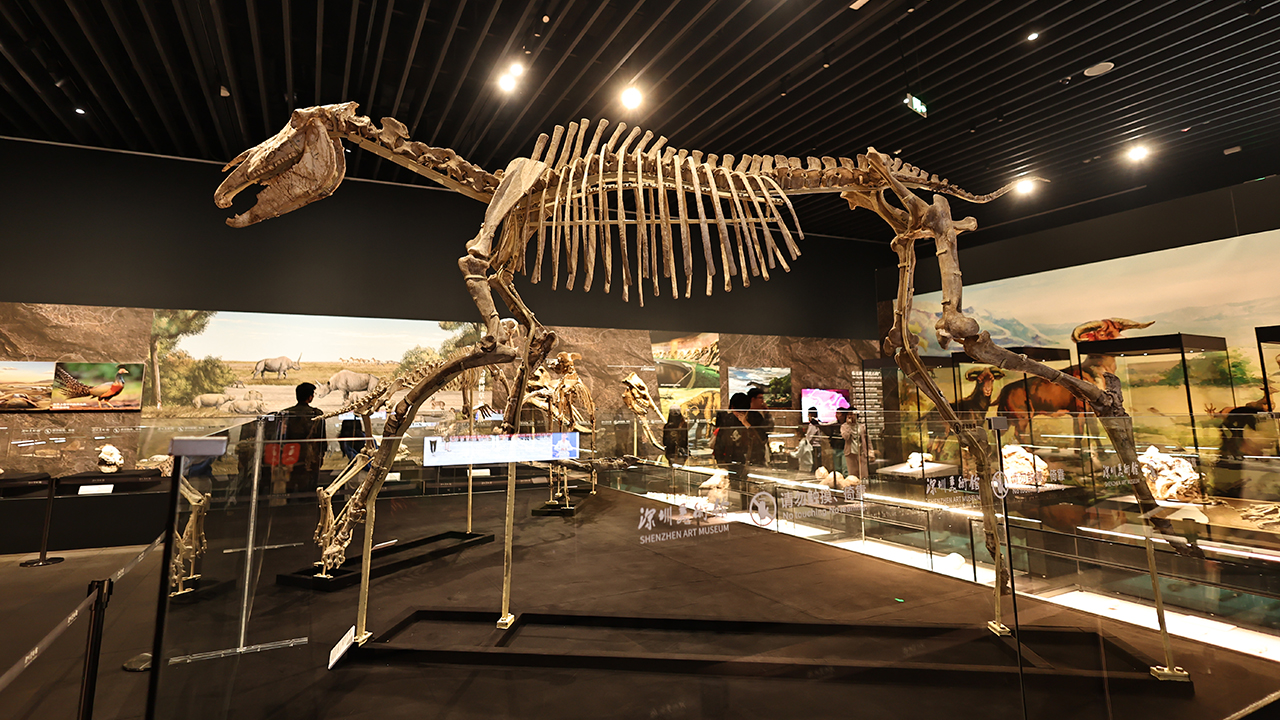
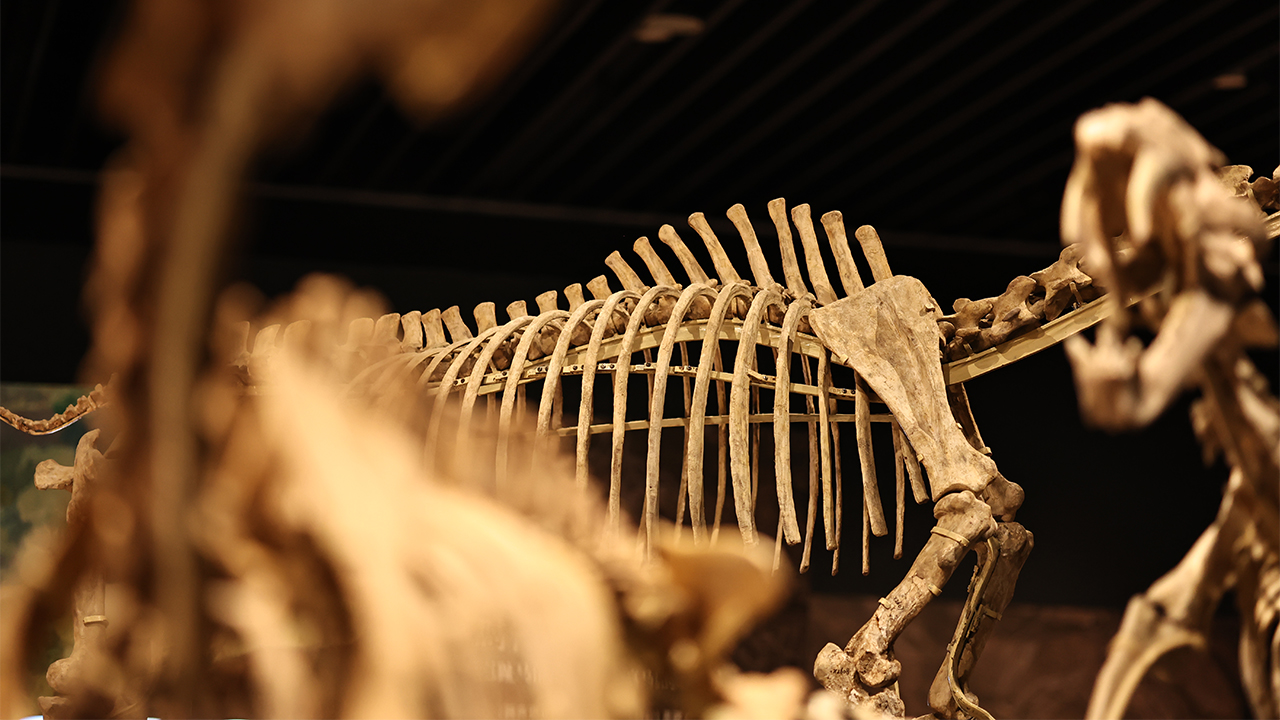
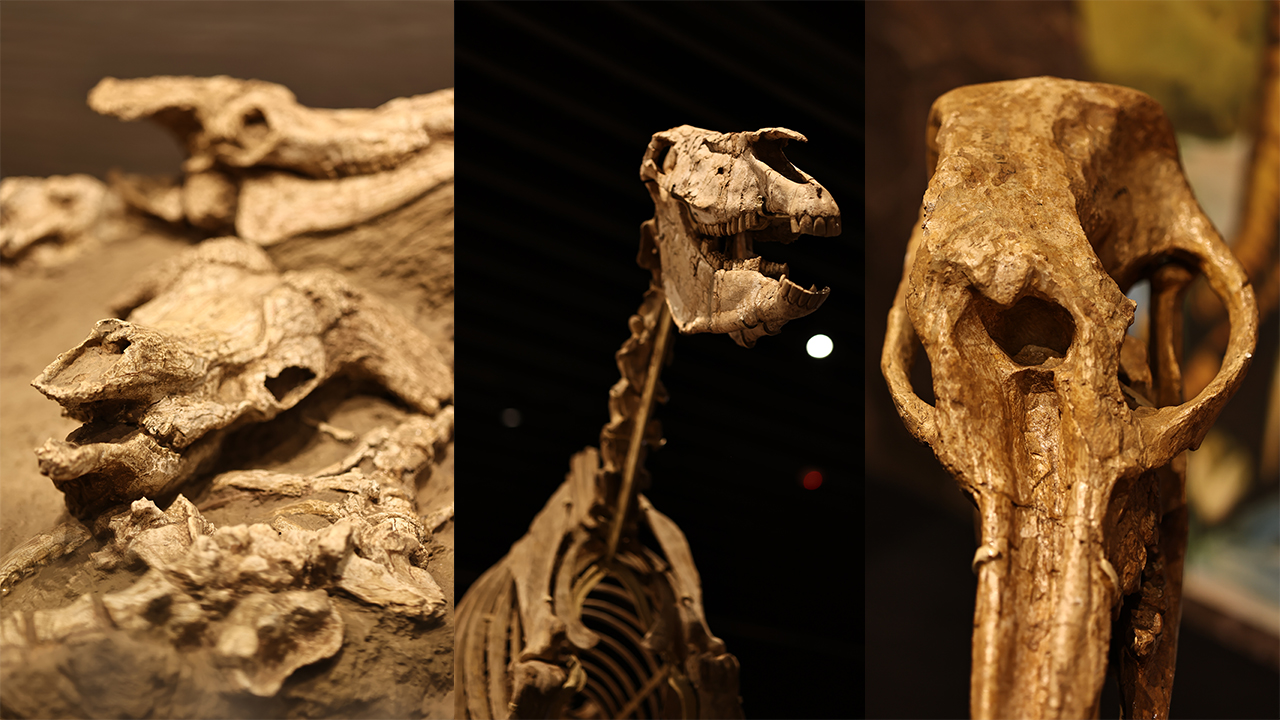
Fossils on display.
Detailed comparisons of skulls and teeth explain the key adaptations that allowed Equus to thrive in open grassland habitats. Supported by migration route maps, the exhibition also tells the broader story of equid dispersal across continents, presenting an epic of life seen through the fossil record.
Dates: Through April 12
Hours: 10 a.m.-6 p.m., closed Mondays
Venue: Shenzhen Art Museum, Longhua District (龙华区深圳美术馆)
Metro: Line 4 or 6 to Hongshan Station (红山站), Exit A1