
 Share
Share


 Print
PrintOfficials share insights on APEC's role in shaping regional prosperity
Writer: Chen Siqi | Editor: Lin Qiuying | From: Original | Updated: 2026-02-10
Videos by Lin Jianping
More than 1,000 delegates have gathered in Guangzhou from Feb. 1 to 10 to chart the economic future of the Asia-Pacific, as China formally launched its host year for the Asia-Pacific Economic Cooperation (APEC) forum.
The First Senior Officials’ Meeting and Related Meetings brought together representatives from APEC’s 21 member economies, its secretariat, business advisory councils and international organizations.
Over 10 days, delegates attended more than 70 meetings, workshops and symposiums focusing on trade and investment, technological innovation, the digital economy, cross-border e-commerce, standards alignment, and marine fisheries.
Officials said discussions aimed to build concrete proposals ahead of the informal leaders' summit in Shenzhen this November.
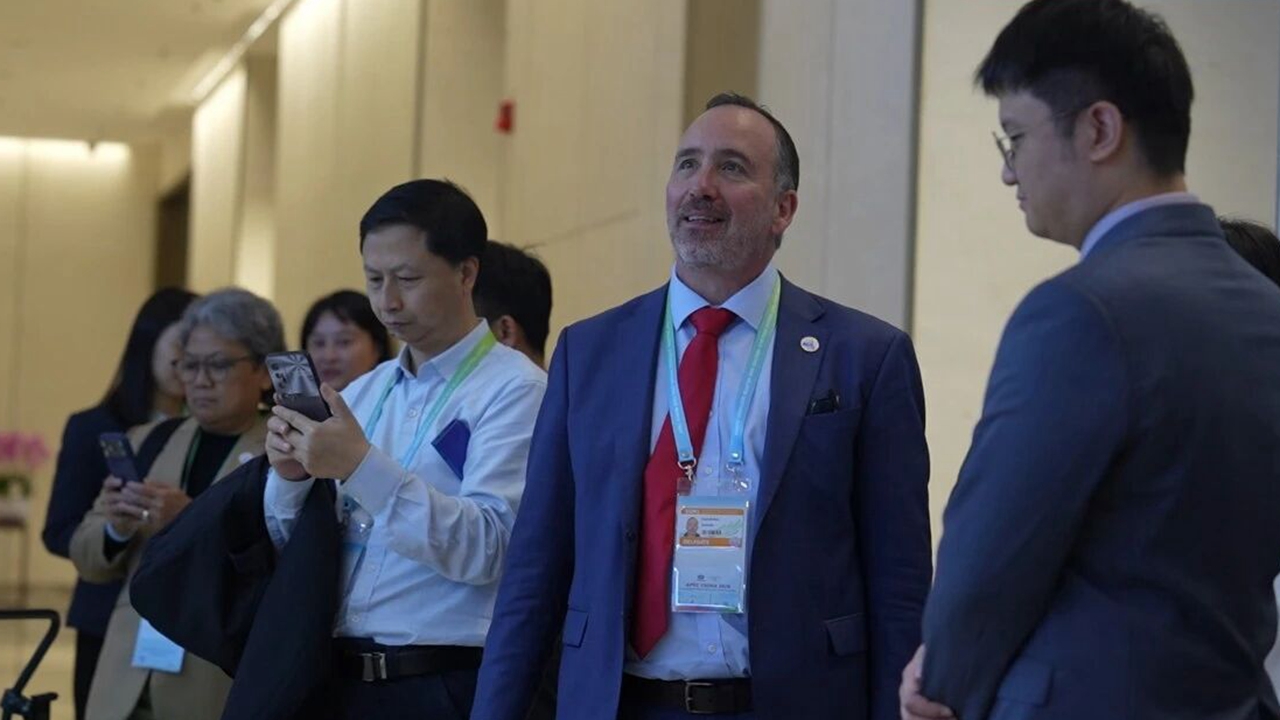
Delegates gather outside a meeting room during the APEC First Senior Officials’ Meeting in Guangzhou on Feb. 4. Photos by Lin Jianping except otherwise stated
“The main goal of APEC is trade and investment. It is useful because you see that all the leaders are coming with different initiatives to work towards one goal, to work as a community,” said Rocio Casildo, an official from the National Council of Science, Technology and Innovation of Peru.
China set its host year theme as "Building an Asia-Pacific Community to Prosper Together," emphasizing openness, innovation and cooperation.
Malcolm John MacMillan, national manager of Standards New Zealand, highlighted the practical benefits of collaboration. “China is our biggest trading partner. So here we want to learn about business practices, standards and conformance to support our economy around trade and market access, innovation and cooperation,” he said.
He added that discussions on rapidly evolving technologies like artificial intelligence were particularly timely, providing insights into how these technologies could support trade, business, and economic growth.
For some delegates, APEC’s value lies in addressing day-to-day commercial hurdles. Wilnora Lavetoria Cawile, deputy collector for operations at the Port of Ninoy Aquino International Airport in the Philippines, noted the importance of talks on customs procedures.
“The growth of e-commerce in the Philippines is largely because of China. We have a lot of cargo freighters coming from different parts of China,” Cawile said. “During the APEC meetings, we can talk about this … It helps a lot.”
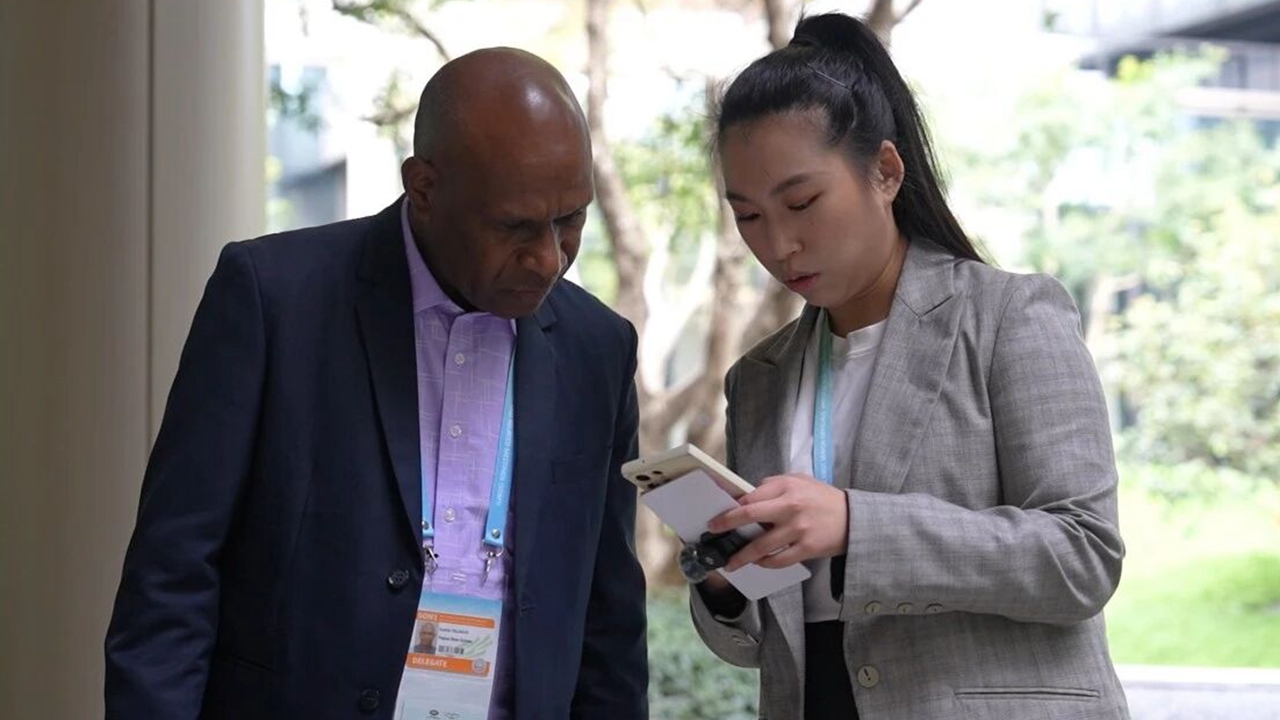
Kamis Yalakun, investment promotion manager of Papua New Guinea's Investment promotion Authority, exchanges views during an interview with Shenzhen Daily reporter Chen Siqi on Feb. 4
Kamis Yalakun, manager for investment promotion at Papua New Guinea’s Investment Promotion Authority, praised China’s hosting priorities as “really good ideas.”
“We can see China is an important global player in shaping the economy,” Yalakun said, citing direct flight connections by Southern Airlines that have created new market opportunities for the business in Papua New Guinea.
Beyond high-level policy, APEC officials emphasized the forum’s broader impact on communities.
Cristina Christodulo, community outreach manager at the APEC Secretariat, who led a communication and press team during Peru’s host year in 2024, said the benefits were tangible.
“APEC is not just about the officials, delegates talking about the technical issues, it’s all about wellbeing,” Christodulo said. Hosting APEC meetings “will help boost the economy, create a lot of work and jobs, to improve the quality of life of people.”
Outside the conference halls, delegates were offered five themed tours of Guangzhou, highlighting the city’s advances in technology, ecology, traditional culture, the circular economy and rural innovation.
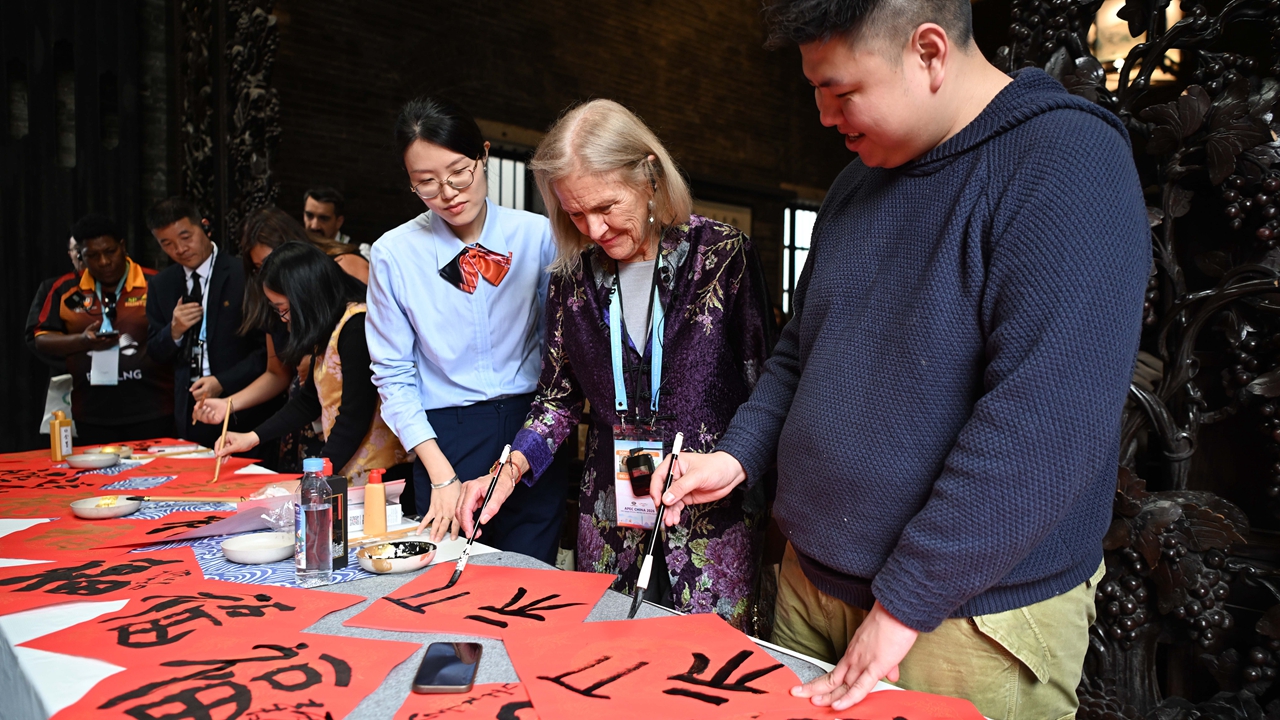
Delegates at the APEC 2026 First Senior Officials’ Meeting try Chinese calligraphy at the Chen Clan Ancestral Hall in Guangzhou, on Feb. 6. Xinhua