
 Share
Share


 Print
PrintResidents join campaign to improve SZ Bay's English signs
Writer: Chen Siqi | Editor: Lin Qiuying | From: Original | Updated: 2026-02-14
Video by Wang Haolan
Days after the first offline winner was announced, the 2026 Shenzhen Public Foreign-Language Signage Improvement Campaign held its second challenge on Feb. 12.
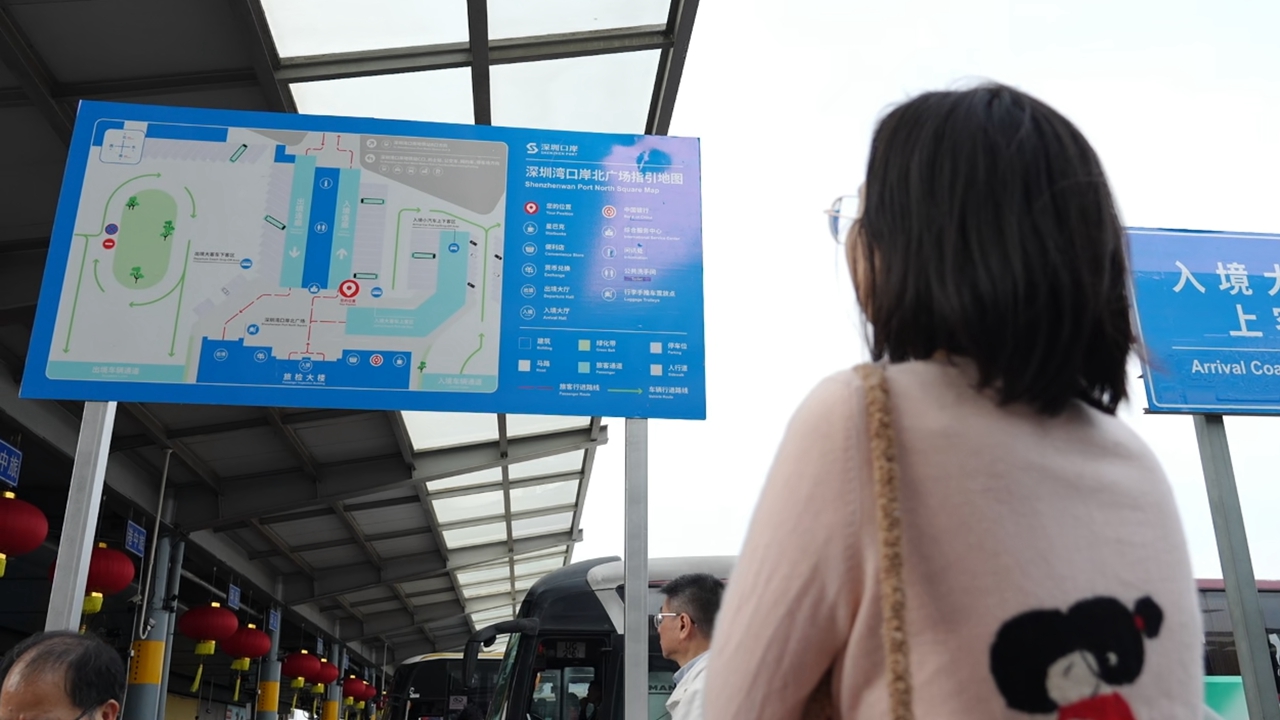
A participant examines English translation on a map sign in Shenzhen Bay Checkpoint. Photos by Qiu Weibin
This time, the event recruited a group of 10 residents to hunt for translation errors and missing English guidance in Nanshan’s Houhai area. The 10 participants, including local residents and expats from Australia and the U.K., inspected public signage around Shenzhen Bay Checkpoint, Shenzhen Bay Culture Square and Shenzhen Bay MixC. Armed with sharp eyes and local experience, they figured out inconsistent translations and confusing directions.
Jennifer, an Australian who moved to Shenzhen six months ago, said, “I must admit when I first moved to Shenzhen, I was surprised about the amount of English signage around the checkpoint. It was quite easy to navigate.”
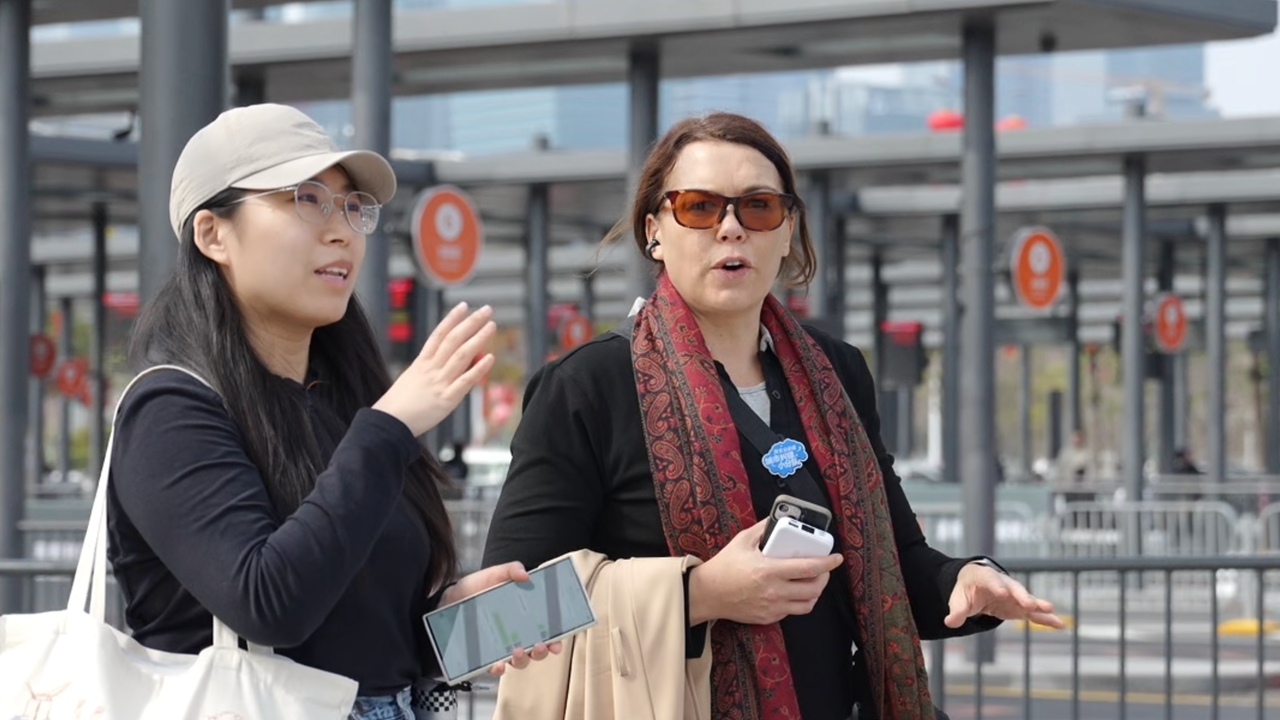
Jennifer from Australia (R) shares her thoughts about public signage in Shenzhen with an EyeShenzhen reporter.
Still, she noted that useful information was sometimes missing. One example was a ride-hailing information board. “You can see the white board over there. I don't know what that board is, but I went up to it, so it's basically just telling you what area that you can pick your car up in,” said Jennifer.
“With the APEC summit coming, this is a good opportunity for them to correct the signage before the number of international visitors increase,” Jennifer said.
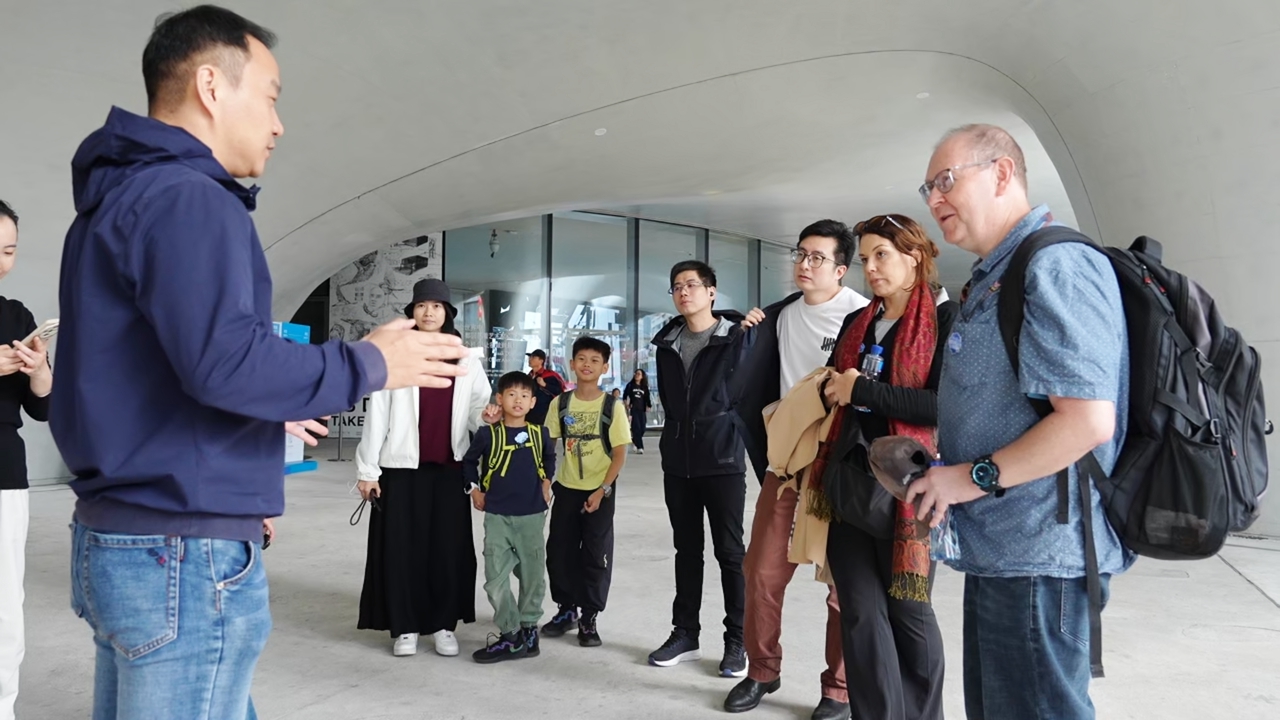
Participants listen as a Shenzhen Bay Culture Square staffer introduces the venue.
A resident surnamed Fan who grew up in Shenzhen and has followed the city’s bilingual development for three decades, said translation quality at the sites he visited during the event exceeded expectations.
“They are much better than the average impression people have of Shenzhen,” Fan told Shenzhen Daily. “Errors were relatively few. At Shenzhen Bay Checkpoint, most were spacing issues or inconsistent translations for the same place name. Hard grammar or vocabulary mistakes were rare.”
Still, he spotted several. At the checkpoint, both he and an international participant flagged a sign reading “当心坠落” — translated as “Warning drop down.” He said, “I’d use ‘Beware of falling’ instead.”
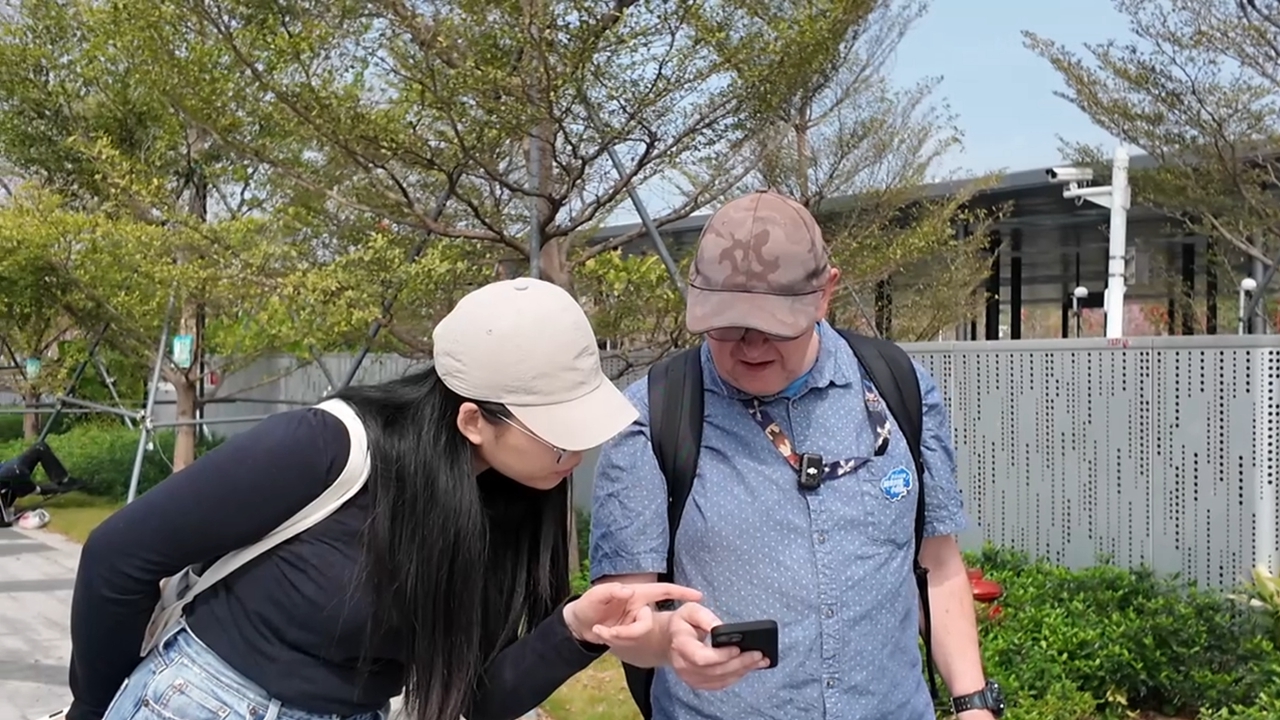
Andrew from the U.K. (R) shows photos about public signs he has taken to an EyeShenzhen reporter.
The event was the second section of a citywide initiative launched by the Shenzhen Municipal Foreign Affairs Office, EyeShenzhen and 1st to the Scene (Shenzhen Media Group). The campaign aims to improve Shenzhen’s public language environment and boost its international image.
The city’s Foreign Affairs Office has also issued an updated version of the guidelines for English use in public service areas, with more sector-specific rules and explanatory videos in the pipeline.
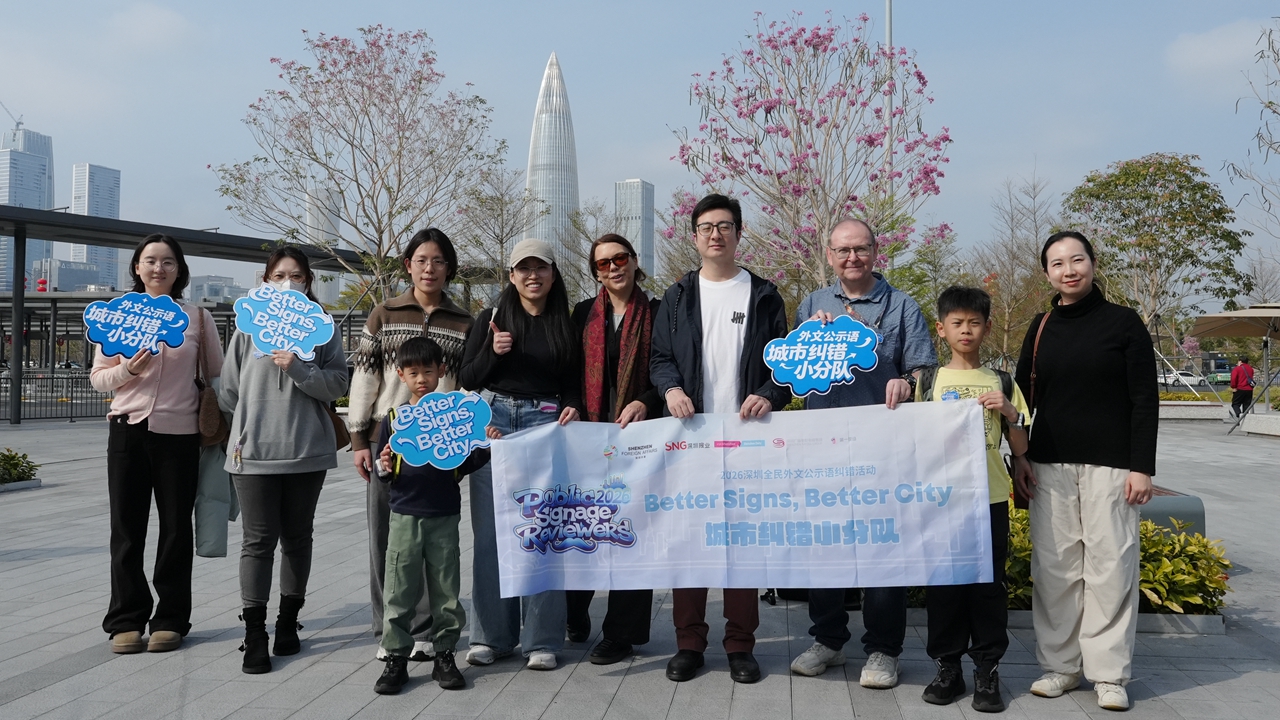
Participants pose for a group photo in Shenzhen Bay Checkpoint.
The campaign will run through November, featuring eight more offline inspections and a 10-round online competition. Residents can report signage errors via the city’s “Inquiry System of Chinese-English Public Signs in Shenzhen” website or WeChat mini-program. Monthly top scorers will receive certificates and prizes.