
 Share
Share


 Print
PrintA close look at Apple's applied research lab
Writer: | Editor: Lin Qiuying | From: Shenzhen Daily | Updated: 2026-03-17
Located in the Shenzhen Park of the Hetao Shenzhen-Hong Kong Science and Technology Innovation Cooperation Zone, Apple’s applied research lab welcomed its first batch of visiting journalists on March 17. The facility, first announced by the U.S. tech giant in March 2024, officially commenced operations in October of that year. During the visit, Sabih Khan, Apple's chief operating officer, and Isabel Ge Mahe, vice president and managing director of Greater China, briefed journalists from the Shenzhen Special Zone Daily on the lab’s operations.
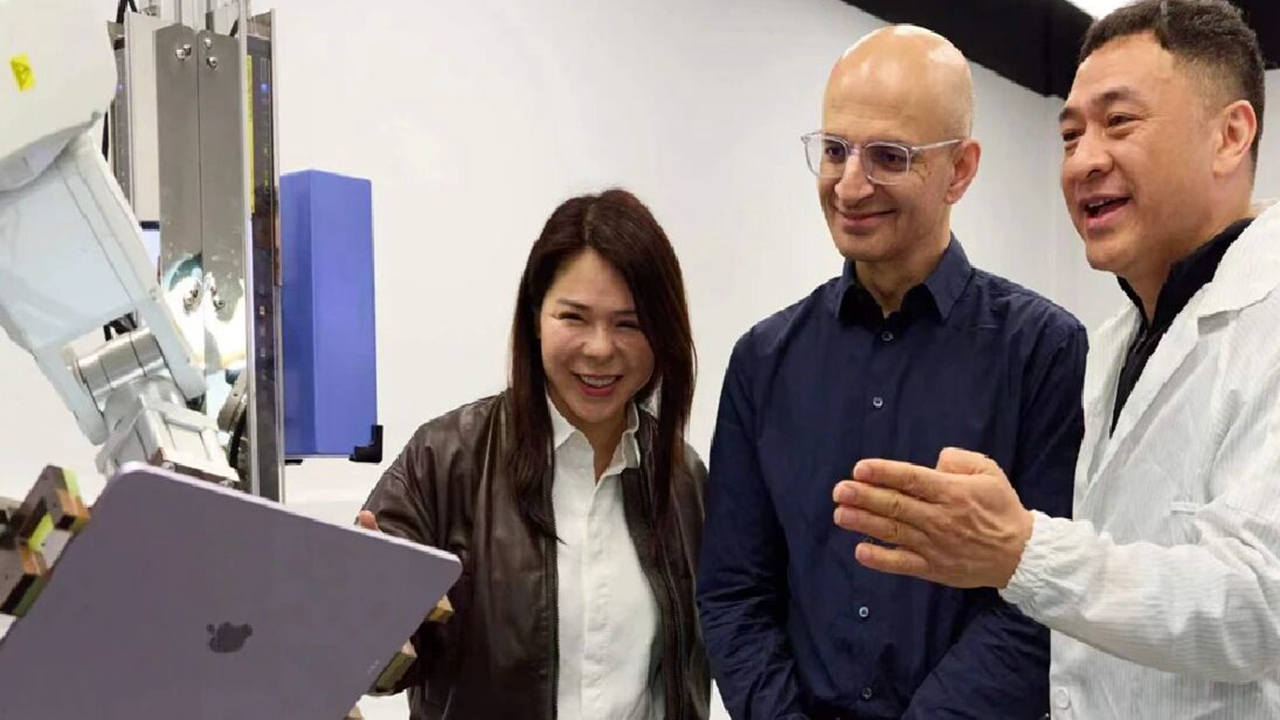 Sabih Khan (C) and Isabel Ge Mahe (L) at the Shenzhen applied research lab. Photos by Dute News
Testing simulates real-world challenges
Inside the lab building is a neat, modern experimental space filled with an impressive array of precision instruments. The eighth floor is currently under expansion; upon completion, the facility will be able to fulfill all of Apple's comprehensive research functions.
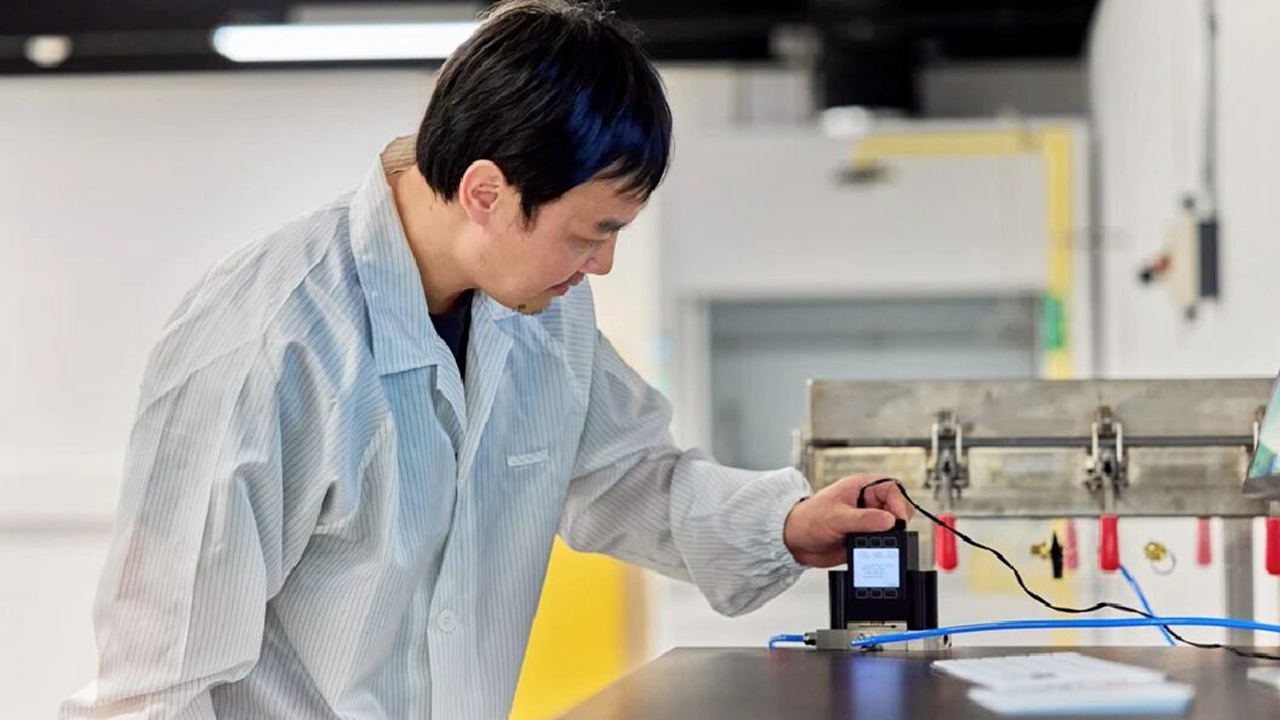
An engineer is working at the lab.
The cutting-edge devices help ensure the quality user experience of Apple products throughout their entire lifecycles. The drop-testing area simulates both controlled and random drop scenarios on three types of flooring—asphalt, wood, and granite. Vibration testing tables, designed according to Apple’s standard formulas, replicate the complex vibration environments of transport and use, ensuring stable product structures. A 3D blue light scanning system captures three-dimensional images with micron-level precision, quantifying deviations down to one-hundredth the diameter of a human hair. Waterproof testing chambers simulate various water intrusion scenarios, from accidental splashes to deep immersion, validating the reliability of sealing designs.
“Engineers working here generally graduated from world-class universities, and many hold doctoral degrees,” Ge Mahe said. They collaborate with global engineers and designers, leveraging advanced lab equipment to create exceptional products not just for China, but for consumers worldwide.
Doppler laser equipment helps create flawless devices
Among all the precision instruments, the laser Doppler vibrometer (LDV) system stands out. It can capture micron-level vibration displacements on product surfaces.
The LDV works by sending a focused laser beam onto an object. When the surface vibrates, the reflected light undergoes a slight frequency shift due to the Doppler effect. By measuring this shift, the LDV calculates precise velocity and amplitude data, creating detailed vibration maps that allow engineers to visually “see” sound. To achieve maximum precision, this LDV system operates within a specially built anechoic chamber, making even the smallest vibrations detectable.
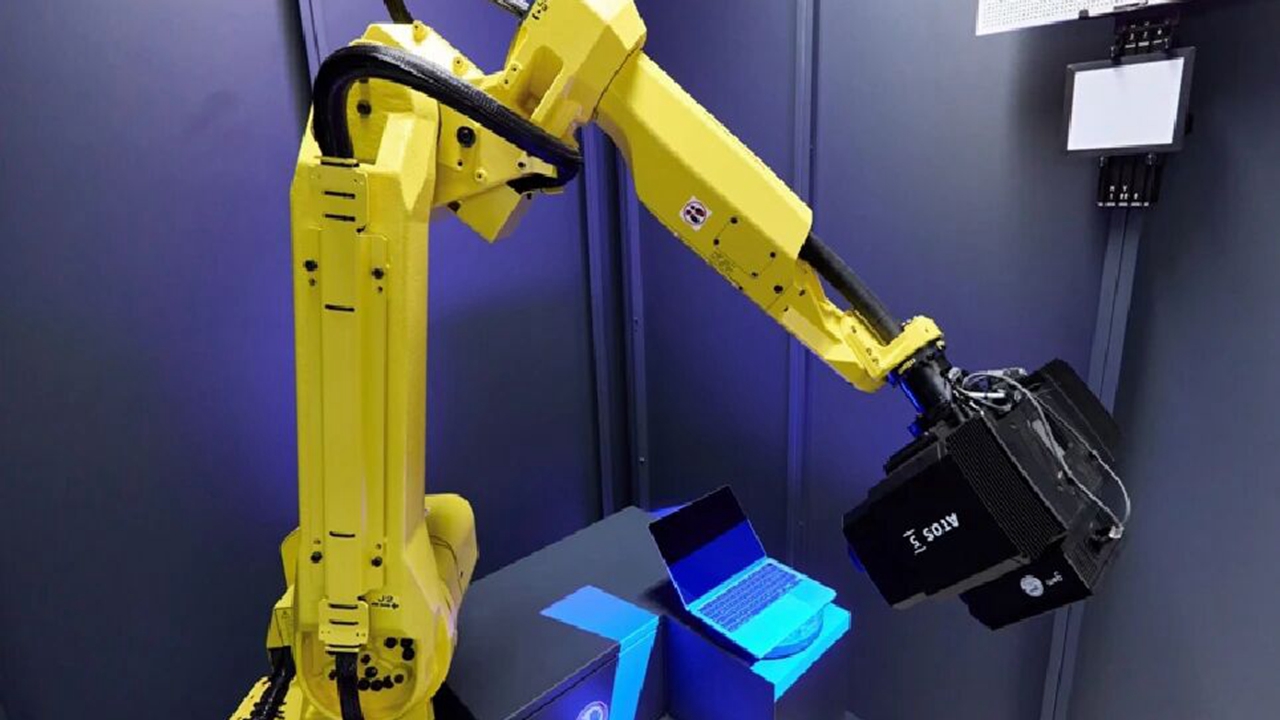
The 3D + blue light scanning facility.
Take the MacBook Air as an example. During product development, if unexpected noise occurs, engineers use the LDV to scan samples, quickly and precisely locating abnormal vibrations in specific areas.
This non-invasive diagnostic capability enables Apple to thoroughly examine its products during early development, identifying hidden structural dangers or functional defects invisible to the naked eye, so that problems are not carried on to later stages.
Hetao empowers Apple's innovation
Apple has deep roots in Shenzhen. In 1998, the company produced its first iMac G3 in the city; in 2007, the first-generation iPhone that revolutionized the mobile phone industry was also born here.
“Our initial supply chain was established in Shenzhen,” said Khan. “Shenzhen means a lot to both me and Apple.”
Ge Mahe specifically highlighted the strategic value of the lab’s location within the Hetao park: “The biggest advantage is efficiency. Once an anomaly is discovered during product development, the team can quickly retrieve samples for analysis in the lab and then feed solutions back to the production line. This response speed is crucial in global supply chain management.”
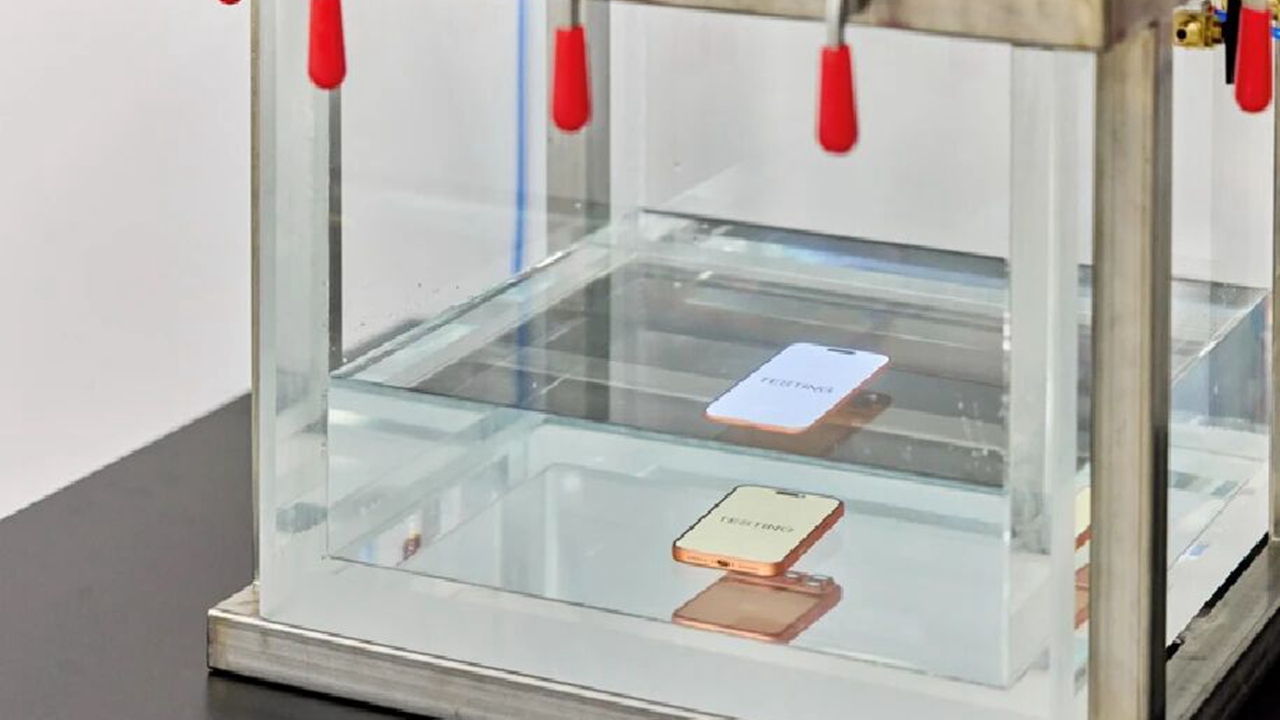
A phone undergoes an IPX8 waterproof test.
The efficiency arises from supply chain synergy. Currently, Apple has nearly 200 key suppliers in Guangdong Province, with whom it has built joint laboratories. “We help our suppliers enhance their R&D staff's problem-solving capabilities,” Khan said. Through joint labs, Apple injects its own R&D capabilities into the local supply chain, fostering innovation synergy and accelerating the commercialization of next-generation technologies.
From the iMac G3 in 1998 to today’s applied research lab, the story of Apple and Shenzhen vividly encapsulates the leap from “made in China” to “made intelligently in China.”
Apart from Apple’s lab, the Hetao cooperation zone is also home to the Greater Bay Area International Clinical Trial Collaboration Platform, the Greater Bay Area Quantum Science Center, Starbucks’ innovation center, and STMicroelectronics’ global assembly and testing center.
According to Shenzhen’s government work report, the Hetao Shenzhen Park now boasts six international industry and standard organizations, in addition to 52 advanced research institutions and corporate R&D centers.