
 Share
Share


 Print
PrintIndonesian strategist highlights Huawei in China education ties
Writer: Chen Siqi | Editor: Lin Qiuying | From: Original | Updated: 2025-12-04
A leading Indonesian strategist pointed to China's development achievements and the tech hub of Shenzhen as critical references for understanding the country's global role while outlining infrastructure, education, and innovation as the future of bilateral ties during the 2025 Understanding China Conference, which concluded in Guangzhou on Tuesday.
In the context of the 75th anniversary of diplomatic relations between China and Indonesia, Jusuf Wanandi, co-founder of the Center for Strategic and International Studies (Indonesia), shared insights on the deepening bilateral partnership during the recent conference.
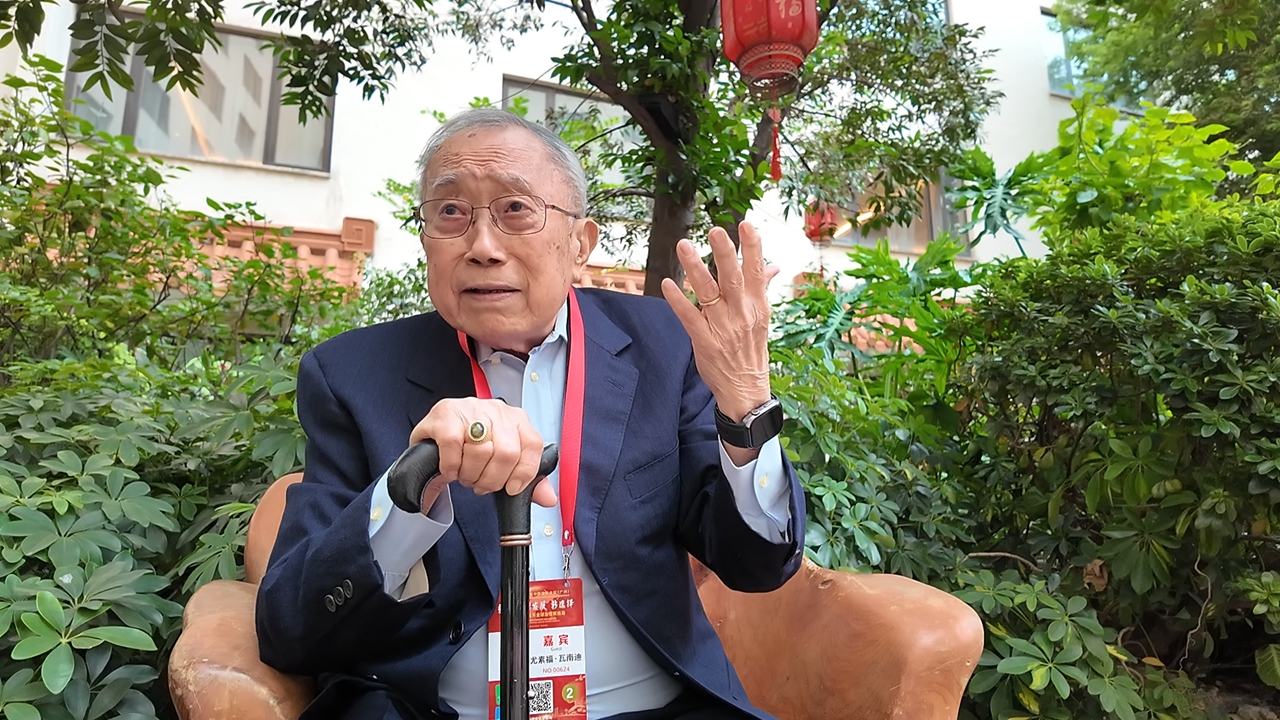 Jusuf Wanandi, co-founder of the Center for Strategic and International Studies (Indonesia), speaks to reporter during the 2025 Understanding China Conference in Guangzhou. Chen Siqi
With more than five decades of experience observing East Asian dynamics, Wanandi emphasized that understanding China requires a deep appreciation of its history and culture.
“The continuity of the country and its culture has been very important in defining China’s path,” he noted, adding that this historical perspective is essential for engaging with contemporary China.
Wanandi spoke positively of the Belt and Road Initiative’s role in enhancing regional connectivity. He highlighted the Jakarta-Bandung High-Speed Railway as a landmark project and revealed that Indonesia has proposed extending this cooperation to a Jakarta-Surabaya line.
He also cited nickel industry collaboration as a successful example of synergies benefiting both nations, particularly in the electric vehicle supply chain.
“China is playing a very important role,” Wanandi said. “We would like to be partners with China in keeping this part of the world both developed and peaceful.”
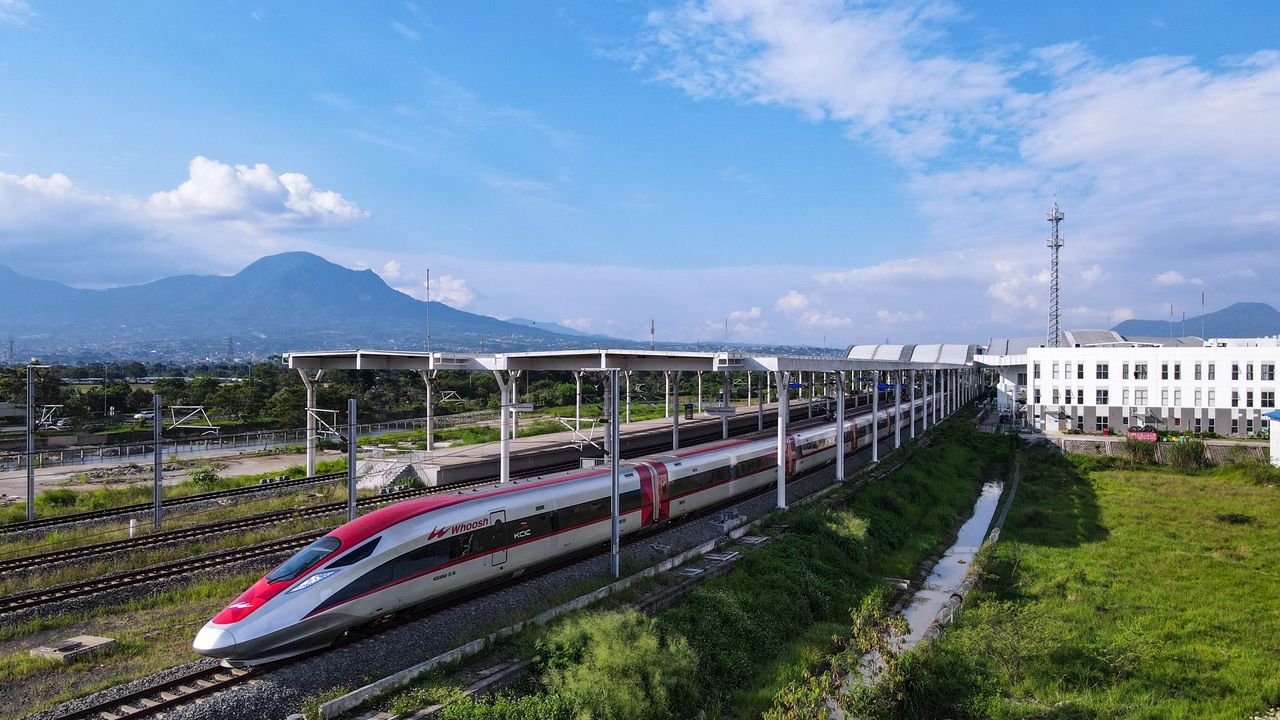
A Jakarta–Bandung high-speed train departs from Tegalluar Station in Bandung, Indonesia, on May 20, in this drone image. The Jakarta–Bandung High-Speed Railway is a flagship Belt and Road Initiative (BRI) project jointly developed by China and Indonesia. Xinhua
During the interview, Wanandi showed his Huawei smartwatch to the reporter and complimented its utility. “My watch is from Shenzhen. It works so hard to check my heart. This is very helpful,” he said, illustrating his personal trust in the city’s technological advancement.
Having visited Shenzhen 15 years ago, Wanandi recalled a contrasting image of the city. Today, he regards Shenzhen as a leading global hub for high-tech innovation.
Looking ahead, Wanandi identified education as a critical area for bilateral growth, pointing to companies like Huawei as prime examples for Indonesia to learn from. He suggested that Indonesia should significantly increase the number of students studying in China, aiming for up to 3 million in the long term.
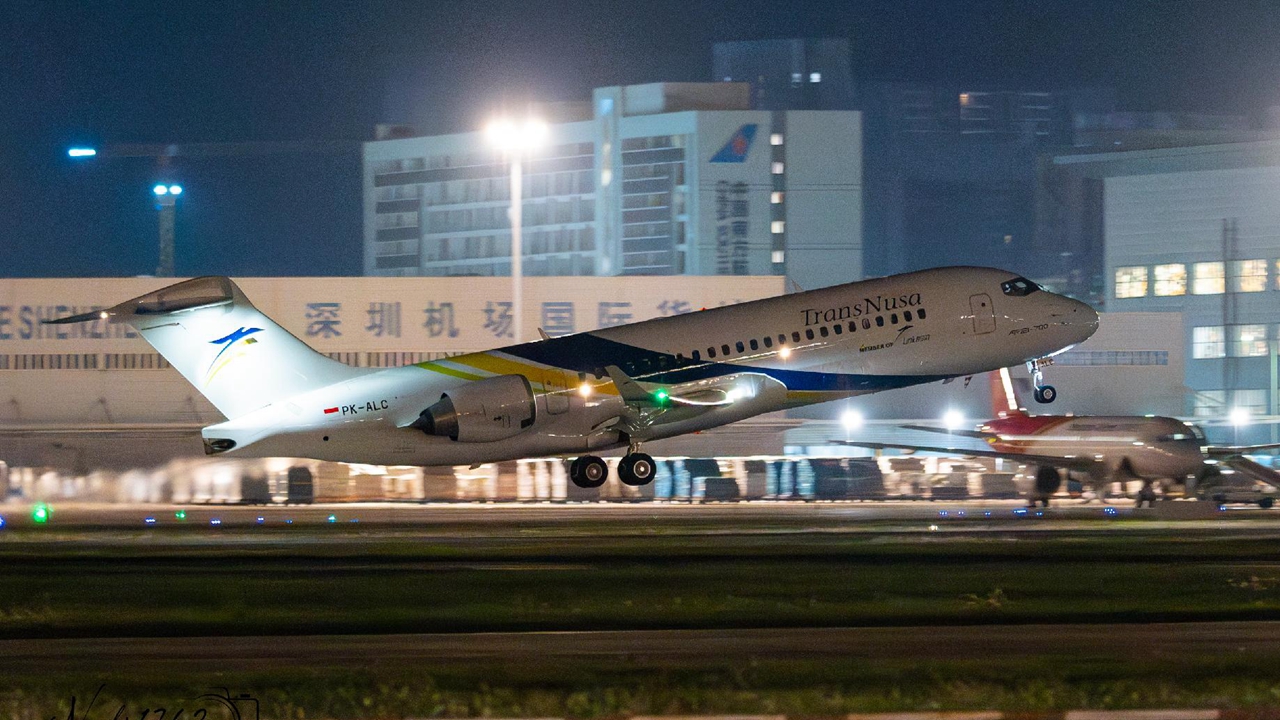
A C919 passenger aircraft is seen at Shenzhen Bao’an International Airport as the new international route to Manado, Indonesia, officially opened Oct. 3. Shenzhen Special Zone Daily
He praised the appointment of Stella Christie — an Indonesian professor at Tsinghua University who now serves as Deputy Minister of Higher Education, Science, and Technology in Indonesia — calling it a positive step toward leveraging Chinese expertise.
Wanandi concluded by reaffirming the strategic importance of the China-Indonesia relationship for regional stability and prosperity. “We have found each other as partners again and again,” he said. “Through cooperation, we can ensure that East Asia continues to develop peacefully.”