
 Share
Share


 Print
PrintBrazilian linguist builds bridges with Esperanto
Writer: Chen Siqi | Editor: Lin Qiuying | From: Original | Updated: 2025-12-04
Rafael Henrique Zerbetto, a Brazilian editor and linguist, is engaged in a quiet but profound mission: using the neutral, constructed language of Esperanto to foster a more nuanced global dialogue about China.
His unique journey, which recently earned him the prestigious Chinese Government Friendship Award in 2025, exemplifies how cultural intermediaries can build bridges of understanding.
During the Understanding China Conference that concluded Tuesday, Shenzhen Daily interviewed the award winner.
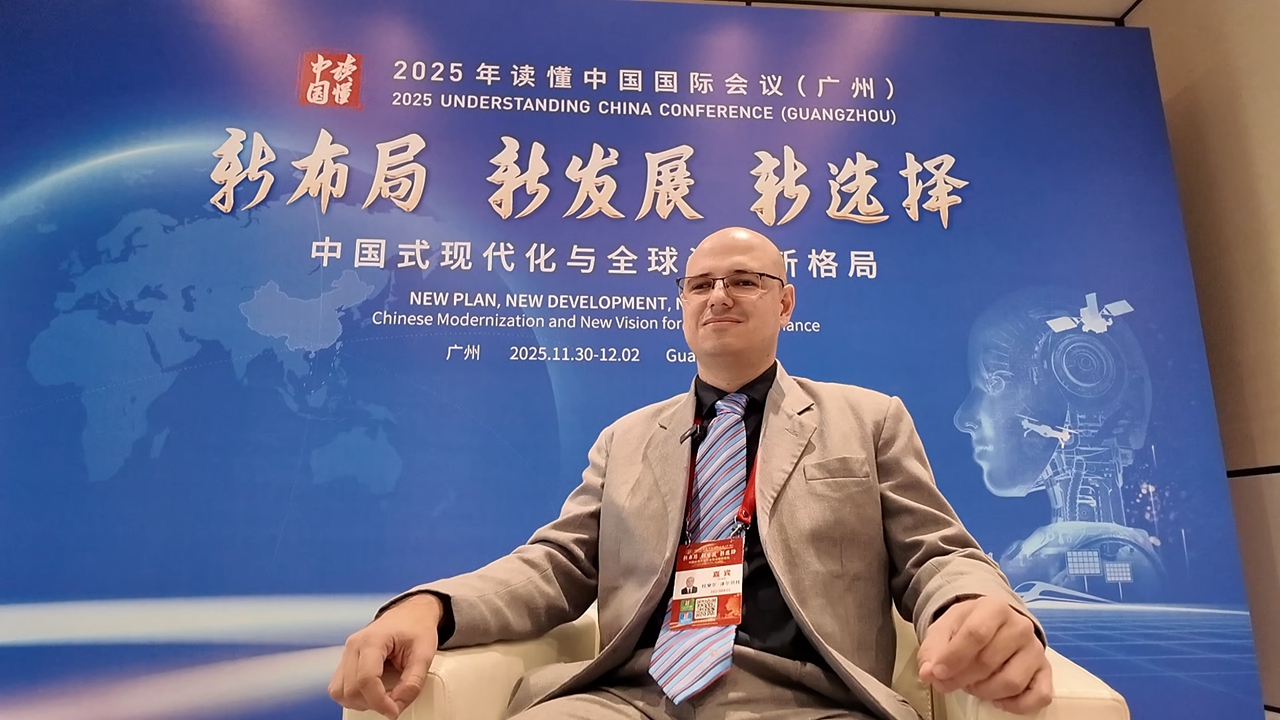
Brazilian editor and linguist Rafael Henrique Zerbetto speaks during an interview at the 2025 Understanding China Conference in Guangzhou. Chen Siqi
Zerbetto arrived in China in 2015 to work as an editor for a news website. While his professional work focused on publishing, his passion lay in Esperanto. “Esperanto was designed to promote communication and friendship between the peoples of the world on a neutral basis,” said Zerbetto.
Zerbetto believes Esperanto is important because it creates a level playing field for global communication. When people talk using one person's native language, that person has an advantage. Esperanto, as a neutral second language for everyone, removes this unfairness.
He compares it to China, where many ethnic groups keep their own languages but use Mandarin to communicate with each other. In the same way, the world's people could keep their native languages and cultures, but use Esperanto as a fair, shared tool for understanding.

The “Language Planet” installation is pictured at the World Language Museum at Beijing Foreign Studies University in this file photo. Located on the university’s west campus, the museum opened in September 2021 and spans approximately 1,400 square meters. It explores the diversity and history of world languages through eight thematic sections, combining foundational linguistics and interdisciplinary knowledge. Xinhua
He uses this neutral language himself to help the world understand China.
"For my readers worldwide, I write about my life in China or topics I see they are curious about," Zerbetto told Shenzhen Daily. The feedback from his global Esperanto-speaking community, scattered across continents, actively shapes his work. "Their questions guide me to research specific aspects of China and present perspectives they might not find elsewhere," he said.
This interactive process has became a powerful communication strategy, allowing him to address genuine international curiosity beyond mainstream media narratives.
This two-way street of communication also deepened his own comprehension of China. The process of researching and articulating China's realities for a foreign audience compelled him to constantly learn and see his adopted home from multiple angles. His understanding crystallizes around two core concepts he believes are essential for any meaningful engagement with China.
"China is an ancient civilization with a distinct mentality and approach to social organization," he shared. "To have a better dialogue, one must learn to see from this different perspective." He emphasized the importance of understanding China's governance model. "The Chinese system is different, developed from its own historical and cultural context. It's not about superiority or inferiority, but about a valid alternative path that has inspired many developing nations."
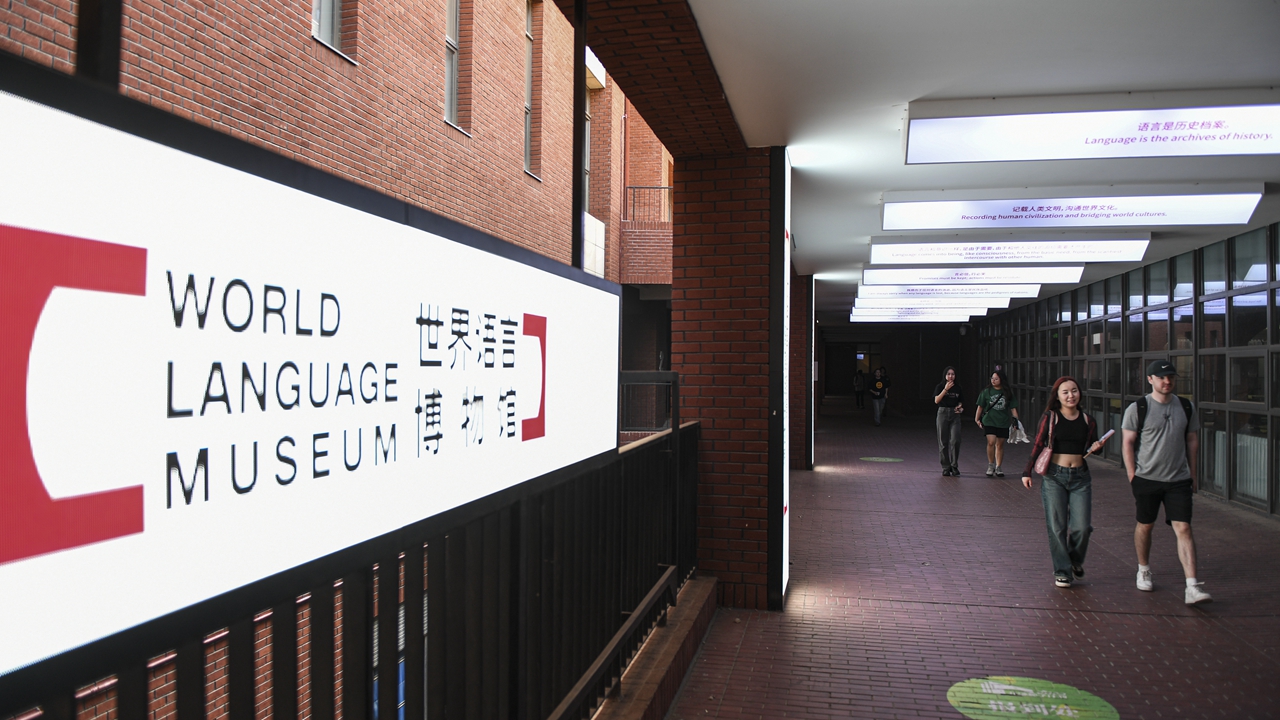
Visitors walk past the World Language Museum at Beijing Foreign Studies University in May 2024. Xinhua
Receiving the Chinese Government Friendship Award in 2025 was a milestone that he says "realized a dream." Beyond the honor, it grants him permanent residency — a symbol of stability and belonging. "It allows me to plan my long-term future here and empowers me to do more in promoting exchanges," he said. The award also validated his approach to building connections, which he found often starts within the foreign community itself.
Looking ahead, Zerbetto sees great potential in China's hosting of international events like the APEC summit in Shenzhen — a city he admires for its blend of technology, green spaces, and vibrant culture. "In the current global climate, forums like APEC are crucial for diversifying partnerships and creating stable grounds for common development," he remarked.
Through Esperanto, thoughtful writing, and personal engagement, Zerbetto stands as a testament to the power of patient, respectful dialogue. He is not merely explaining China to the world, but is simultaneously facilitating a conversation where understanding flows in both directions, one carefully crafted word at a time.