
 Share
Share


 Print
PrintTech empowers athletes with disabilities at Paralympics
Writer: | Editor: Lin Qiuying | From: | Updated: 2025-12-16
Technology was an invaluable partner for athletes and individuals with disabilities during China's 12th National Games for Persons with Disabilities and the 9th National Special Olympic Games, which wrapped up Monday.
A total of 7,824 athletes from 34 delegations registered for the Games, which was held across the Guangdong-Hong Kong-Macao Greater Bay Area.
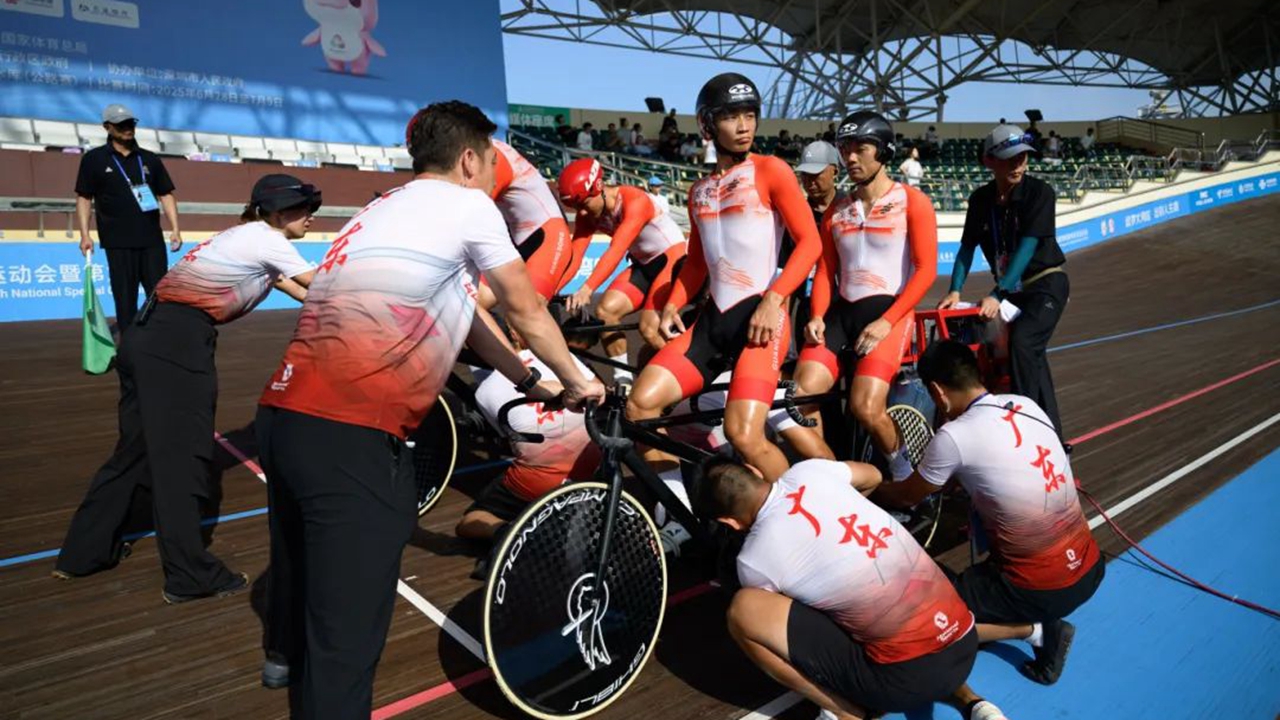 Team Guangdong cyclists prepare for competition with the support of their crew at the 12th National Games for Persons with Disabilities and the 9th National Special Olympic Games. Photos from WeChat account “深圳发布"
The most significant highlight of the Games, according to the organizing committee, was the major role technology played in assisting athletes. Across the venues, a range of cutting-edge technologies were used to create an accessible and supportive environment, including the Internet of Things, artificial intelligence, big data, and digital twins.
Gong Wei, a Beijing-based volunteer who has been providing remote sign language translation for more than a year, said the number of requests increased during the Games.
Through a program on WeChat, users can connect with volunteers for video calls within seconds. "This service not only breaks down geographic distance but also bridges the psychological gap for people with hearing impairments, offering them certainty and confidence," Gong said.
The program was developed by Shi Chengchuan, a hearing-impaired person whose team has also created sign language translation software and devices used in settings like government offices, hospitals, and schools.
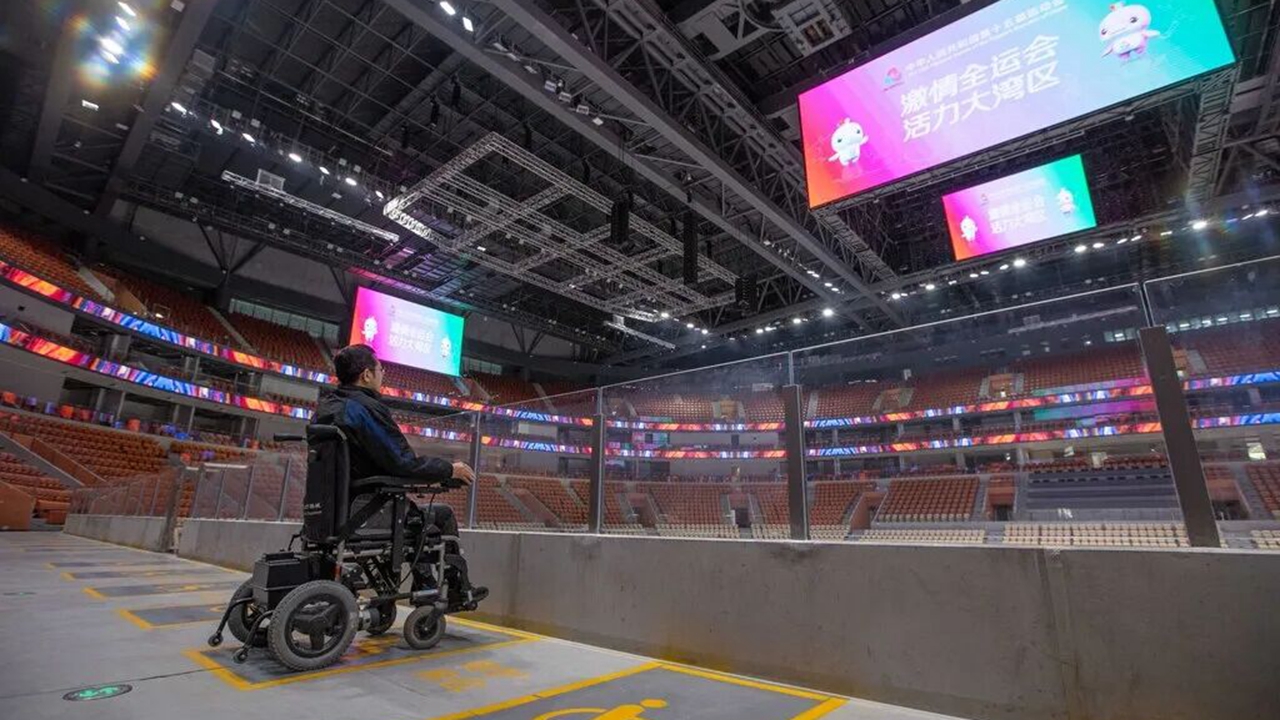
A spectator in a wheelchair enjoys an accessible viewing area at a Games venue in Shenzhen, highlighting the inclusive design and smart infrastructure showcased during China’s 12th National Games for Persons with Disabilities and the 9th National Special Olympic Games. Technology played a central role in creating barrier-free experiences for all.
Zheng Qihao, a Games official from Guangzhou, said smart, barrier-free modules were installed across various venues and connected to each venue's central control system. These included emergency help buttons, accessible query platforms, smart service pillars, and online sign language translation machines.
A technology exhibition at the main media center showcased products such as AI-powered accessibility systems, guide dog robots, and advanced all-terrain wheelchairs, generating significant interest from visitors.
"These products are equipped with advanced balance control algorithms and reliable mechanical structures, ensuring stability and user safety on different terrains," said Liu Yi'an, an employee from a smart wheelchair manufacturer.
He added that Guangdong has long been a leader in assistive technology production, and now, with the integration of AI, new materials, and other cutting-edge technologies, mobility for people with disabilities has become safer and more convenient.
The integration of smart systems could also be seen in newly introduced electronic dartboards, which are height adjustable to accommodate wheelchair users.
"The dartboard's automatic height adjustment has made it much safer and more reliable than traditional models," said Luo Baogang, the coach of Shaanxi Province's dart team for persons with disabilities. "Athletes are much more comfortable with the new electronic dartboards because they're designed with their needs in mind."
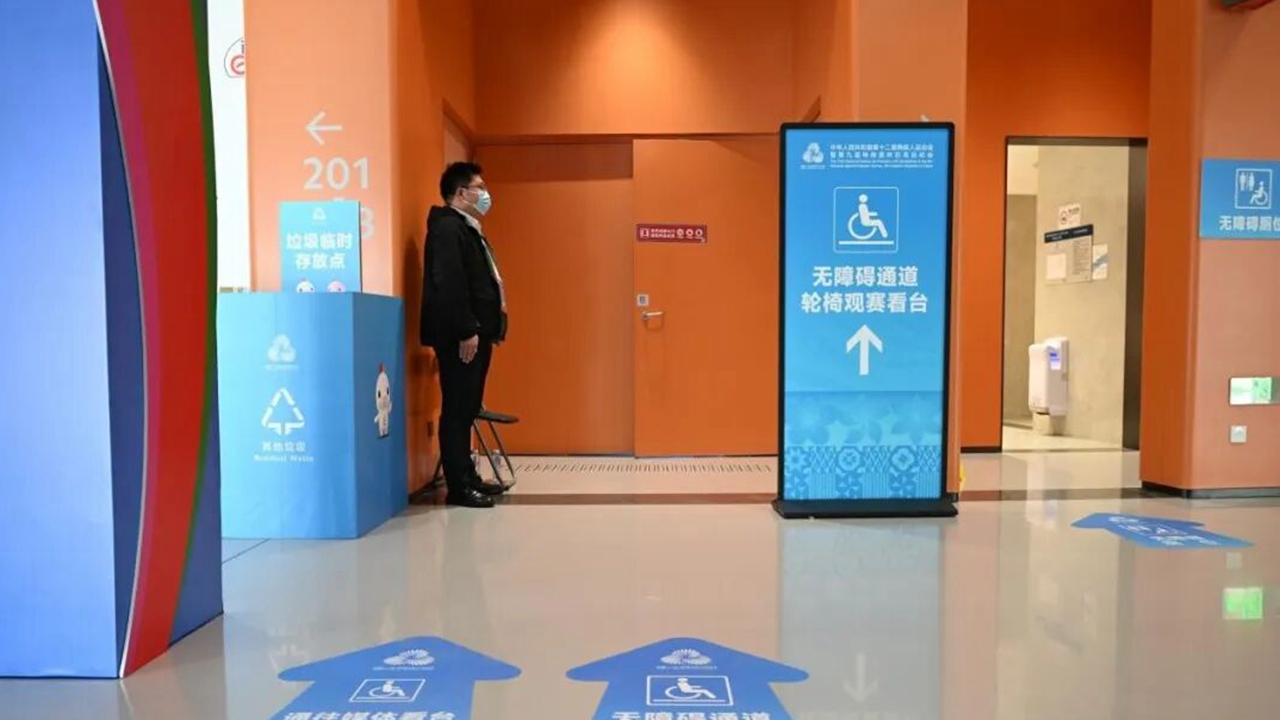
Clear signage and barrier-free pathways guide spectators to wheelchair-accessible seating at a Games venue in Shenzhen.
Beyond the competition floor, technology like guide dog robots assisted athletes with visual impairments, and digital twin technology enabled real-time monitoring of venue operations. A range of advanced products were used during competitions, helping move technologies from laboratories into real-world testing.
Chen Xuejun, deputy secretary-general of the organizing committee, said the Games provided an opportunity to better integrate disability services into broader social development.
"We aim for higher-quality and more sustainable progress so that people with disabilities can look forward to a brighter future," Chen said. (Xinhua)