
 Share
Share


 Print
PrintGD to mandate upfront disclosure of 'tea charge'
Writer: Li Jing | Editor: Lin Qiuying | From: Shenzhen Daily | Updated: 2025-12-16
Guangdong's market watchdog has drafted new hospitality guidelines requiring restaurants to clearly disclose all additional fees — including the traditional yet contentious "tea charge" — before customers place their orders, aiming to address consumer complaints over hidden charges.
The draft rules, open for public comment until Dec. 24, stipulate that all service fees and surcharges, including the "tea charge," must be communicated openly and displayed prominently through menus, digital screens, signage, or online platforms prior to ordering. Any price changes must be updated in a timely manner.
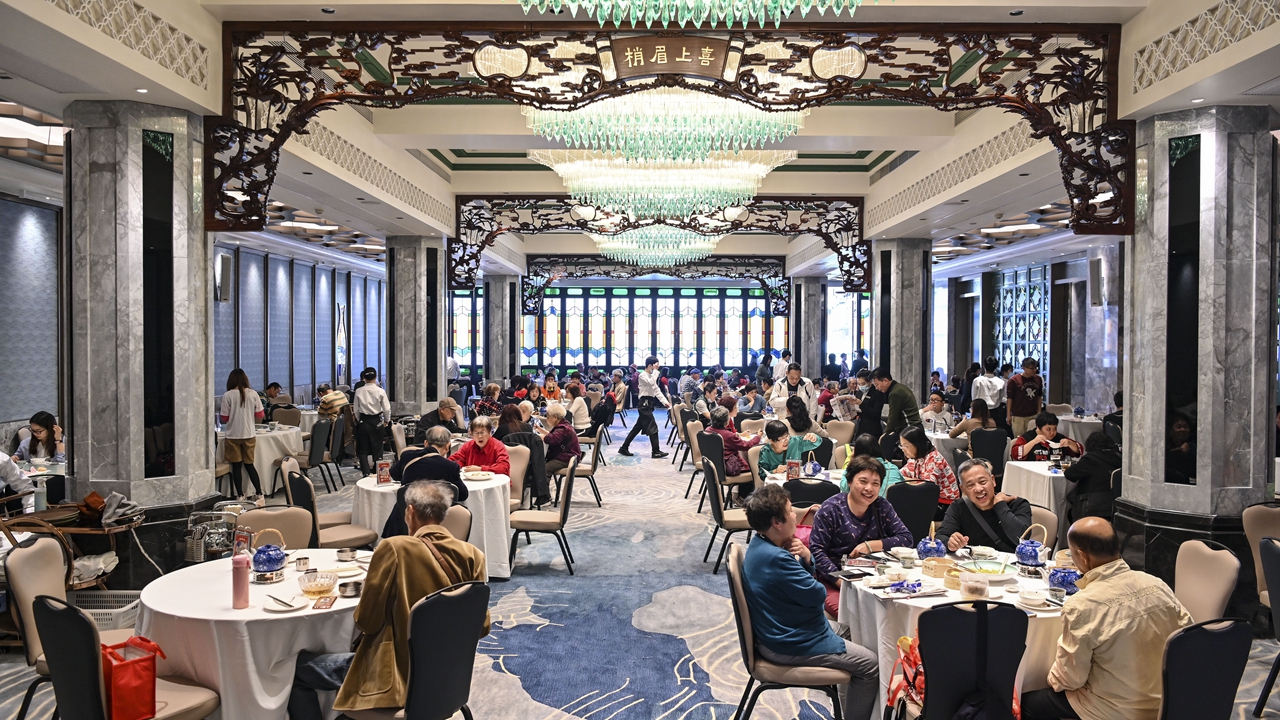
Diners enjoy morning tea at a restaurant in Guangzhou, a tradition that includes tea and a variety of dim sum dishes, commonly served as breakfast or brunch in southern China, especially in the Guangdong-Hong Kong-Macao Greater Bay Area. The “tea charge” — a per-person fee for tea and seating — has long been a standard practice in Guangdong’s dining culture. Photo by China News Service
The "tea charge" — a per-person charge levied regardless of whether tea is consumed — is deeply rooted in Guangdong's dining culture. Originating in Qing Dynasty (1644-1911) tea houses, where patrons paid a nominal sum for tea and a place to rest, the fee has evolved into a common practice across the province and is often viewed as compensation for seating and basic service. Many Guangdong-based restaurant chains have introduced the custom nationwide.
However, the lack of consistent and upfront disclosure has sparked growing criticism. Tourists from outside the region frequently express confusion, and local diners increasingly question the fairness of being charged on top of their meal.
Recently, a resident surnamed Li told the Yangcheng Evening News that she was charged 15 yuan (US$2.13) per person at a Shenzhen restaurant as a "tea charge" without prior verbal or menu notification — with only a small notice near the cashier. She described it as a "hidden charge," but the restaurant defended it as an "industry practice."
Public discontent has been simmering. In February 2024, on the online platform of People's Daily, a netizen suggested that Shenzhen should lead the way in abolishing the fee, noting that it often creates a negative impression on visitors from other parts of China.
In a reported case from October this year, a traveler surnamed Huang questioned why her 8-month-old infant was charged a 3-yuan "tea charge" at a seafood restaurant in Shanwei, which was listed under "tableware sets" for a party of 13. After media involvement, the restaurant apologized and refunded the overcharge.