
 Share
Share


 Print
PrintSmoke in restroom stall? The door turns clear
Writer: Mu Zi | Editor: Lin Qiuying | From: Shenzhen Daily | Updated: 2025-12-17
A shopping mall in Luohu District has installed “smart” restroom stall doors that turn transparent when they detect cigarette smoke — a high-tech deterrent that has drawn widespread attention and sparked heated debate over privacy and the ethics of surveillance.
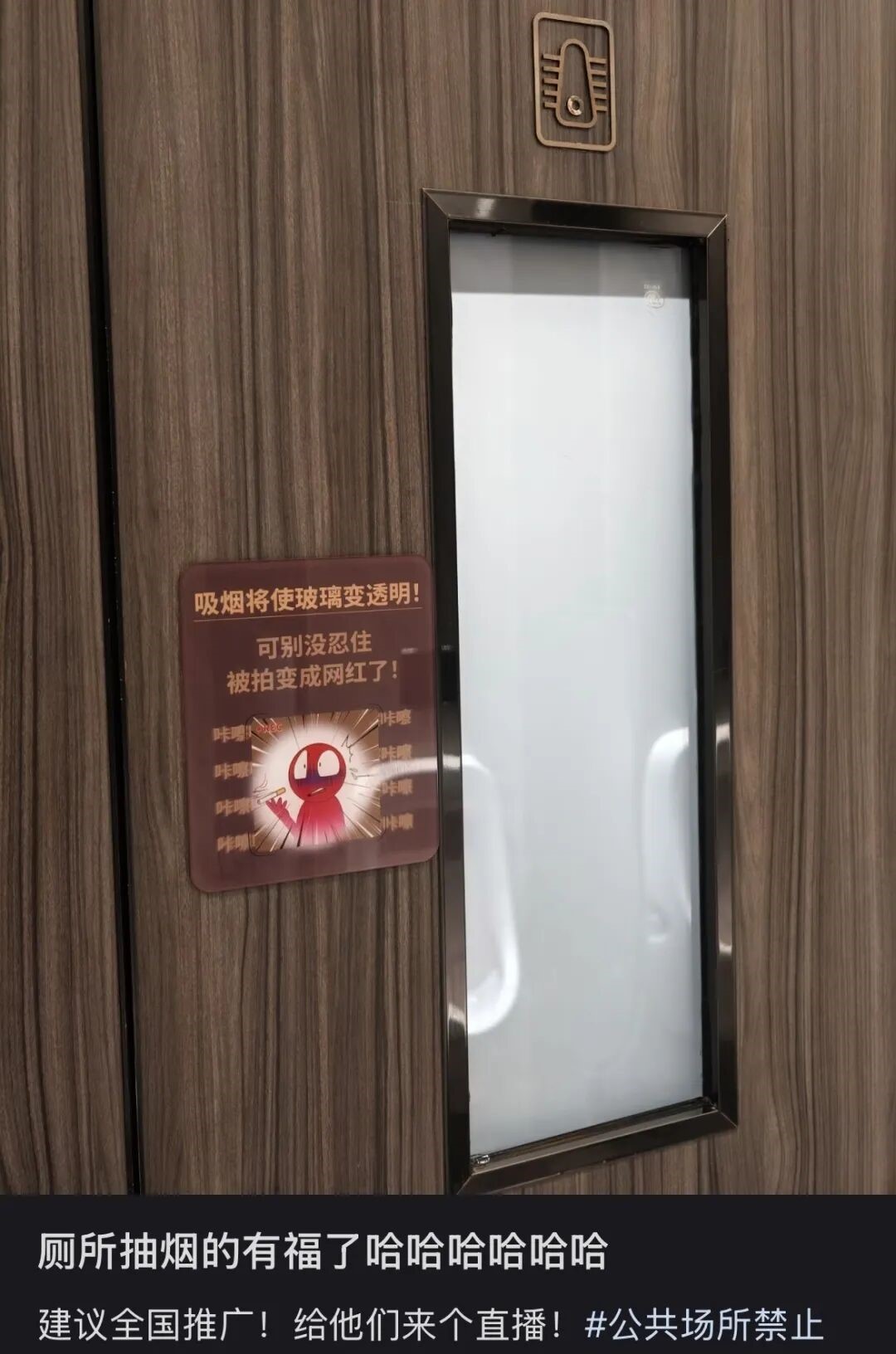
A smart-glass stall door with a liquid-crystal film is seen inside a public restroom at Gold Plaza in Shuibei, Luohu District. Photos from Daily Sunshine
The doors, fitted in the public restrooms of Gold Plaza in Shuibei, feature an electrically controlled glass panel at eye level. Normally frosted and opaque, the panel clears within seconds if built-in smoke sensors register a certain concentration of smoke in the stall. A prominent warning on each door reads: “Smoking triggers transparent mode.”
According to technical experts, the panels use commercially available smart glass with a liquid‑crystal film. When powered, the film keeps the glass opaque; when the system cuts power after sensing smoke, the crystals rearrange and the glass becomes clear almost instantly. By publicly exposing smokers, the design is intended as a behavioral deterrent.
Mall management says the measure was introduced to tackle persistent restroom smoking, which had generated complaints, lingering odors, and even fire risks from discarded cigarette butts. Zhao Li, the mall’s operations director, said smoking incidents have fallen significantly since the doors were installed earlier this year. A similar system has been adopted at the nearby Shuibei International Center.
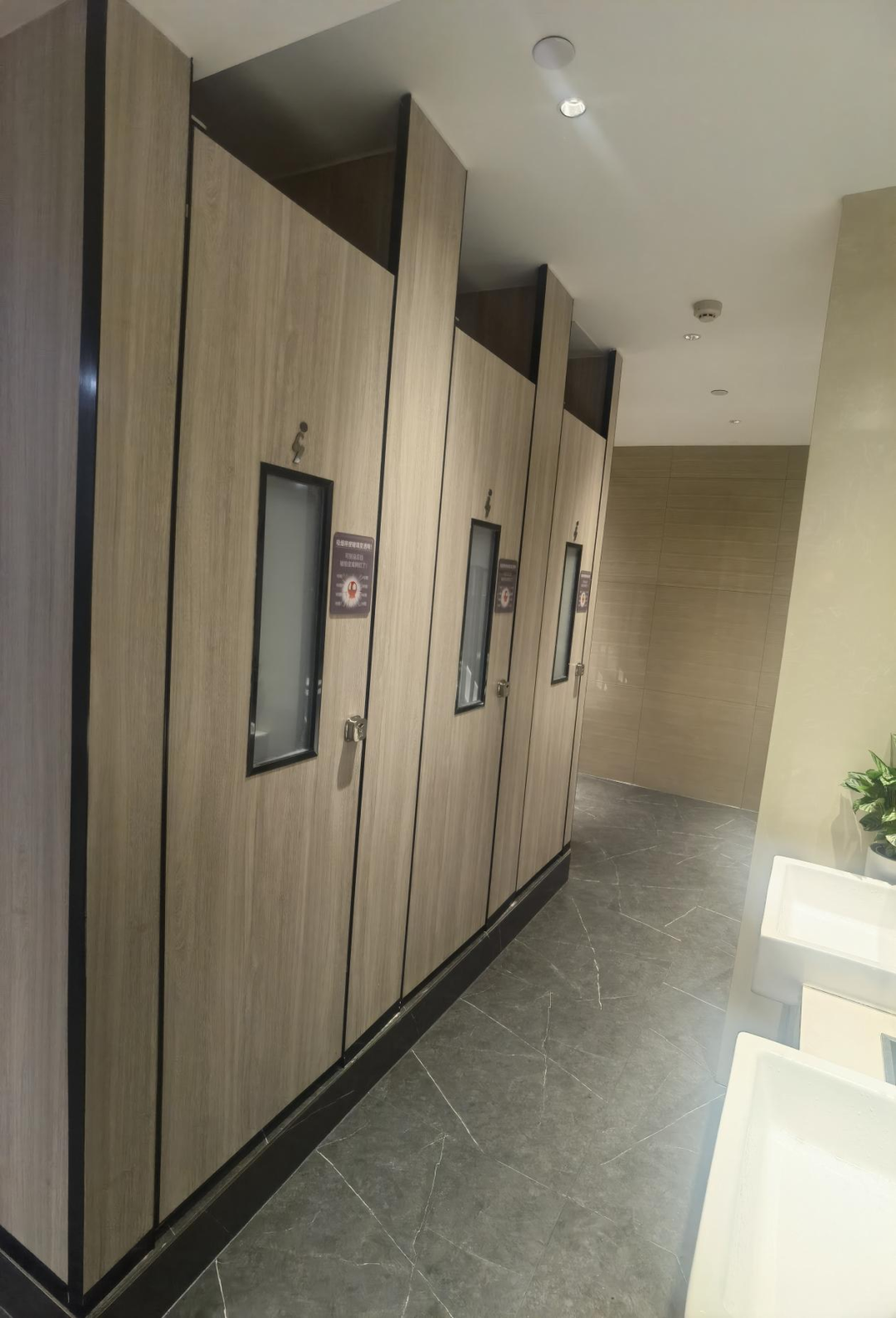
A restroom equipped with smart-glass stall doors in Shuibei, Luohu District.
Online reaction has been mixed. The "smart tech" smoke-control measure has been commended by some netizens as an effective and creative response to an intractable issue, with suggestions that it should be rolled out nationally. Others have raised privacy concerns, warning that false triggers — from steam, aerosols, or sensor errors — could expose innocent restroom users.
In response, the mall said it will recalibrate the smoke sensors and add a manual reset function to reduce accidental exposure.
Legally, the measure sits on uncertain ground. Shenzhen’s indoor smoking ban covers all enclosed public spaces, including shopping malls, so the doors align with public health regulations. But privacy experts caution against overreach.
Lu Weiguo of Guangdong Gehou Law Firm said restroom use is protected under privacy law, and technical failures that lead to unintended exposure could open the mall to civil liability. He also invoked the “principle of proportionality” administrative law, warning that excessive or prolonged transparency could exceed reasonable public‑interest limits.