
 Share
Share


 Print
Print'Once emotions build, they really grab you,' 'Wing Chun'audience
Writer: Chen Siqi | Editor: Lin Qiuying | From: Original | Updated: 2026-01-03
Rooted in the true story of legendary martial artist Ip Man, who left Foshan for Hong Kong in the 1950s-60s to preserve and promote Wing Chun, Shenzhen original dance drama “Wing Chun” delivers a deeply Chinese narrative — yet its staging and physical storytelling have touched a global crowd.
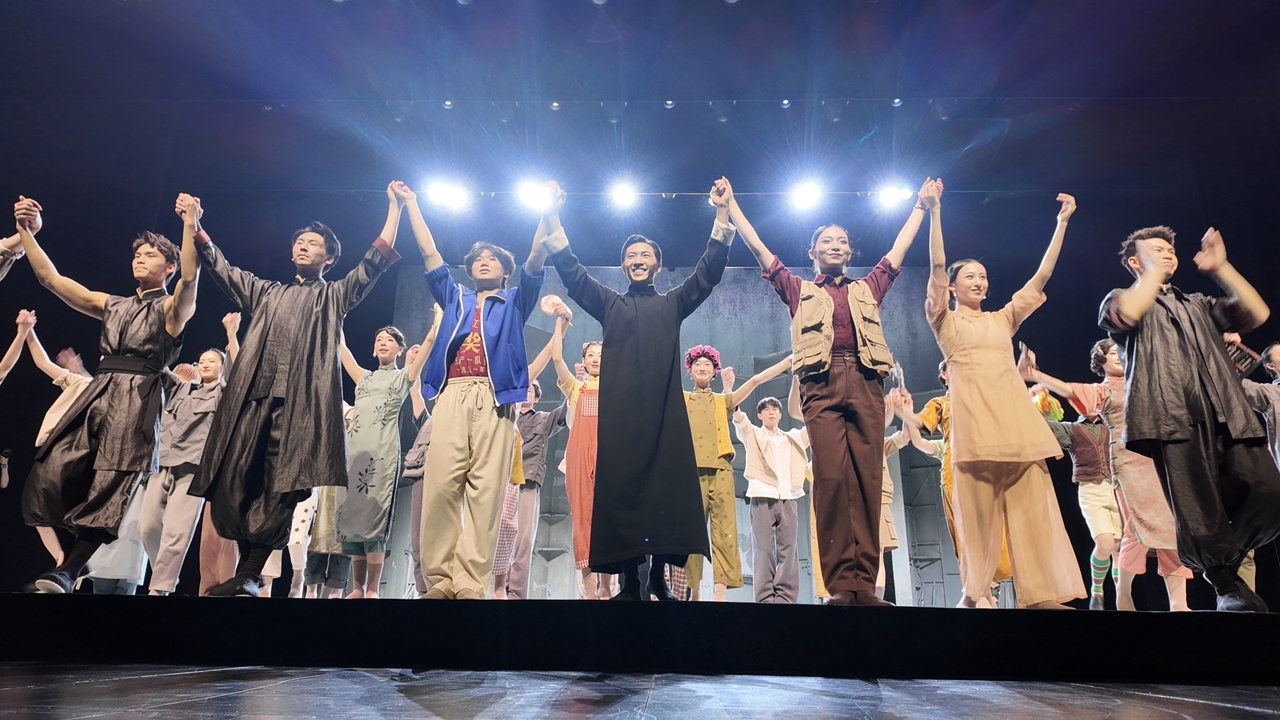 Curtain call for “Wing Chun” after the Jan. 2 performance at the Meridian Hall in Toronto, Canada. Photos by Geng Chaoyi unless otherwise stated
With only three performances left in Toronto — two on Jan. 3 and a closing show on Jan. 4 — the dance drama is wrapping up a 20-show run at Meridian Hall.
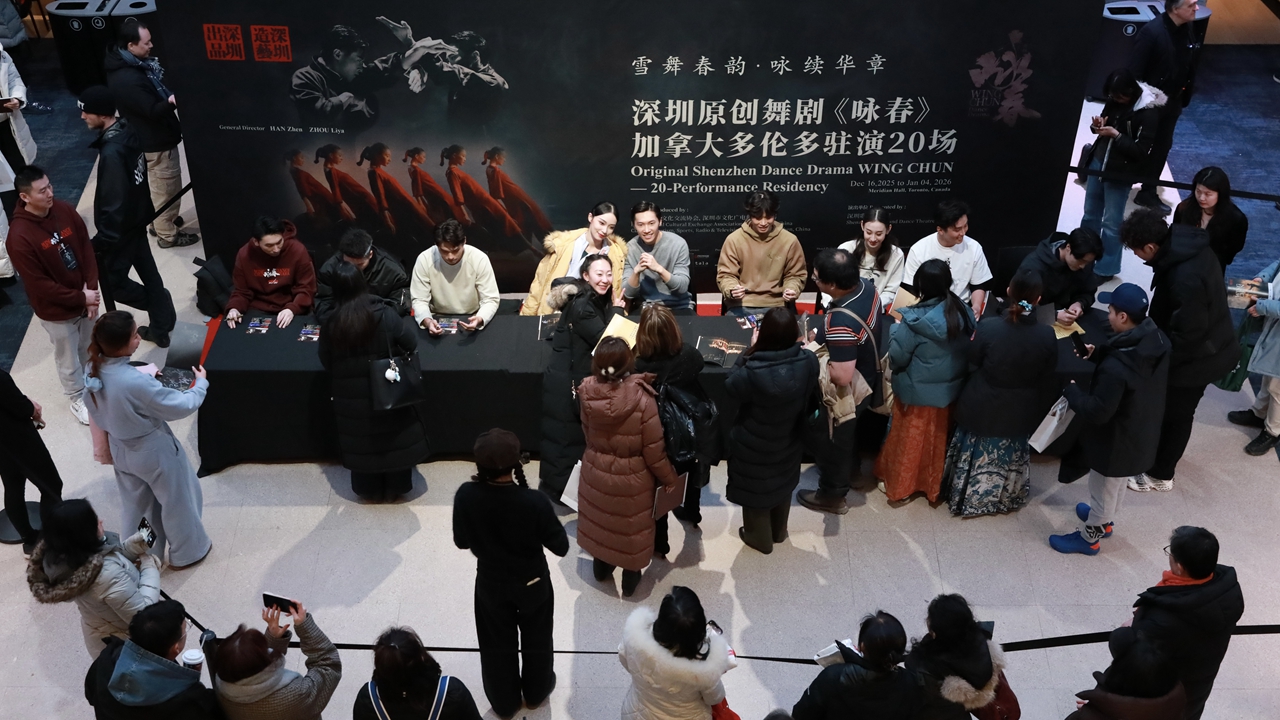
An autograph session of “Wing Chun” draws enthusiastic fans.

The Meridian Hall is packed with audience members Jan. 2.
During curtain calls on the evening of Jan. 2 local time, it was two foreign spectators who first rose to their feet in a standing ovation. Dozens more captured the moment on their phones, and after the show, a steady stream of international attendees queued to buy “Wing Chun” merchandise and collect signed brochures at the cast meet-and-greet.
What draws international audiences to a performance so distinctly Chinese in theme and form? For many, “Wing Chun” is their first encounter with Chinese dance drama.
“It’s my first time to see Chinese dance drama, but I’m a martial arts fan,” said Ryan, a Toronto local who practices Brazilian jiu-jitsu. “The fusion of martial arts and dance is stunning. There’s hardly any dialogue, but the movement speaks completely.” He added that the show expanded his view of Chinese kung fu: “It’s a great introduction. You get to see five different styles of Chinese martial arts in one show.”
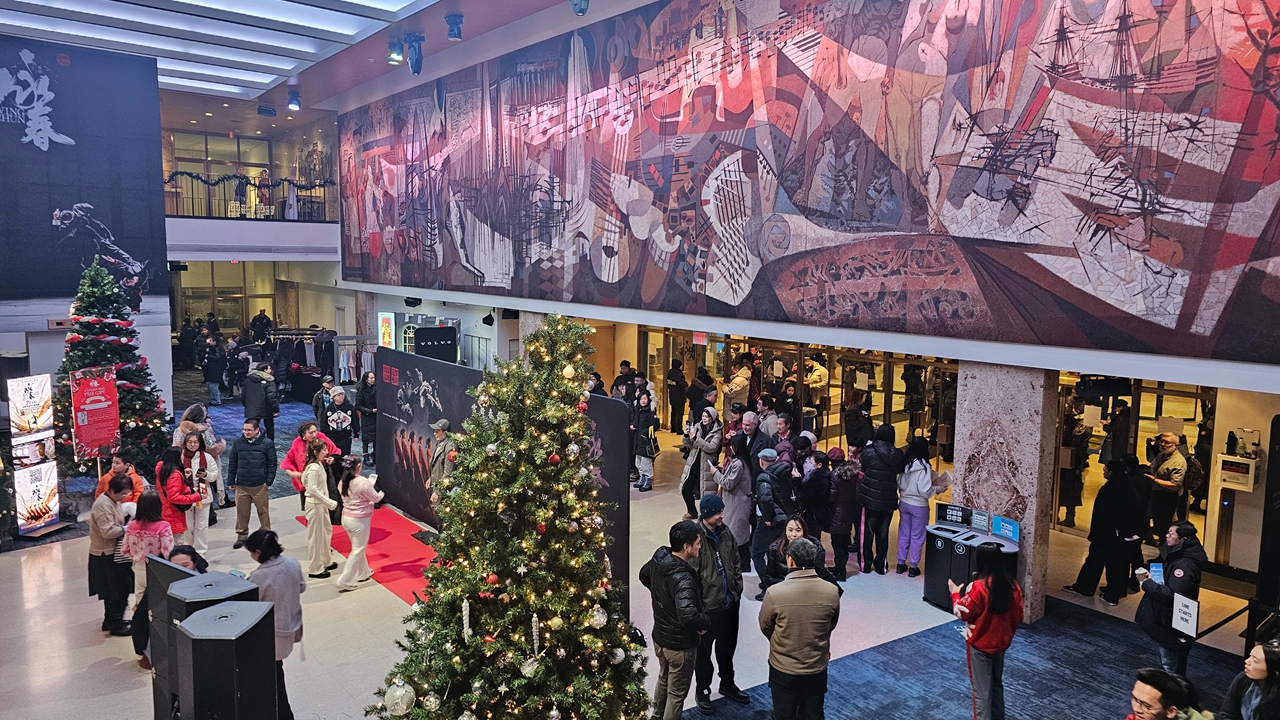
A view of the Meridian Hall. Chen Siqi
Jorge Correa came with five friends as a New Year’s celebration. “We just wanted to experience something different,” he said. Though unsure what to expect, they left impressed, and curious to explore more Chinese drama. “I’ve already texted my friends, telling them ‘There’s a great show here. You shouldn’t miss it.’”
For others, the bond with China feels personal. Amanda relocated to Canada from Australia with her mother and grandmother, who have long had Chinese friends. “I grew up on Bruce Lee films, so we were excited to come and support Chinese culture,” she shared warmly. “There’s something hereditary in it — even though we’re not from China, we feel drawn to its people. And I came for the talented dancers.”

Amanda and her daughter purchase “Wing Chun” merchandise.
Olga, who goes by the Chinese name 雪莹 (Xueying) given by her Mandarin teacher, has long admired Chinese culture and was visibly moved during the show. “I was so excited, I almost cried,” she said. “It’s a beautiful way to understand China’s history and the spirit behind its martial traditions.”
When asked whether differences in expressive style between Chinese and Western performance affected his enjoyment, Roy Maher, a Canadian resident originally from the U.K., said it posed no barrier. “Western shows tend to be very camp, but this show is subtler,” he observed. “Once the emotions build, they really grab you. I found several scenes very touching.”
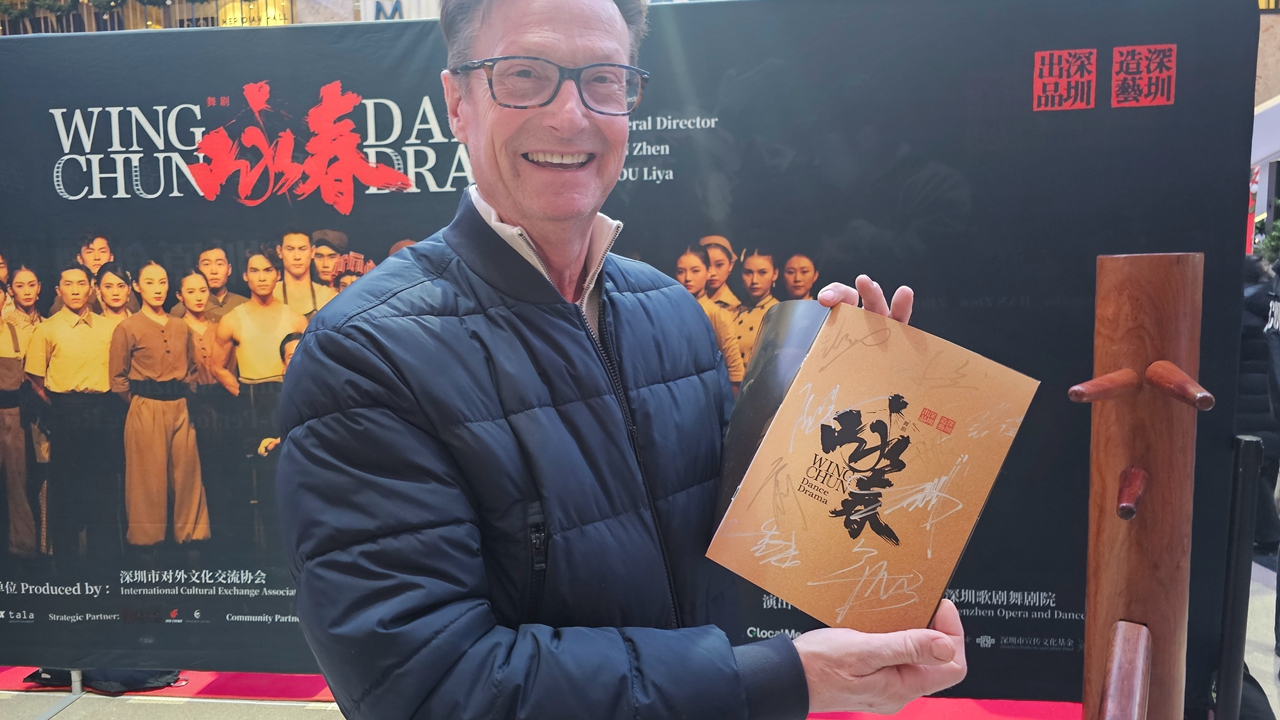
Roy Maher poses for a photo with autographs from “Wing Chun” performers following the Jan. 2 show. Chen Siqi
Whether drawn by curiosity, martial arts, or an existing affection for Chinese culture, audiences have been consistently moved by the ensemble’s subtle, expressive storytelling and movements. That quiet power may explain how “Wing Chun” continues to cross borders, nearing its 300th performance with international tours through the U.K., France, Russia, Singapore, Egypt, and now Canada.