
 Share
Share


 Print
PrintShenzhen-Shanghai air route ranks among world's busiest in 2025
Writer: Cynthia Song | Editor: Lin Qiuying | From: Shenzhen Daily | Updated: 2026-01-08
The air corridor linking Shanghai Hongqiao and Shenzhen has officially joined the ranks of the world’s 10 busiest airline routes, marking a major milestone for China’s rapidly evolving aviation market and underscoring Shenzhen’s rising role in regional and global connectivity.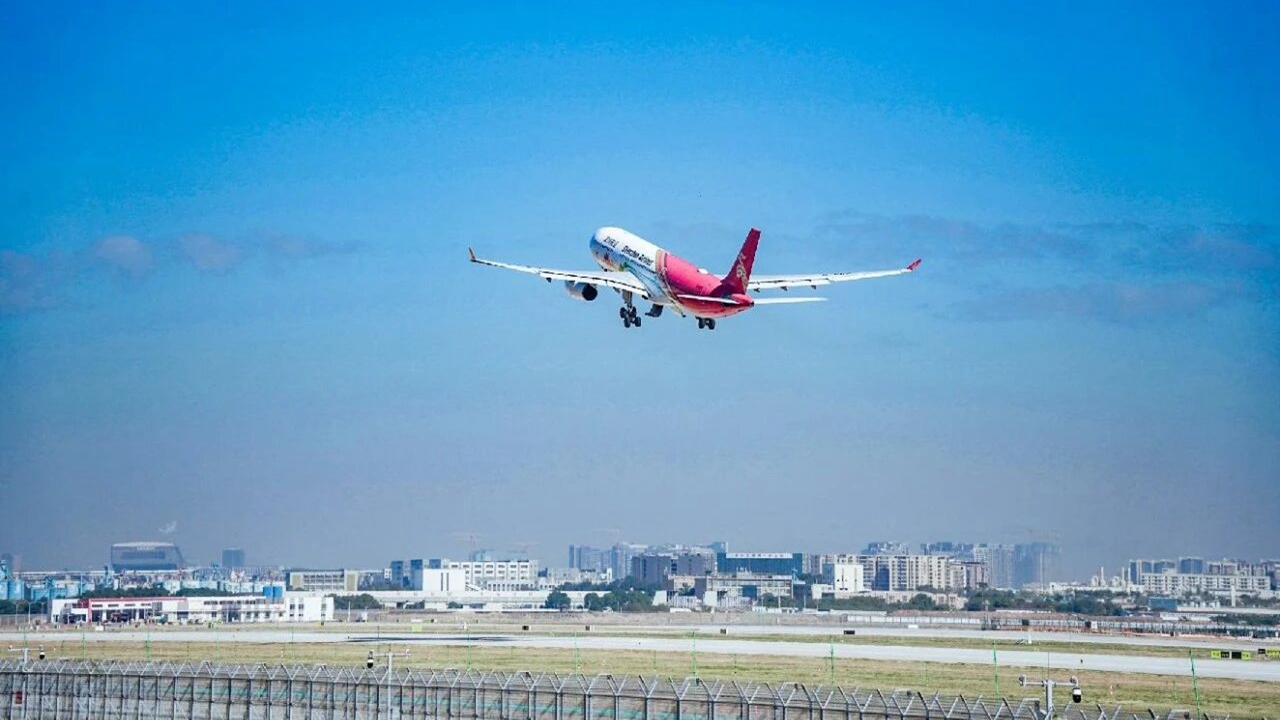
A commercial jet departs from Shenzhen Bao’an International Airport, a key hub in southern China’s Greater Bay Area. Photos courtesy of the airport unless otherwise stated
According to newly released 2025 data from OAG, a leading global aviation analytics provider, the Shanghai–Shenzhen route ranked 10th globally with 7.1 million scheduled seats, a 4% increase year-over-year. The surge in capacity, combined with highly competitive fares, helped the route break into the global top 10 for the first time.
The Beijing–Shanghai Hongqiao route remains China’s busiest with 7.5 million seats (ranking No. 9 globally).
The annual ranking, reported by Chinese travel data outlet Traveldaily.cn, showed that nine of the top 10 busiest airline routes are now based in the Asia-Pacific region, highlighting the strength of short- and medium-haul demand across the region. The Jeju–Seoul Gimpo route in South Korea retained its No. 1 spot globally with 14.4 million seats.
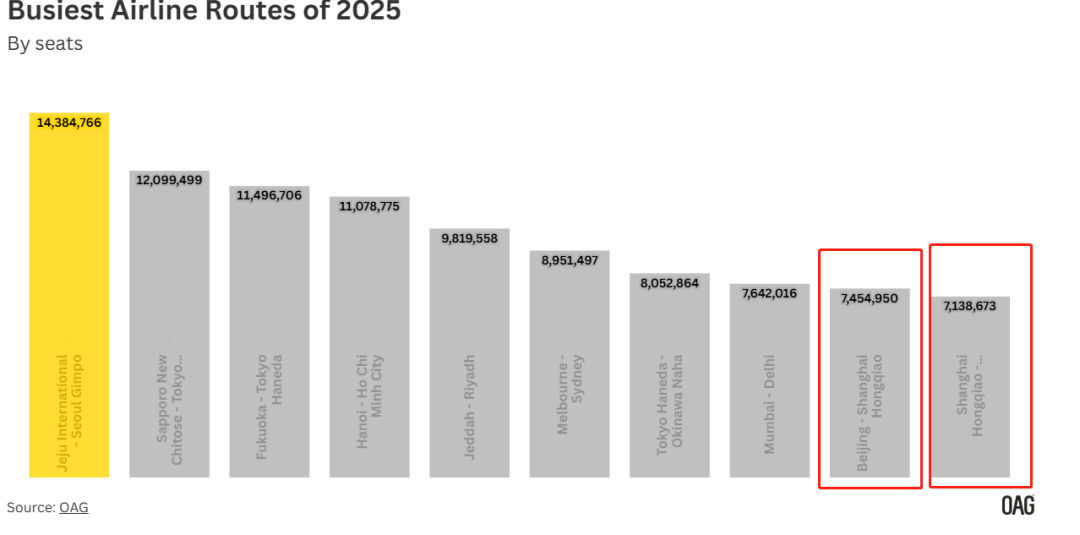
New OAG data ranks both the Beijing–Shanghai Hongqiao and Shanghai Hongqiao–Shenzhen routes among the world’s 10 busiest airline corridors. OAG
High capacity, low fares drive Shenzhen growth
The Shanghai–Shenzhen route, often dubbed a "value-for-money" alternative to high-speed rail, has become especially popular among both business and leisure travelers. During promotional periods, airfares have dipped as low as 300 yuan (US$42) — cheaper than second-class high-speed train tickets for the same route. This ultra-competitive pricing has earned the route a nickname on Chinese social media: the “cattle and horse line,” referencing its mass-market appeal.
Behind this boom lies the growing synergy between two of China’s most dynamic economic zones: the Yangtze River Delta, anchored by Shanghai, and the Guangdong-Hong Kong-Macao Greater Bay Area, with Shenzhen as its innovation engine. As business ties and tourism between the regions deepen, air traffic volume continues to climb.
Shenzhen emerges as a global aviation hub
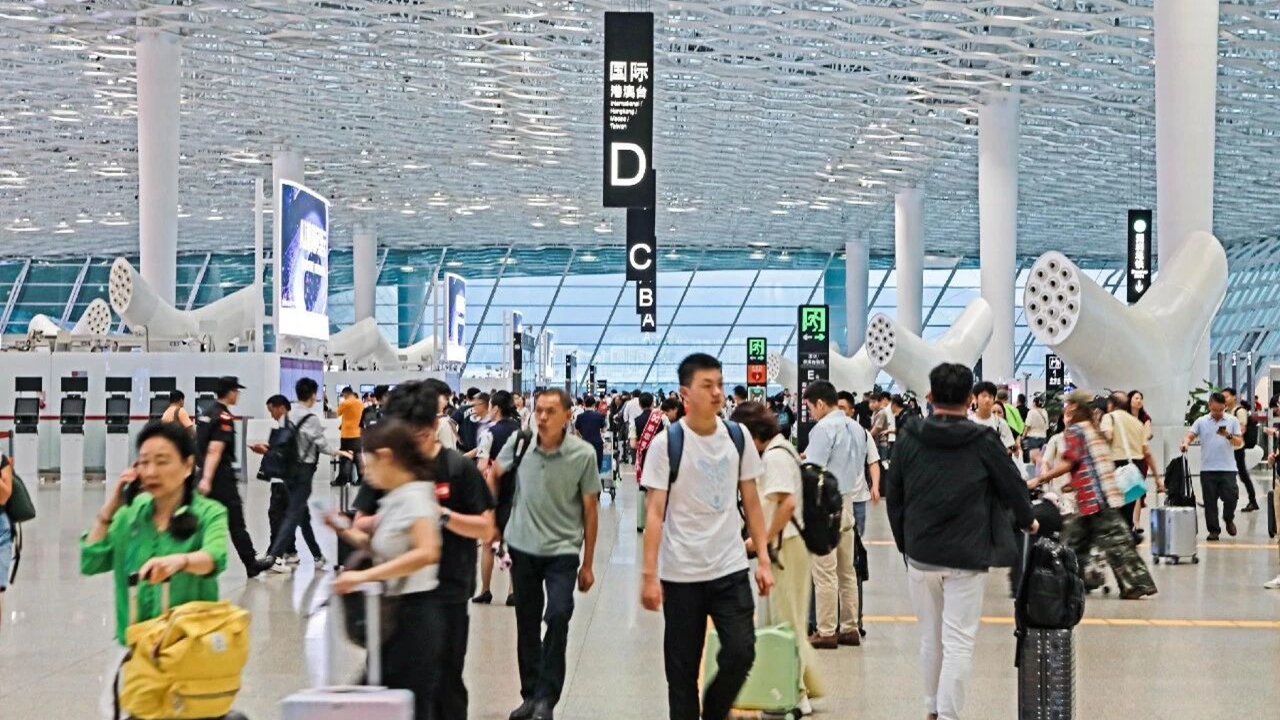
Passengers crowd the departure hall at Shenzhen Bao’an International Airport.
The rise of the Shanghai–Shenzhen route also reflects broader momentum at Shenzhen Bao’an International Airport, a key regional hub. In 2025, the airport handled 66 million passengers, up 8% from the previous year, according to data from the Transport Bureau of Shenzhen Municipal. Monthly traffic peaked at over 6 million passengers, setting a new record.
In cargo, Shenzhen also saw impressive growth. The airport processed 2.05 million metric tons of freight in 2025 — a 9% increase — with international and regional air cargo surpassing 1 million tons for the first time. This achievement makes Shenzhen only the third mainland Chinese airport to reach that threshold, reinforcing its position as a critical node in global trade networks.