
 Share
Share


 Print
PrintShort series 'Miracle' reveals stories behind 'Wing Chun' fever in N. America
Writer: Chen Siqi | Editor: Lin Qiuying | From: Original | Updated: 2026-01-15
Toronto’s Meridian Hall was ablaze with light on the afternoon of Jan. 4, local time, as Shenzhen’s original dance drama "Wing Chun" celebrated its 300th global performance — a milestone that also marked the triumphant close of its 20-show run in the Toronto, the first city in North America. The production, a powerful blend of high art and Chinese kung fu, has ignited a Wing Chun craze spanning the Pacific.
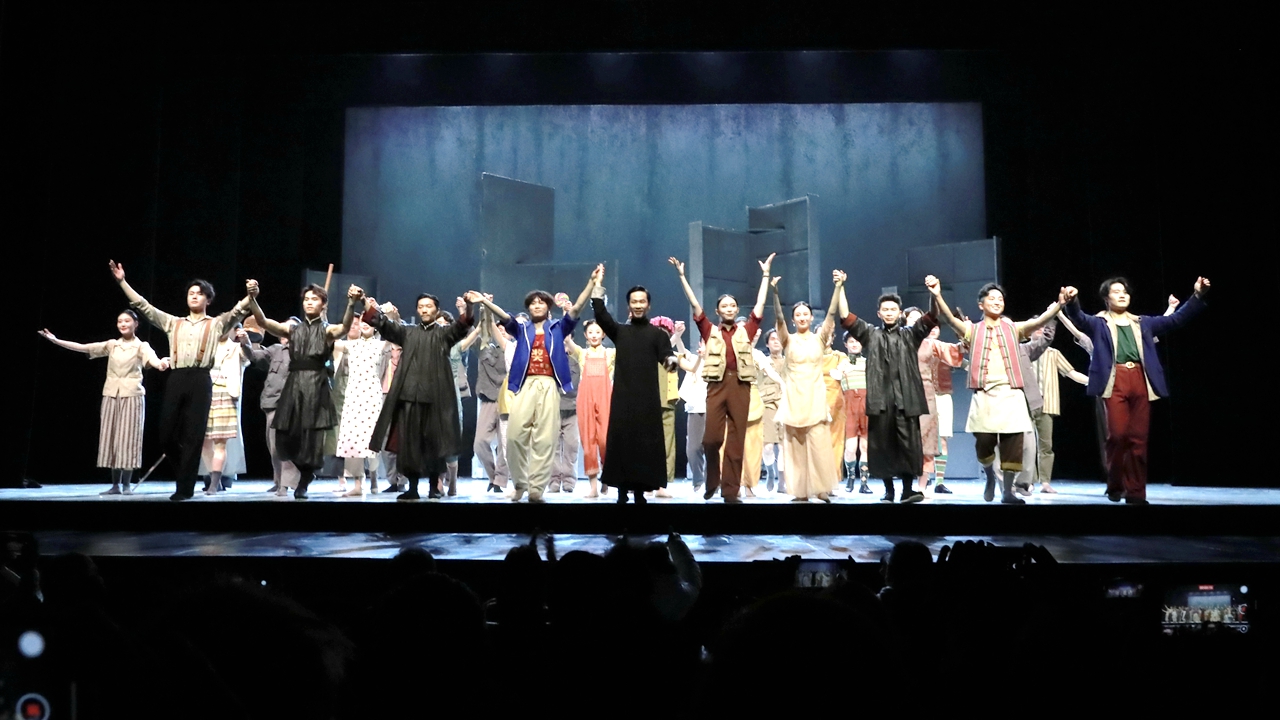
“Wing Chun” performers acknowledge the audience amid standing ovations after the show’s 300th global performance in Toronto, Canada, on Jan. 4. Photos by Geng Chaoyi
Since its debut, the dance drama has been staged in 66 theaters across 54 cities from various countries and regions, including Singapore, the U.K, France, Russia, and Canada, with plans to reach even more international stages.
Meanwhile, on screens back home in China, the premium short drama series ”Miracle“ is captivating audiences. Co-produced by China Central Television and Shenzhen — a city synonymous with “miracles” — it airs in prime time on CCTV-1. On Jan. 14, the series aired an episode "Wing Chun Rhythm." It delves into the full journey of the dance drama, from its creative inception to its overseas success.
The episode stars Chang Hongji, the young dancer who portrays Ip Man on stage, with special appearances by Zhang Zhijian (as the head of Shenzhen Opera & Dance Theater) and Liu Yun (as Chang’s mother), offering a genuine glimpse into the arduous creative process and artistic pursuit behind the scenes.
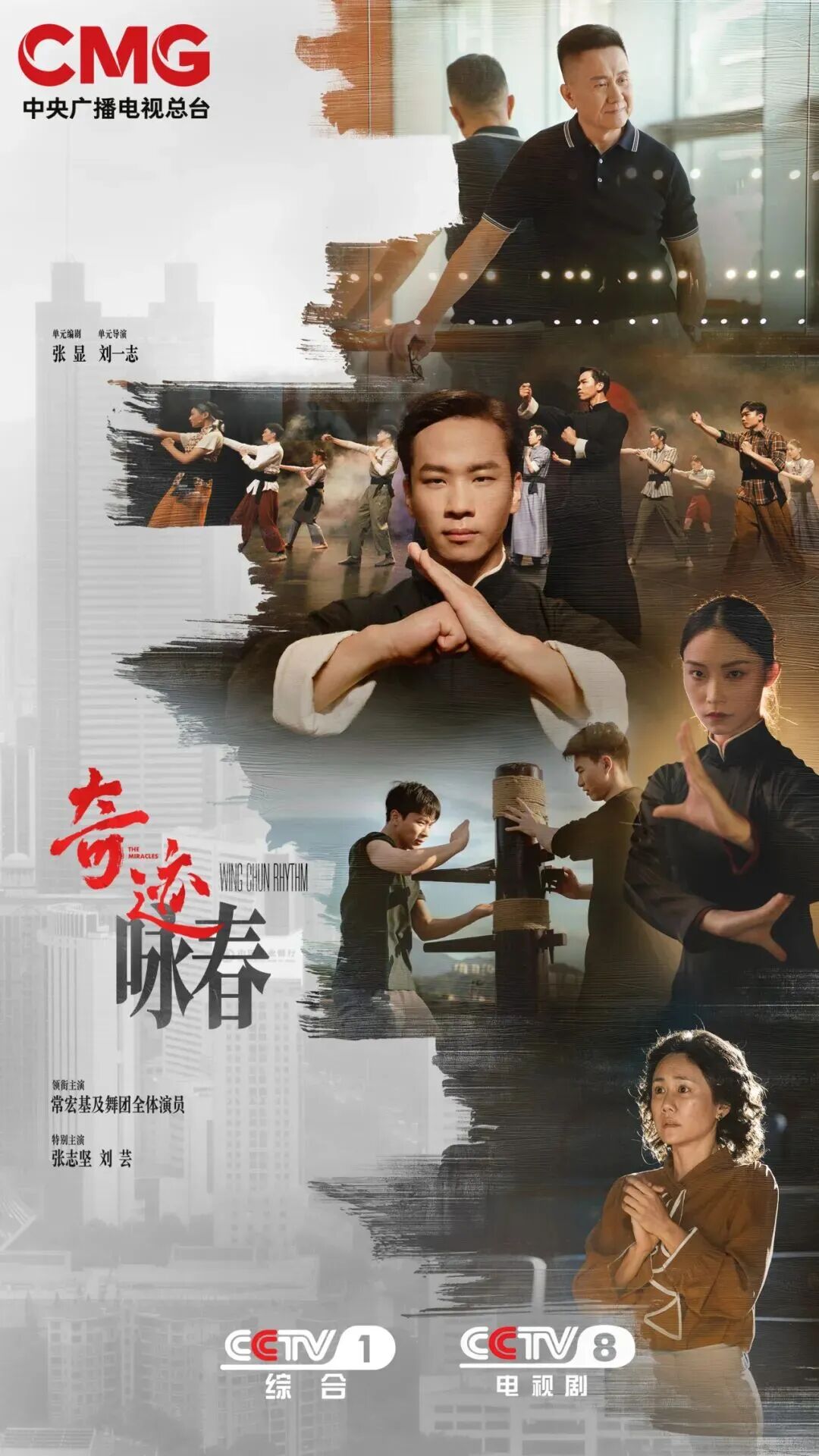
A poster for "Wing Chun Rhythm."
"Miracle" and "Wing Chun" — one a series, the other a dance — are mirror images, together telling a singular story of “creation” and “breakthrough.” The "Wing Chun Rhythm" arc in the drama lays bare the most challenging yet compelling chapter of the stage production’s creation.
The dance drama draws from the history of Ip Man — the martial arts master from Guangdong and teacher of Bruce Lee — focusing on his time in Hong Kong during the 1950s and 60s promoting Wing Chun. It transforms a martial arts legend into a modern allegory about cultural heritage and striving in a new land.
For lead performer Chang Hongji, the greatest challenge was transforming from a professional dancer into the poised grandmaster on stage — how to seamlessly blend the graceful cadence of dance with the powerful vigor of kung fu?
Through the series, viewers follow Chang’s perspective back to the sweat-soaked rehearsal studios of the Shenzhen Opera & Dance Theater, witnessing days and nights filled with exertion, doubt, and revelation. “How do I portray a kung fu master like Ip Man? Dance emphasizes form and rhythm, while martial arts focus on power and execution,” he repeatedly asked himself, searching for a path to fuse the two.
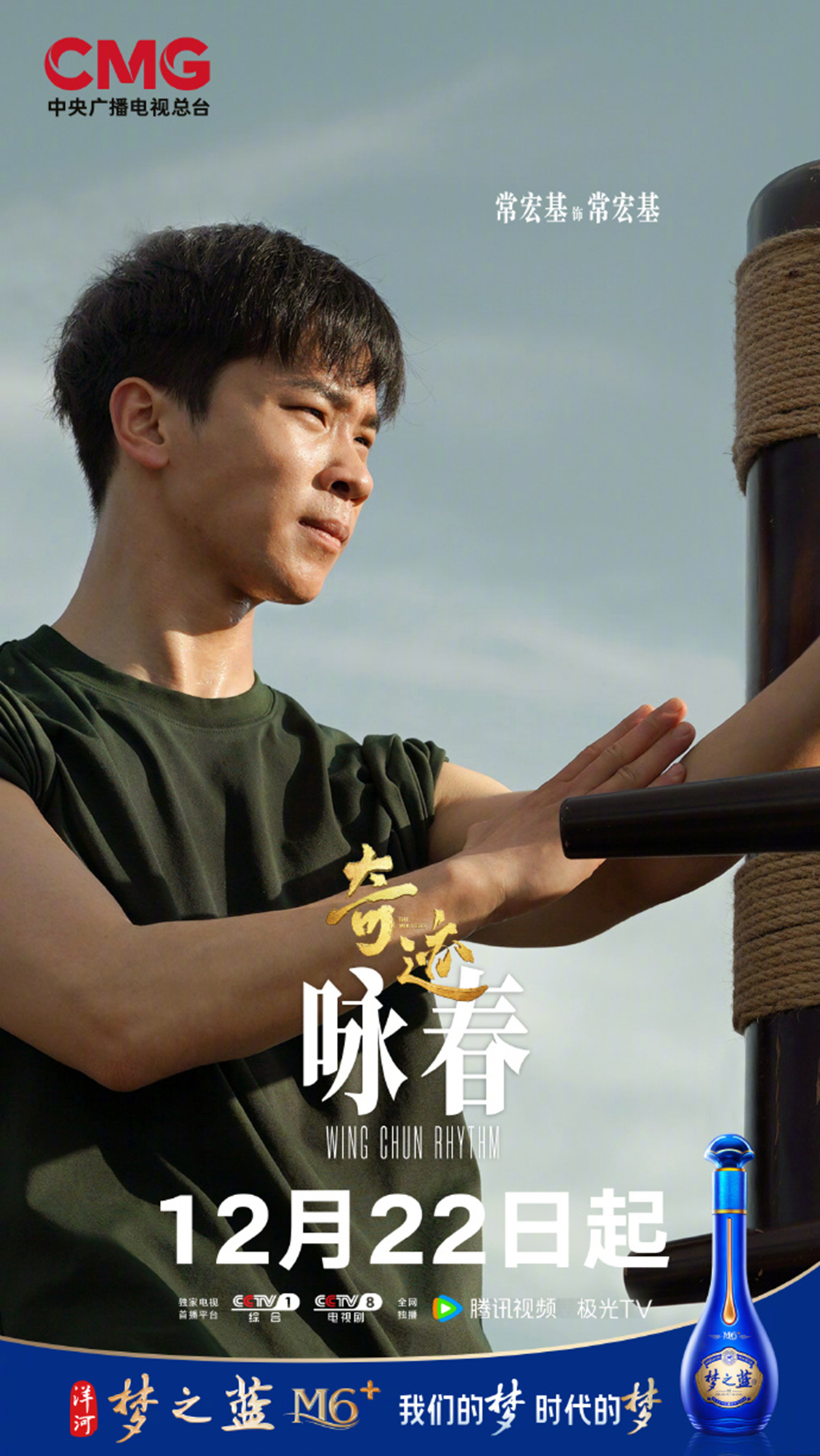
Lead performer Chang Hongji in a poster for "Wing Chun Rhythm."
Through months of grueling practice and deep contemplation of Wing Chun’s principles, he found his answer: “Dance isn’t about posing, and martial arts aren’t just about throwing punches. They are both vehicles for conviction; the body is an extension of the spirit. Every fist, every palm, every step, every movement … The key isn’t mimicking Ip Man’s appearance, but embodying his spirit, standing in the place of his legacy.”
This relentless pursuit of “fusion, breakthrough, and innovation” is keenly captured in the short drama. A line delivered by Zhang Zhijian, playing the theater head, cuts to the core: “What we want is breakthrough.” This statement illuminates the shared essence of both productions: whether it’s the cross-disciplinary fusion of art forms or the transoceanic journey of a cultural work, each is fundamentally an act of “creating a miracle.”
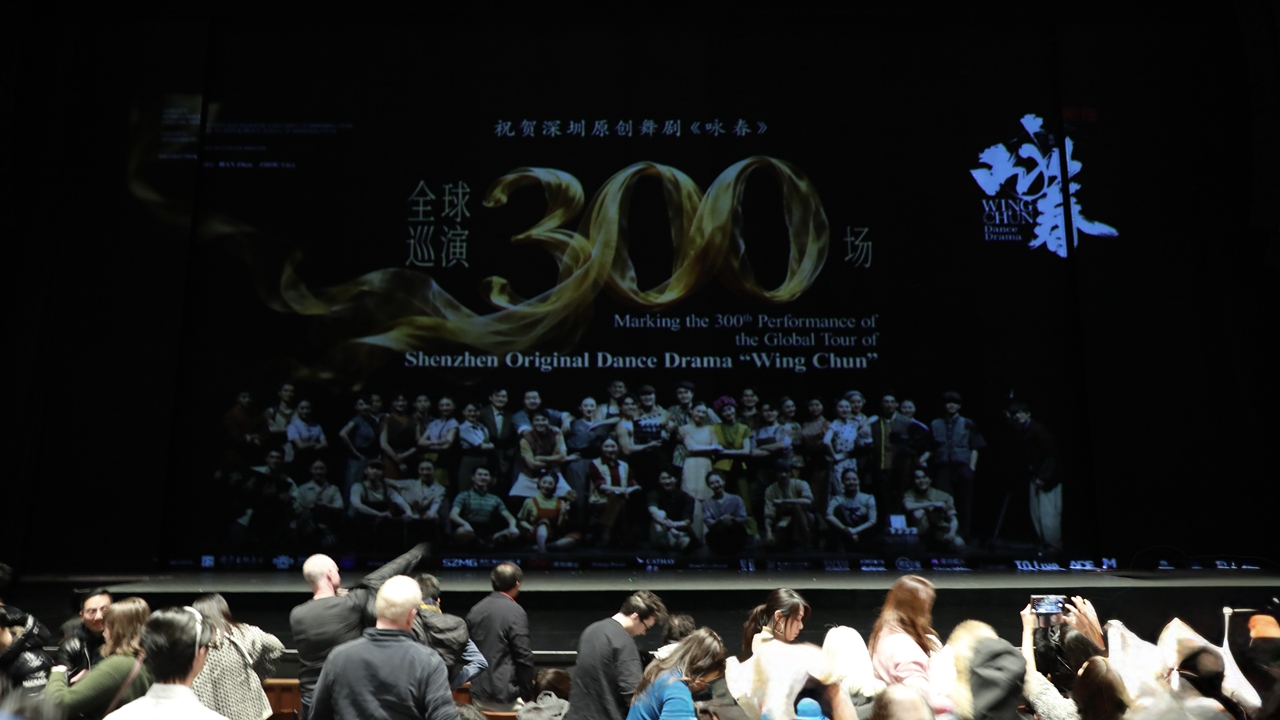
Audience members leave their seats as a commemorative backdrop celebrates the 300th global performance of the Shenzhen original dance drama “Wing Chun” at Meridian Hall in Toronto, Canada, on Jan. 4.
So, is the Wing Chun story told behind the scenes in "Miracle" the same as the one blossoming on stage in "Wing Chun"? The answer is they are two sides of the same coin. The short drama reveals the process of “cultivation,” while the dance drama showcases the subsequent “blossoming.” On stage, Ip Man steps into a foreign street of martial arts schools, carrying the plaque of his “Wing Chun Hall.” He seeks not just a personal light, but the cultural mission of breaking down barriers and spreading the true path of martial arts.
From the dance drama "Wing Chun" surpassing 300 performances across the globe to the short series "Miracle" entering millions of homes, this pair of “dance and drama” serve as dual cultural calling cards of China‘s stories to the world. One illustrates “how culture strides out with confidence,” while the other depicts “how stories of innovation grow from the soil of everyday life.” Together, they narrate the creators’ relentless dedication to their craft and the unyielding, pioneering spirit that drives every striver forward.