
 Share
Share


 Print
PrintNipah virus outbreak reported in India
Writer: | Editor: Lin Qiuying | From: | Updated: 2026-01-27
Health authorities in India's eastern state of West Bengal are implementing containment measures following a localized outbreak of the Nipah virus, according to reports from Xinhua News Agency citing Indian media.
As of the latest dispatches, five cases have been confirmed in the region. At least one patient is reported to be in critical condition, while approximately 100 individuals have been placed under home isolation orders to prevent further transmission.
Medical staff at center of localized outbreak
The cluster was initially identified at a private hospital near Kolkata, where a nurse tested positive for the virus. Subsequent testing confirmed infections in three additional medical staff members at the same facility. According to Xinhua, West Bengal health officials stated that the first two healthcare workers infected likely contracted the virus from a patient who exhibited severe respiratory symptoms and died prior to being tested for Nipah.
A highly lethal zoonotic pathogen
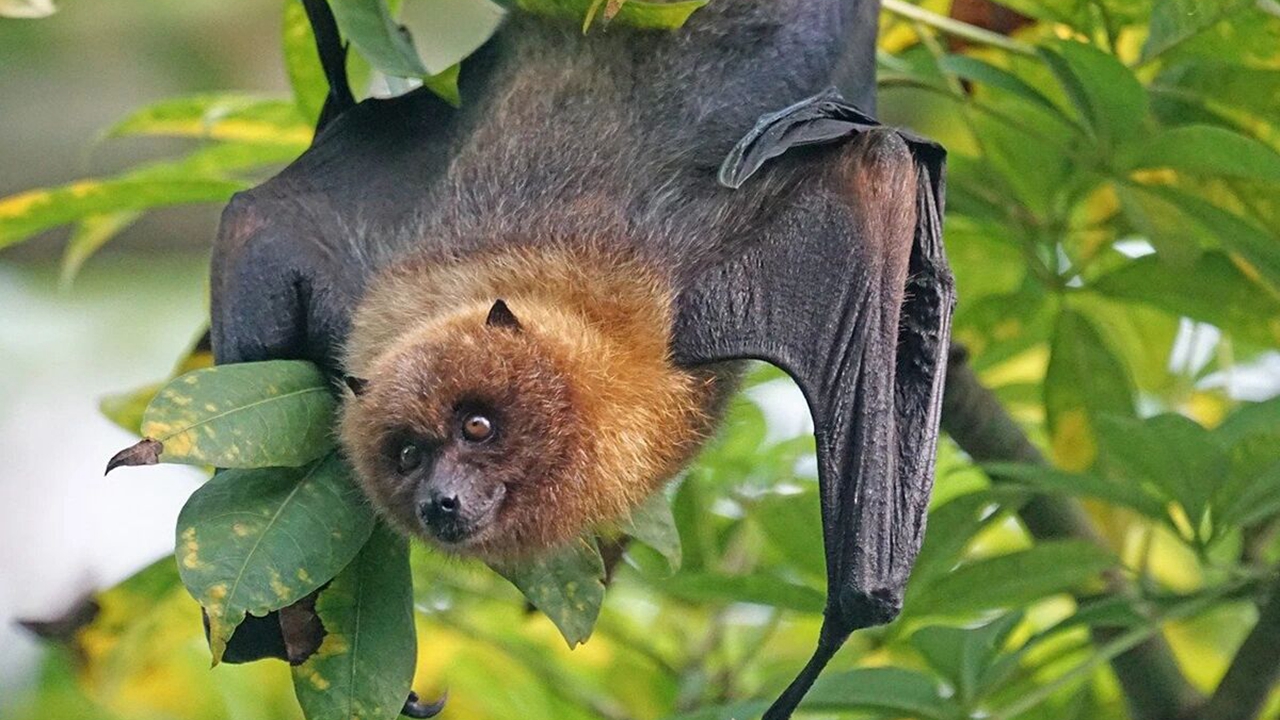
A fruit bat, the primary carrier of the deadly Nipah virus. File photo
Nipah is a zoonotic virus primarily carried by fruit bats. The World Health Organization (WHO) classifies it as a highly lethal pathogen with a fatality rate estimated between 40% and 75%. There is currently no licensed vaccine or specific antiviral treatment; medical intervention is limited to supportive care and symptom management.
Transmission and Symptoms Data provided by the WHO and disseminated by the Guangzhou Center for Disease Control and Prevention (CDC) outlines three primary transmission routes:
Animal-to-human: Direct contact with infected bats or pigs, or consumption of food (such as fruit or raw date palm sap) contaminated by their saliva, urine, or excreta.
Human-to-human: Close contact with an infected person’s secretions or respiratory droplets.
Intermediate hosts: The virus can spread from bats to pigs, which then act as a bridge to human populations.
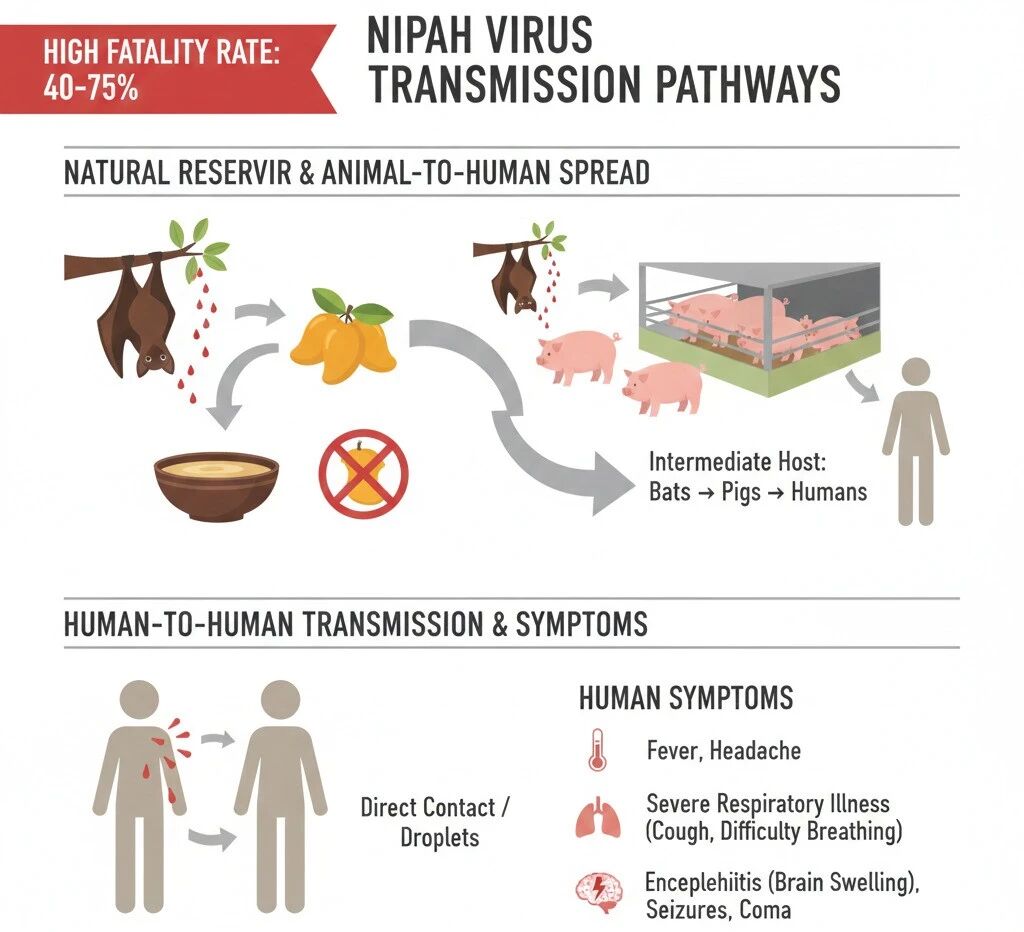
Infographic generated by AI
The incubation period typically lasts four to 14 days, though it can extend longer. Clinical manifestations range from asymptomatic infection to acute respiratory illness and fatal encephalitis. Common symptoms include high fever (above 39°C), severe headache, and neurological signs such as drowsiness, altered consciousness, or seizures.
Regional and regulatory response
Local authorities in West Bengal have ordered zoos to conduct sampling and testing of captive bat populations. This measure follows previous outbreaks in India, including a period between May and July 2024 in Kerala that resulted in four cases and two deaths.
A report by Yangcheng Evening News noted that the Nipah virus was included in China's revised Frontier Health and Quarantine Law last year. The updated regulations mandate screening for Nipah alongside other infectious diseases such as COVID-19, HIV, Zika, and Chikungunya.
Health officials advise the public to avoid contact with bats, refrain from consuming fallen fruits, and ensure that livestock feed is protected from bat contamination. (Xinhua)