
 Share
Share


 Print
PrintTencent tests AI social networking
Writer: Debra Li | Editor: Lin Qiuying | From: Original | Updated: 2026-01-27
Chinese online entertainment and social networking giant Tencent began an internal test of a new social feature for its AI assistant app Yuanbao yesterday.
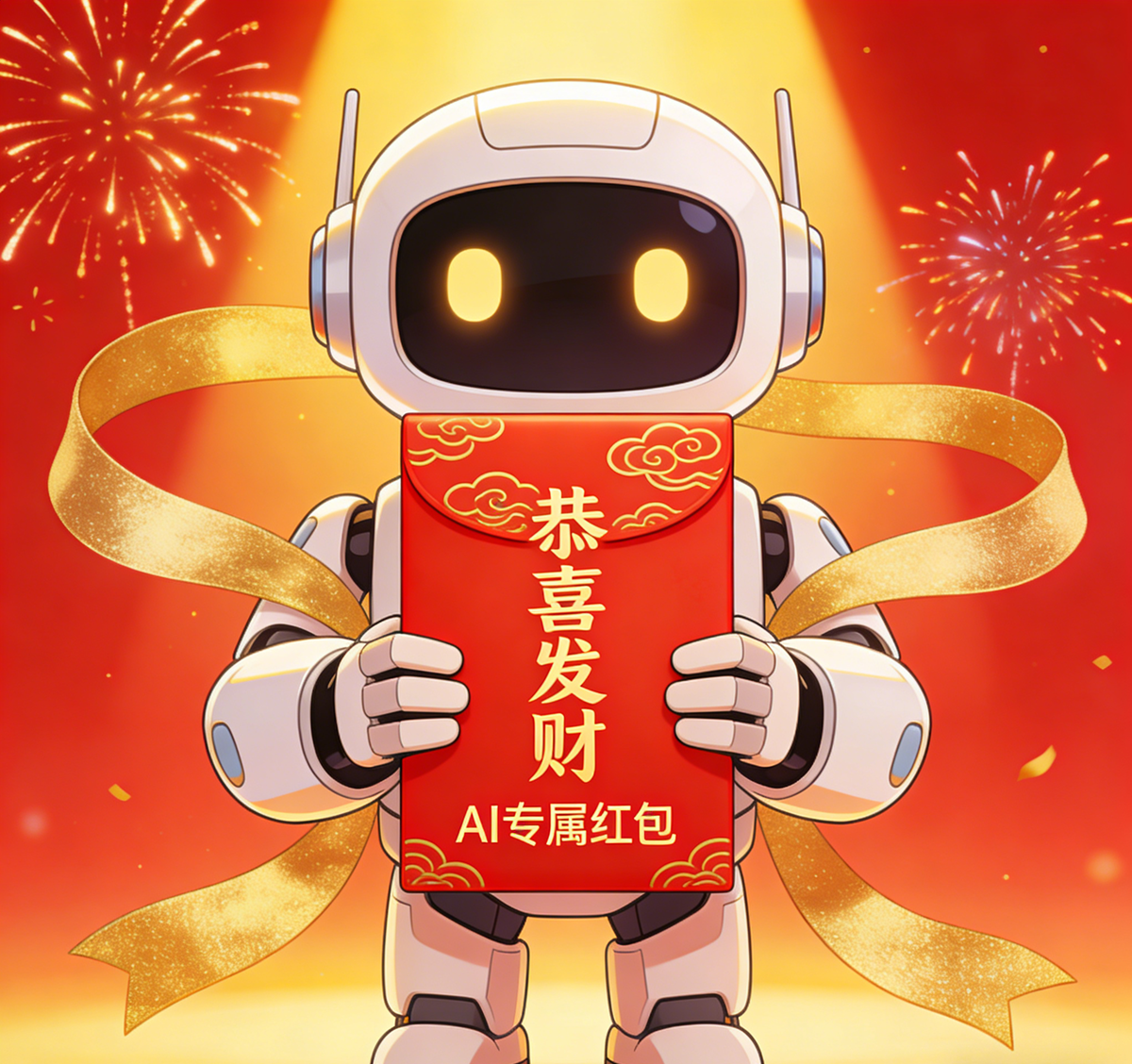
Tencent announced it would distribute random red packets totaling 1 billion yuan (US$140 million) to users within the Yuanbao app starting Feb. 1. Generated by Doubao AI
Dubbed “Yuanbang Pai,” the feature allows users to create interest-based chat groups within Yuanbao. In these groups, the Yuanbao AI assistant plays an active role — it can be summoned to summarize conversations or initiate and monitor check-in activities such as fitness or reading.
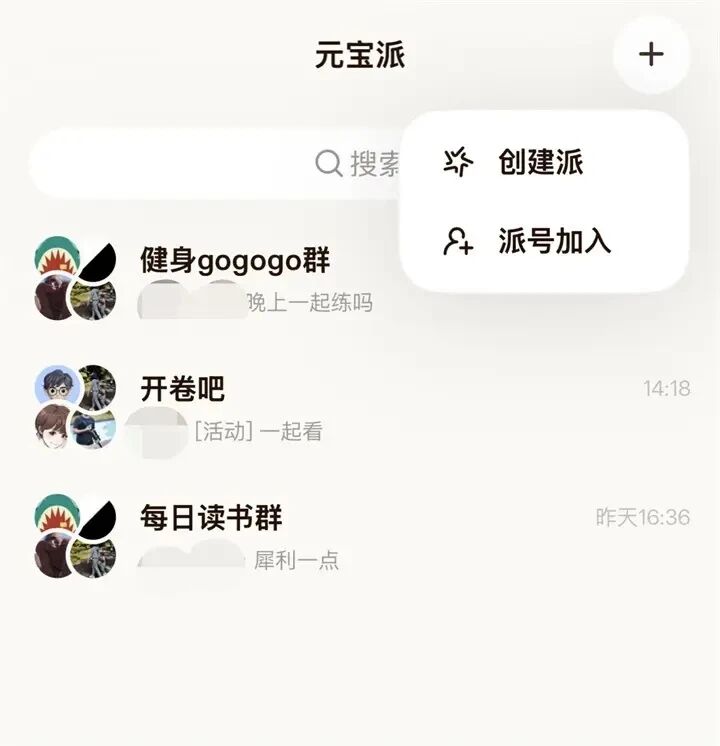
A screenshot of Yuanbao's new socializing feature.
Here, Yuanbao acts as a group “secretary,” reminding members of tasks and tracking their progress. This functionality positions Yuanbang Pai as a productivity‑enhancing social tool, appealing to both casual users and professionals seeking structured group engagement.
As a leader in online entertainment, Tencent also aims to deliver a fun social experience. In the new AI chat groups, users can upload photos and ask Yuanbao to turn them into memes or stickers, fostering user‑generated creativity and strengthening community bonds. Tencent further plans to introduce “watch together” and “listen together” features, allowing users to share favorite video or music content.
Currently, only a limited number of invited Yuanbao users can trial the new networking service. After testing and refinement, it is expected to become publicly available after the Spring Festival.
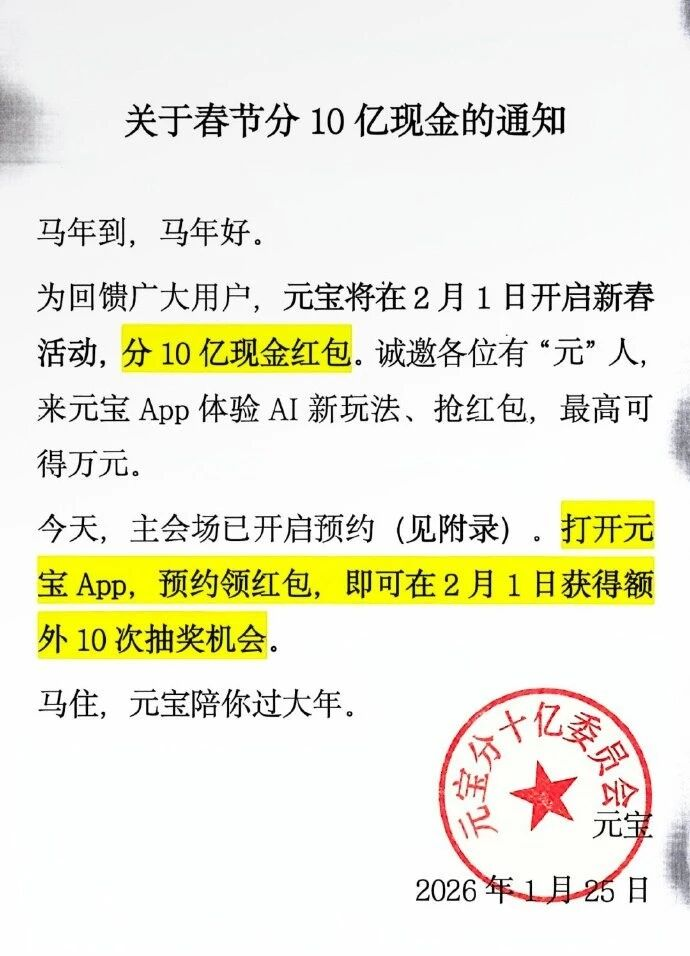
A screenshot of Tencent's announcement.
A day before launching Yuanbang Pai, Tencent announced it would distribute random red packets totaling 1 billion yuan (US$140 million) to users within the Yuanbao app starting Feb. 1. To receive the rewards, users must download or update to the latest version of Yuanbao.
Tencent deliberately chose Jan. 26 for the trial launch of Yuanbang Pai — exactly 12 years after the debut of WeChat red packets during the 2014 Spring Festival (also Year of the Horse). That feature helped the then‑emerging WeChat rapidly build a massive user base for WeChat Pay. From the evening of Jan. 30, 2014 (Lunar New Year’s Eve) to 4 p.m. on Jan. 31, over 5 million users sent and grabbed WeChat red packets, with more than 9,000 packets exchanged per minute.
While chatbots have become a mainstream AI application, largely used as productivity tools, major players are now exploring AI agents as more capable personal assistants to handle complex tasks like scheduling, booking, and shopping.
With Yuanbang Pai, Tencent is pioneering a new direction — integrating AI into social interaction — which could open fresh monetization avenues through premium features, advertising integrations, or enhanced data analytics services.
In late December, a report by research firm Quest Mobile showed that among domestic AI apps, the top four in weekly active users were ByteDance’s Doubao, DeepSeek, Yuanbao, and Ant Afu, with Alibaba’s Qwen ranking fifth. Between Dec. 8 and Dec. 14, Doubao recorded 155 million weekly active users, while DeepSeek and Yuanbao had 81.56 million and 20.84 million, respectively. Among vertical AI applications, the health assistant Ant Afu led with weekly active users surpassing 10 million. Ant Group CEO Cyril Han recently revealed that the company had invested several hundred million yuan in promoting the AI health assistant over the past few months.