
 Share
Share


 Print
PrintRoad to rebirth: A Russian scholar's second life in Shenzhen
Writer: Zhang Yu | Editor: Lin Qiuying | From: Original | Updated: 2026-03-06
Video by Lin Jianping
“They just hung there, lifeless. I thought this would be my life forever. I had lost all hope. And then, suddenly, they moved...”
On a late autumn day in 2025, at The University of Hong Kong-Shenzhen Hospital, a faint but distinct twitch in her legs brought tears streaming down Irina Karabulatova’s face. The day after surgery, nerves that had lain dormant for six years reawakened, sending signals back to her brain. Her legs had finally stirred to life.
“When I saw my legs move like that, the tears just came,” Karabulatova recalled, her voice still catching. “The doctors were so pleased with the result. They said it was a good sign.”
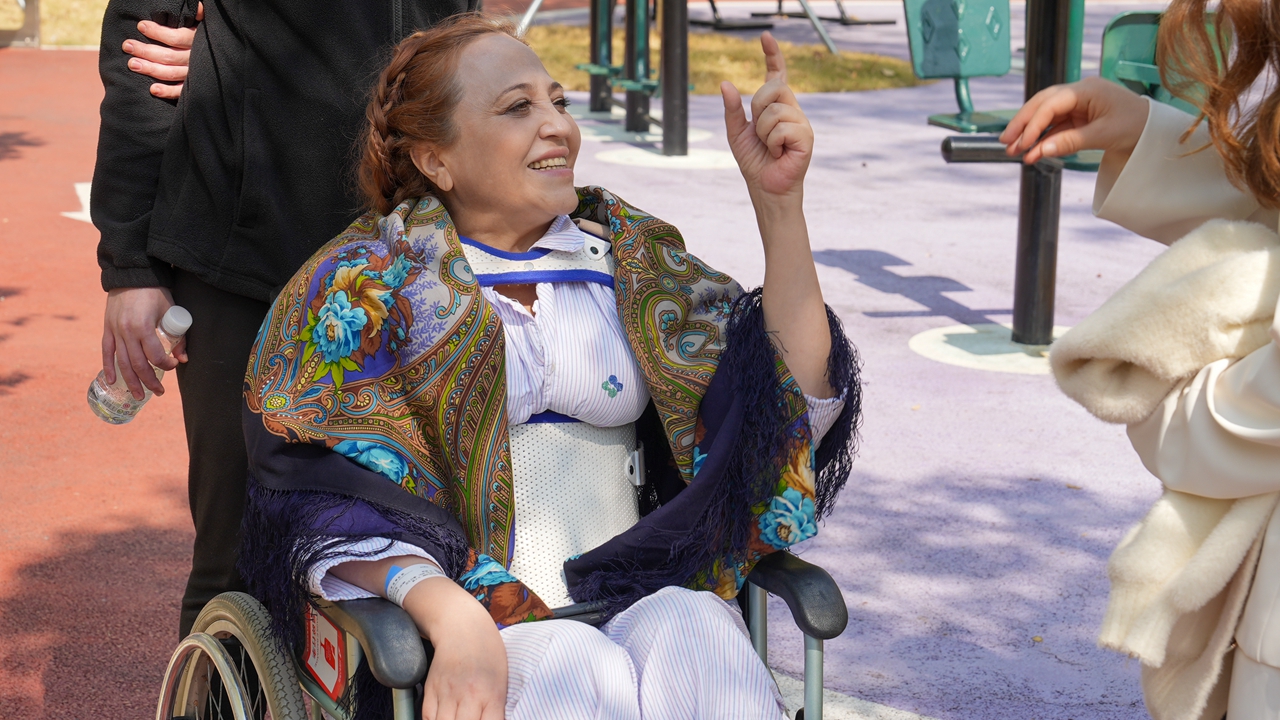
Irina Karabulatova greets visitors from her wheelchair following successful surgery at The University of Hong Kong–Shenzhen Hospital in Shenzhen in January. Photos by Lin Jianping
Hope in a wheelchair
Karabulatova’s credentials are impressive: an academician of the Russian Academy of Natural Sciences and the European Academy of Natural Sciences, chief scientist at the machine learning and semantic analysis laboratory of Lomonosov Moscow State University’s artificial intelligence faculty, professor at Peoples’ Friendship University of Russia, and honorary professor at Heilongjiang University. She was also once an opera singer and even founded a rock band.
In 2019, after spinal surgery in Russia, severe complications dramatically altered the course of Karabulatova’s life. Multiple procedures ultimately led to a spinal cord injury, and she completely lost the ability to walk. Every movement became an ordeal; even simply standing was an unattainable dream.
Clutching onto a thread of hope, she sent applications to medical institutions in eight countries. The responses were consistently measured assessments: the surgical risks were too high, and the outcomes too uncertain. She was advised to prepare for long-term rehabilitation. Some doctors frankly admitted that given her age and the complexity of her condition, the probability of success was too low; they were unwilling to proceed.
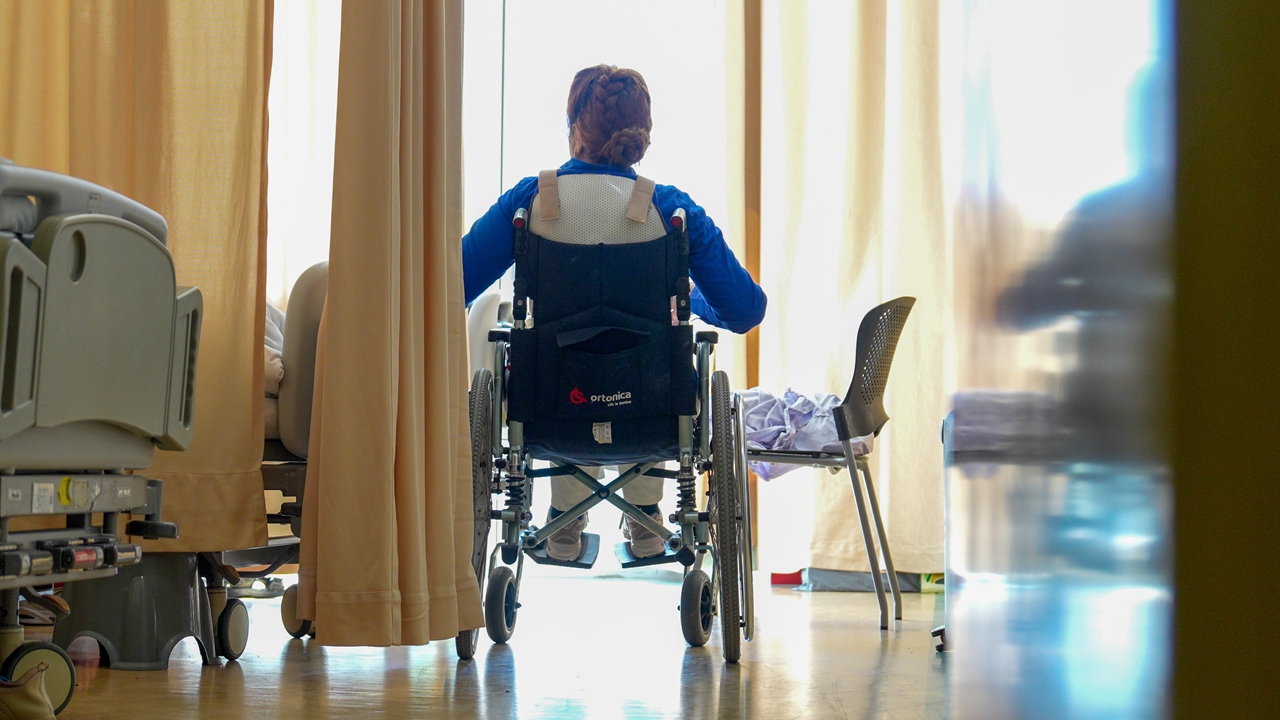
Irina Karabulatova sits in her wheelchair by a window in a hospital room at The University of Hong Kong–Shenzhen Hospital.
Karabulatova’s son, Mikhail, describes his mother’s state at the time in two words: despair and tension. The smile vanished from her face, and the light gradually faded from her eyes.
In 2024, through the help of friends, a video appeared on her phone screen — the story of Professor Tao Huiren’s treatment of the “3-on folded man.” In the video, a patient who had suffered for years from severe spinal deformity stood up again after treatment by Professor Tao and took his steps again. This scene, like a bolt of lightning, pierced the years of despair that had enveloped Karabulatova. Hope, dormant deep in her heart, ignited instantly. “In that moment, my mother’s hope was kindled,” Mikhail recalled.
Through a connection with a researcher at the Pengcheng Laboratory in Shenzhen, Karabulatova finally got in touch with Professor Tao, director of the orthopedic medical center and head of the spinal surgery department at The University of Hong Kong-Shenzhen Hospital. This encounter was destined to become the starting point of her rebirth.
Trust across borders
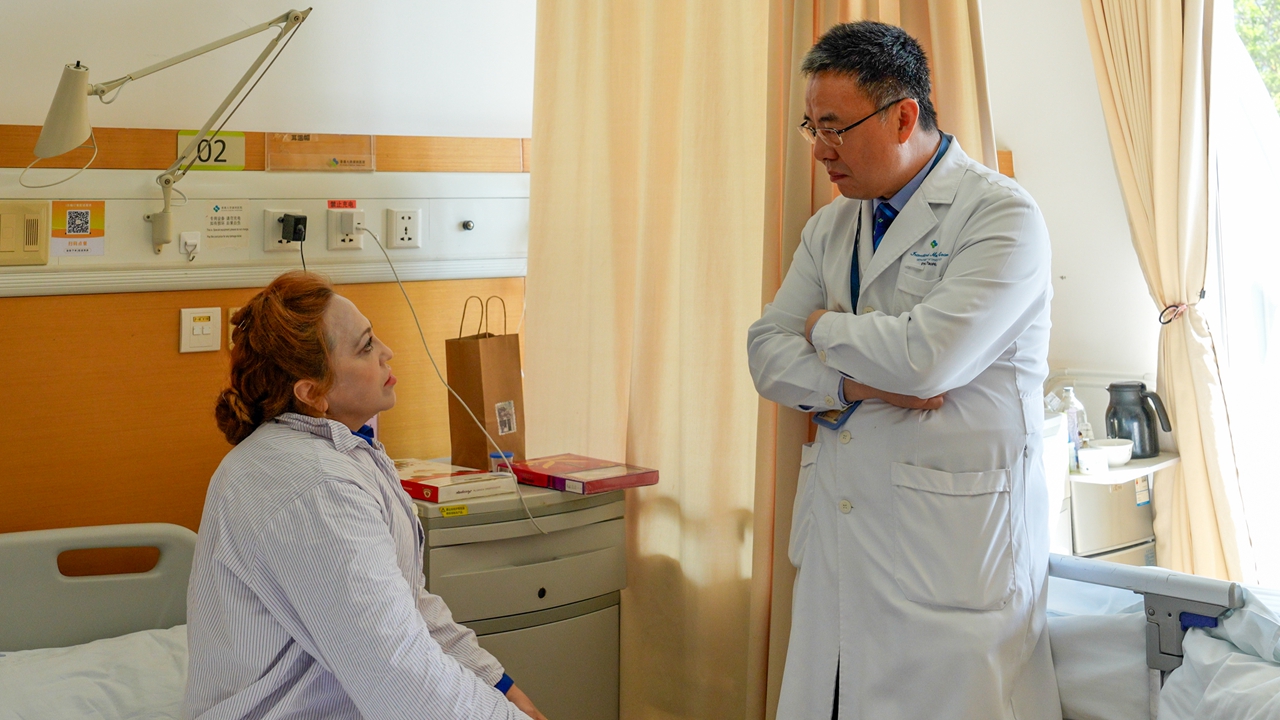
Irina Karabulatova (L) speaks with Professor Tao Huiren in a hospital ward at The University of Hong Kong–Shenzhen Hospital.
In October 2024, Karabulatova met Professor Tao for the first time. She was wracked with severe pain, and every attempt to stand left her unsteady and on the verge of falling. Years of multiple surgeries had rendered her condition extraordinarily complex: her spine was stiff, her anatomy profoundly altered, her medical history unclear, and even imaging data could not fully explain the extent of the damage to her body.
Professor Tao’s first words offered no empty comfort, yet they conveyed a long-missed sense of being taken seriously: “I can’t operate on you yet. You need to build up your strength first, so your body can withstand the procedure.”
Karabulatova recalled that for the following year, she rigorously followed every one of Professor Tao’s recommendations. Day after day, she underwent tedious rehabilitation therapy and received stem cell treatment, slowly gathering strength for the surgery.
In September 2025, Karabulatova returned to Shenzhen. She wanted to discuss a surgery date with Professor Tao. However, after examining her, he made an immediate decision: “We’ll operate now.” Behind this sudden decision lay the team’s thorough reassessment.
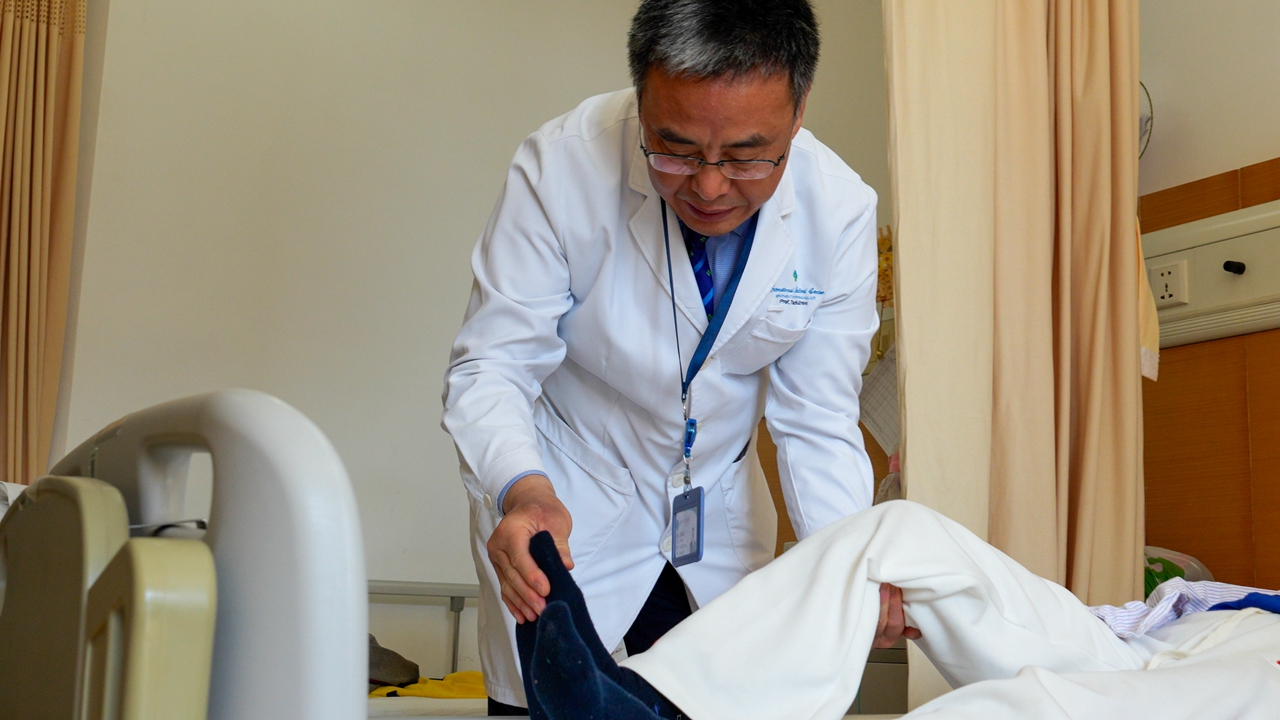
Professor Tao Huiren examines Irina Karabulatova’s condition after surgery in her ward at The University of Hong Kong–Shenzhen Hospital.
Professor Tao explained that this was an extremely complex revision surgery — rebuilding upon anatomical foundations altered by previous procedures. But complexity, he noted, does not mean technical helplessness. For a surgeon with his years of deep experience, the surgical technique itself wasn’t the main challenge. The real difficulty lay in untangling her intricate medical history and predicting the highly uncertain outcome. No one could guarantee success; there was even a chance she could be worse off after surgery than before.
“After comprehensive evaluation, I felt that after surgery she could at least be somewhat better off than she was now,” Professor Tao stated.
Karabulatova has never forgotten the words Professor Tao said before the operation: “It won’t be worse than it is now. I will do my best to make it better.” Those words at last eased the tension she'd held for six years. In that moment, she knew with certainty, “I can trust this person completely.”
Healing in harmony
The day after surgery, the faint tremor in Karabulatova’s legs, like a beam of light, illuminated the life she had lost for six years. This rekindled perception gave her a completely new understanding of herself and life. “When you can feel your body again, you feel completely different about yourself,” Karabulatova said. “For me, Professor Tao is a magician.”
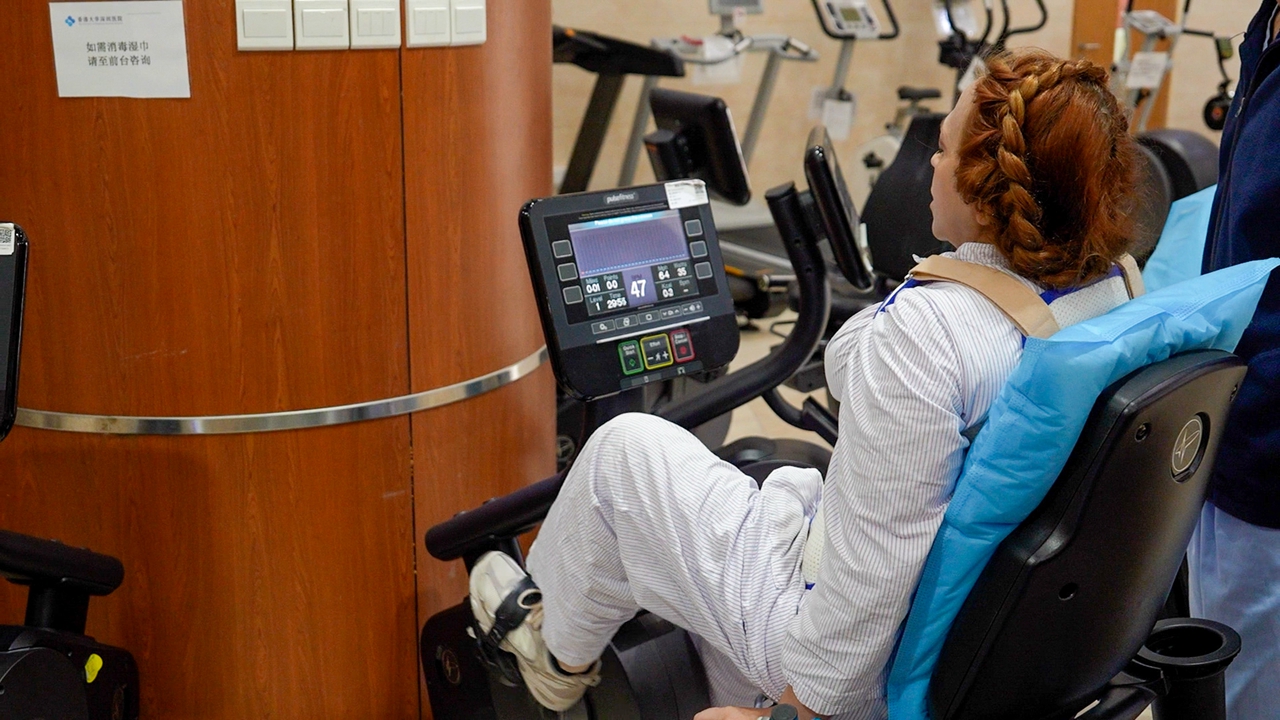
Irina Karabulatova undergoes rehabilitation training on an exercise machine at The University of Hong Kong–Shenzhen Hospital as part of her recovery after the spinal surgery.
Now, just over five months since the operation, Karabulatova’s recovery has far exceeded Professor Tao’s expectations. Once unable to take a single step, she can now walk steadily with a walker. The agonizing pain that once tormented her day and night has almost vanished. The abnormal muscle tension is gradually returning to normal.
Karabulatova even bought herself a pair of sneakers. The new shoes hold all her hopes and dreams of walking again. Six years of life in a wheelchair meant her brain had gradually reduced control over her legs. Now, like a child learning to walk, she is slowly relearning how to stand and step.
Every day in the long, curved corridor of the hospital building, a heartwarming scene unfolds: her son pushes Karabulatova’s wheelchair to and from the rehabilitation center. Along the way, they often sing loudly together. In the sun-drenched rehabilitation garden, the mother and son frequently sing duets, their voices carried by the gentle breeze. Their singing has become one of the hospital’s most moving melodies.
Karabulatova’s once tense face has gradually relaxed. Even her colleagues joke with her: “You’re becoming more and more like a Chinese woman – because you’re always smiling, and your eyes are full of light.”
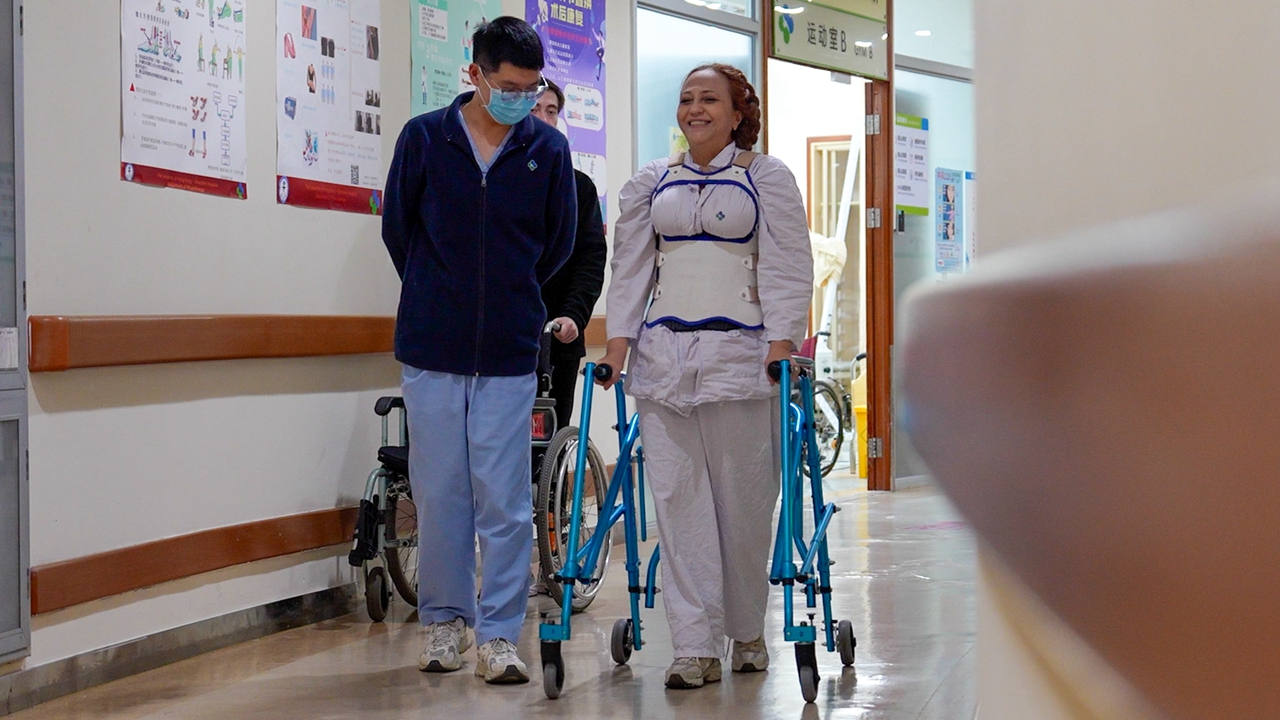
Irina Karabulatova walks with a walker during rehabilitation at The University of Hong Kong–Shenzhen Hospital, accompanied by a medical staff member, as she continues her recovery after spinal surgery.
Where dreams take flight
Karabulatova’s choice to seek treatment in China was no accident. It stemmed from a long-held appreciation and recognition for Chinese culture and medicine.
She understands that the profound understanding of the human body inherent in traditional Chinese medicine complements the world-leading position of modern medical technology. The responsibility and dedication she sees in Chinese doctors, like the intricate art of Chinese embroidery or jade carving, reveal mastery in the finest details. The spirit of mutual support in Chinese society warms her deeply.
Shenzhen’s accessible environment, in particular, has shown her an extraordinary level of inclusivity and care. Her wheelchair can reach nearly every corner of the city – a level of convenience she has never experienced elsewhere.
In Karabulatova’s eyes, Shenzhen is a city that makes dreams come true. She marvels that in just four decades, this city has transformed from a small fishing village into an international metropolis, creating a miracle of prosperity that astounds the world. “Here, I believe nothing is impossible. Shenzhen is precisely the city that can realize my deepest dreams.”
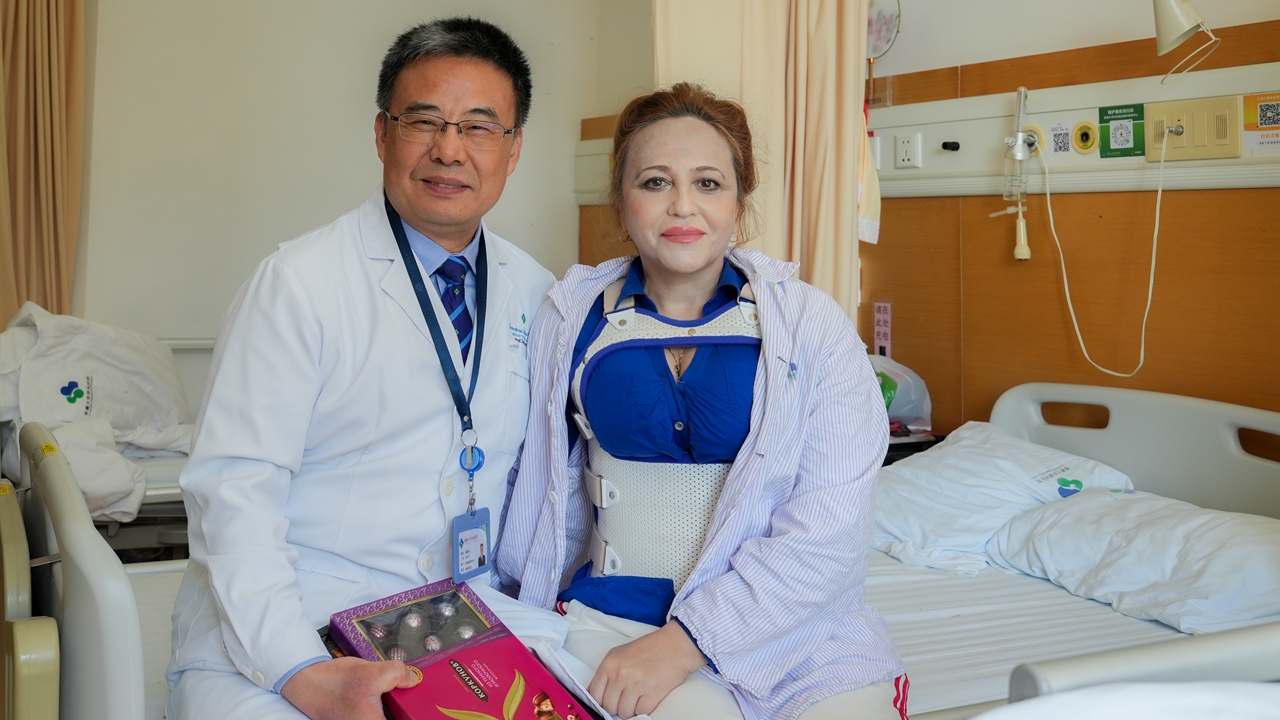
Irina Karabulatova (R) and Professor Tao.
Today, Karabulatova has a concrete goal: within one year, or at most two, to leave the walker behind and walk independently, normally. This wish, once so distant it could only be pursued in the depths of nighttime dreams, is now becoming increasingly tangible in Shenzhen, with the help of Professor Tao and his team. She has even dreamed of walking on her own — a dream she had consciously sought for years has finally broken through into reality.
“Now I have hope, I have a goal. This goal has become concrete and clear. We are taking steps towards it, one by one,” Karabulatova said, her voice filled with certainty.
Professor Tao is also confident in Karabulatova’s recovery. “Judging by her progress over these past months, she will slowly but surely get better and better. In two years, it’s possible she won’t need any help and will be able to walk independently.” For Professor Tao, this is not only Karabulatova’s victory but also a doctor’s deepest wish fulfilled. “Seeing her stand up again is the happiest thing for us doctors.”
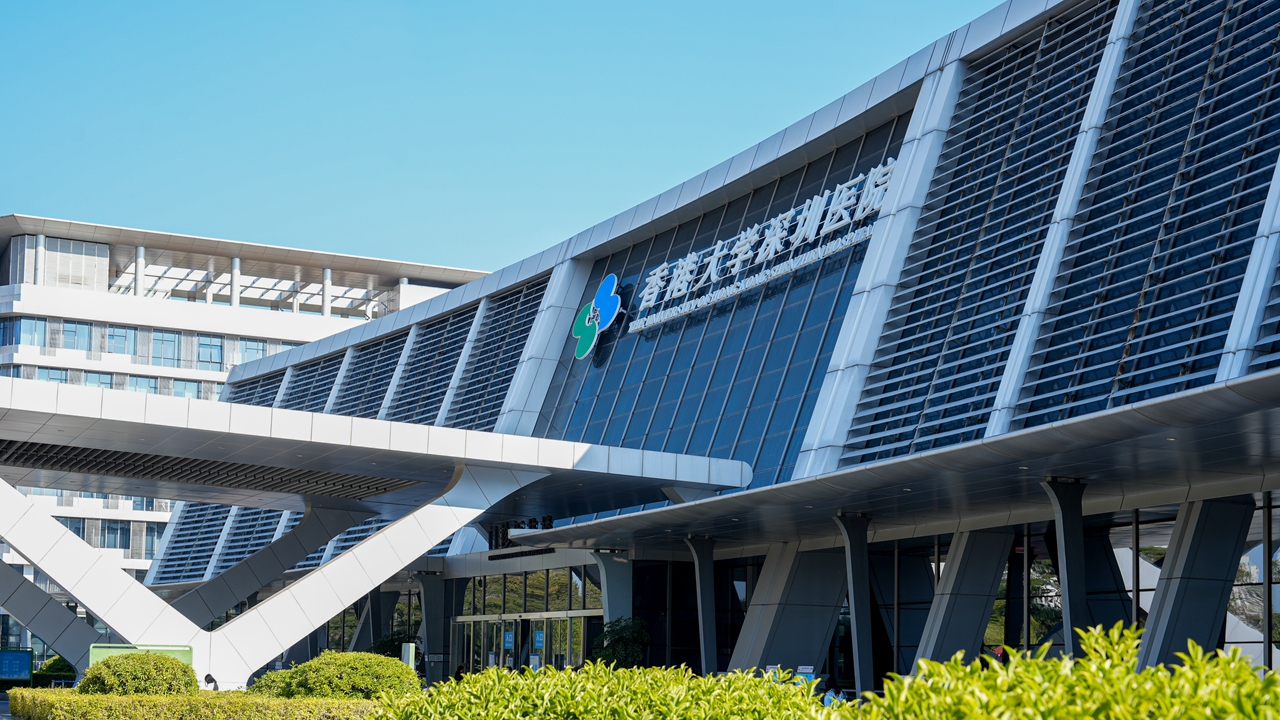
Exterior view of The University of Hong Kong–Shenzhen Hospital.
Karabulatova’s story is just one example of how Shenzhen’s healthcare reaches out to the world. Professor Tao’s office now welcomes a growing number of international patients — from Indonesia, Saudi Arabia and Bangladesh... They travel thousands of miles, drawn by the story of the “folded man” that spread worldwide. That case, with its 130 million views on YouTube, showed the world the formidable power of Chinese medicine.
Karabulatova’s road to rebirth has only just begun. It started the day after surgery, with the first movement in her legs. It winds through the curved corridor she travels daily, leading to the sunlit rehabilitation garden. On this path, she is accompanied by her son’s songs, watched over by her doctors’ caring gazes, and feels the Shenzhen Bay breeze on her face.
In a year, in two years, when she finally walks out of the hospital gate on her own, when those sneakers truly touch the ground, she will remember that this road began in the city of Shenzhen.
And in that curved corridor, every day, the singing continues.