
 Share
Share


 Print
PrintBao'an adds 12 languages to urban management hotline
Writer: Wei Jie | Editor: Cao Zhen | From: Original | Updated: 2026-03-12
Bao’an District has upgraded its urban management hotline with intelligent multilingual support, adding 12 foreign languages to help non-Chinese residents access city services without language barriers. The move is aimed at raising Bao’an’s internationalized public service level as more foreign nationals and multinational employees choose to live and work in the district.
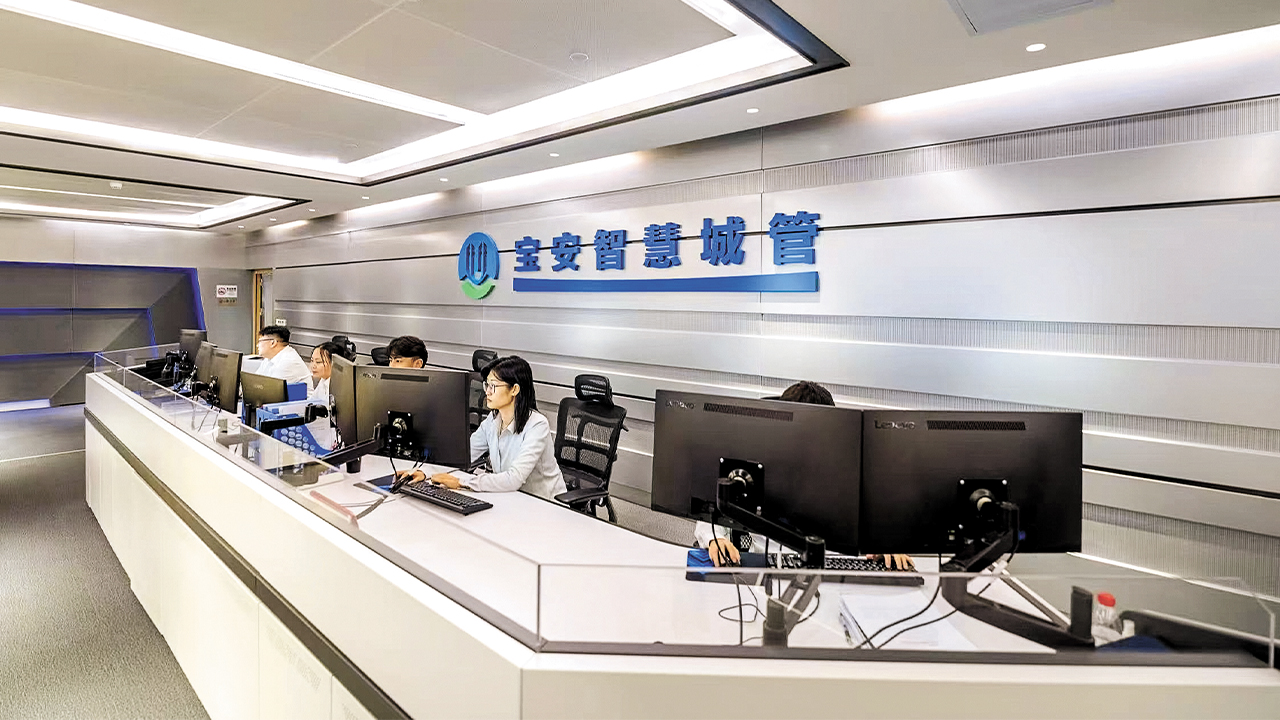
A glance at Bao’an’s urban management and law enforcement bureau’s office. Photo from Bao’an Daily
The upgraded Bao’an urban management hotline (0755 29921234), available on weekdays from 9 a.m. to 12 p.m. and from 2 p.m. to 6 p.m., retains its Putonghua service while launching an initial package of English, German, French, Japanese, Korean, Vietnamese, Indonesian, Turkish, Thai, Portuguese, Spanish and Malay. Together, these languages cover most major global economies and many countries along the Belt and Road, enabling callers to use a single number and receive professional, accurate answers in their native tongue.
Officials say the expansion responds to growing demand as Shenzhen’s international connectivity and the presence of foreign residents in Bao’an rise. Common inquiries that previously stalled due to language gaps include questions about waste-sorting rules, reporting damaged public facilities, and understanding appearance and city management regulations. The new service is designed to make such routine public service interactions easily accessible.
The multilingual capability is not powered by foreign-language call agents but by an intelligent system developed in partnership with the Bao’an branch of China Telecom. According to a district urban management official, the core upgrade integrates AI-driven automatic language recognition and real-time translation. Incoming calls are routed through a call-dispatch layer where the system identifies the language and performs synchronous translation. Hotline operators hear the caller’s words rendered into Putonghua in real time, while callers receive responses in their own language — creating a seamless experience that minimizes the sense of translation.
This technical shift also represents a conceptual change from providing a one-size-fits-all service to delivering tailored, adaptive services for a diverse population. “The upgrade aims to break down information barriers for foreign residents and ensure every person and international enterprise in Bao’an feels the district’s professionalism and warmth,” a district official said.
Following the launch of the first 12 languages, Bao’an officials said they will monitor usage and user demand, to introduce more language options covering priority countries and regions.